


TOP STORY
Narciso, reviewed
It’s 1959, and Paraguay is five years into South America’s longest-lasting dictatorship. Asunción is plastered with propaganda for el rubio, a.k.a. Alfredo Stroessner: the blond despot who will rule this isolated nation with an iron fist for three decades to come. Gunshots ring out in the sultry night air. Driven underground, unmarried couples and gay men rendezvous in abandoned buildings in a blur of grasping, panting bodies.
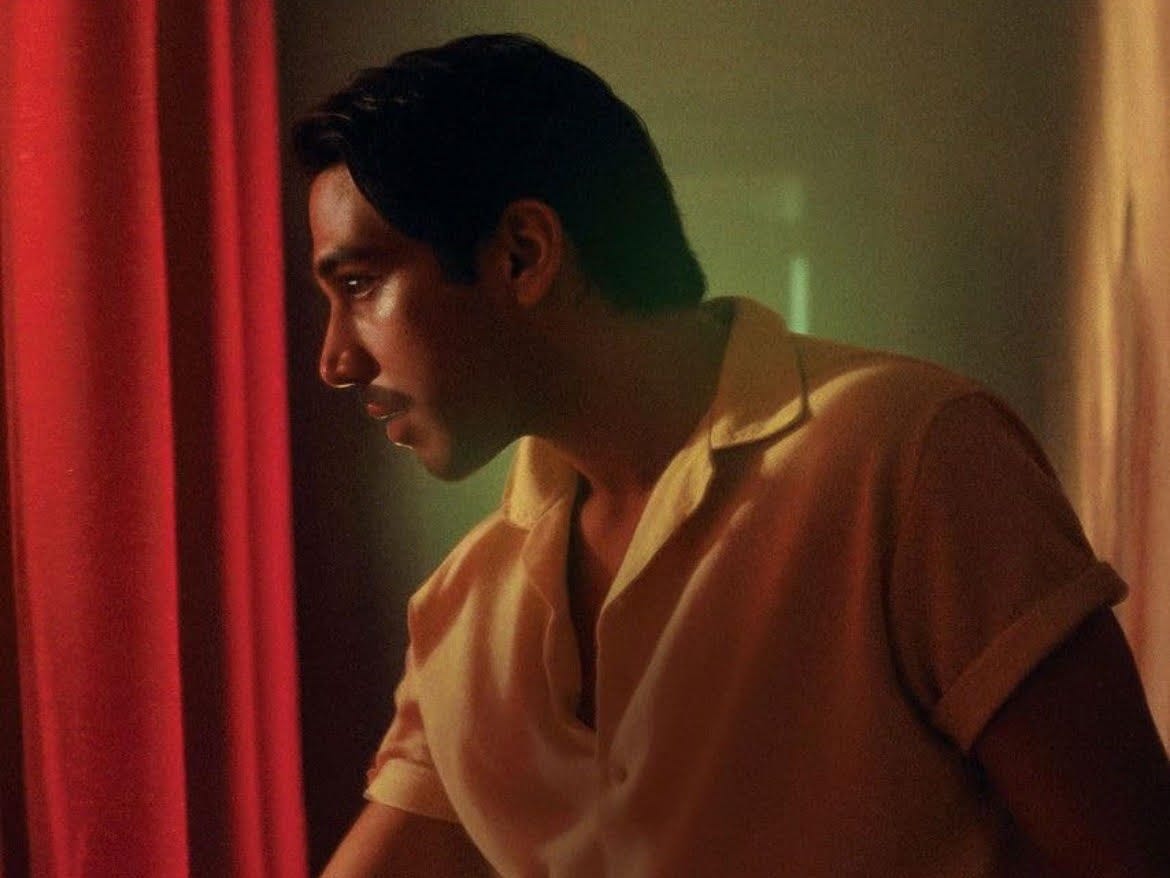
This is the moodily atmospheric backdrop to Narciso, the latest outing by Paraguayan writer-director Marcelo Martinessi, which premiered in local cinemas on Thursday after picking up the prestigious Fipresci prize at the Berlin International Film Festival in February. Paced like a thriller and beautifully shot — and inspired by real events — the movie doubles as a sharp critique of contemporary Paraguay’s ultra-conservative turn.
Lulú (Manuel Cuenca) is the impresario behind Radio Capital, which beams out a soporific sequence of radio plays and folkloric harp music. Lulú styles himself a man of the people and an upstanding pillar of the artistic community. He struts the stage in the scarlet shirt of the ruling Colorado Party, a portrait of the autocrat-in-chief hangs in his office, and a rosary dangles from his rear-view mirror.
But Narciso (Diro Romero) — a suave, twenty-something upstart from the country, who has imbibed the music of Bill Haley and the swagger of Little Richard while living in Buenos Aires — threatens to destabilise the broadcaster’s squeaky-clean reputation. Sensual and vain as his name suggests, Narciso persuades Lulú to let him play rock and roll records to a live studio audience and begins to shake the Paraguayan public out of their stupor.
As Narciso leaps into the crowd to shimmy, shake and twirl with a flock of screaming teenagers, he transforms into a Paraguayan Elvis with a yanqui-yopará drawl and more than a touch of James Dean. Mobbed by fans wherever he goes on his motorbike, he can take his pick of admirers: women, men, even the louche, Stratocaster-strumming charge d’affaires at the U.S. Embassy (Nahuel Pérez Biscayart).
Married but closeted, Lulú also becomes obsessed with his new presenter, twitching the curtain to watch Narciso gyrate on stage and sweatily crawling the curb for young men who look like him. Yet as the regime whips up a moral panic about pop music, and Lulú’s infatuation reaches fever pitch, Narciso is found dead amid an unexplained fire at his boarding house. His apparent murder immediately becomes the pretext for a violent round-up of men of “doubtful sexual conduct.”
In the film’s final, striking scenes, a Radio Capital actor dressed up as Dracula (Arturo Fleitas) warns listeners of the long nightmare to come as Stroessner’s goons hammer at the door. Next thing, he’s one of the dozens of men handcuffed and stripped to their underclothes in a truck bound for a torture cell. El rubio is now firmly calling the tune, and the real monster, it seems, isn’t the one in the greasepaint and cape.
THE POST TAKE:
Fast cementing his reputation as Paraguay’s leading filmmaker, Martinessi’s previous work has probed around the edges of the 1954-89 dictatorship of Alfredo Stroessner.
His debut short, Karai Norte (2009), is set during the 1947 civil war that paved the Colorado Party’s rise to power. The award-winning Las Herederas (2018), is also a study of repressed same-sex desire among an upper-class Asunción couple who live off the dwindling family fortune — it’s implied — accrued under Stroessner’s rule.
Martinessi’s latest examines the beginnings of the stronato, as a military regime initially feted for bringing order after decades of turmoil rapidly devolves into a repressive reign of terror. Narciso draws on the real-life story of Bernardo Aranda, a 27-year-old radio presenter and dancer who died in a mysterious blaze in 1959. The case triggered a public uproar over homosexuality — Aranda’s home was said to be frequented by male lovers — and a crackdown by the authorities.
Pro-regime newspapers published a list of 108 suspected gay men, who were jailed and brutalised despite having no proven link to Aranda. (A similar bout of homophobic repression in 1982 is the subject of Cuchillo de Palo, a 2010 documentary by Renate Costa, whose uncle was among those rounded up.) To this day, 108 is known as the “cursed number,” scratched out or omitted altogether in hotels, licence plates, addresses and public institutions across Paraguay.
And the film presents clear parallels with modern Paraguay, where discrimination remains common, same-sex civil unions aren’t permitted — and the Colorado Party, still in power, recently scrubbed the word “gender” from schoolbooks. A scene where Lulú throws dangerously “foreign” records on a bonfire mirrors a suggestion in 2017 by the education minister that he was prepared to publicly burn books mentioning trans people.

But the heavy subject matter of Narciso is leavened by a strong ensemble cast, sumptuous period costumes and set design, and thumping, thrumming soundtrack. Alternating Buddy Holly riffs and classical strings evoke the intoxicating dawn of the rock and roll era and the lengthening shadows of Cold War authoritarianism.
Some of the characters feel underdeveloped. Perhaps deliberately, the title role is something of a cipher, his background left unclear. Narciso’s inner life is made even harder to discern by the gloomy lighting. His girlfriends come and go without doing much to advance the plot: possibly a hangover from an earlier working title, Quien mató a Narciso? that may have focused more on the murder-mystery aspect among his jilted lovers.
The American diplomat’s role is also ambiguous. He is sympathetic to Narciso’s mission of helping the kids cut loose, but also proudly shows off a U.S.-funded water-treatment facility whose crystalline pools — in which Stroessner’s face is briefly reflected — seem to serve the regime’s propagandistic message of purity.
In Martinessi’s version, the desire to punish dissent — sexual, musical — seems to emanate from the authorities, against the wishes of an increasingly emancipated public. Arguably, a more faithful retelling of Aranda’s story would capture how a conservative “committee of parents” pressured Stroessner’s regime into stamping down on diversity. In today’s Paraguay too, Colorado lawmakers are both cultivating and pandering to conservative civil society activists linked to the global, evangelical far-right.
But the overall story is powerful, moving, and unsanitised. Narciso is no saint, nor a helpless victim. Instead, he represents a radical yearning for liberation that will outlive his immolation. It’s a message to cause hypocrites, censors, and gangsters of all stripes to tremble. As Martinessi recently put it: “We need more films and, above all, we need more courage.”
Welcome back to The Weekly Post, your essential briefing on all things Paraguay.
Also in this issue:
Colorado friendly fire · Ambassador: Peña “smells of bribery” · Paraguay signs nuclear agreement · Paraguay-Ecuador ties advance · Environmental defender attacked · Trade rebounds · Fuel price shock · Congress debates fiscal emergency
Want to keep reading? Claim your free trial — and unlock exclusive Insider Insight.