


TOP STORY
White coats and greenbacks
Want to boast of studying at an Ivy League institution, but don’t have the grades? Paraguay may have the place for you.
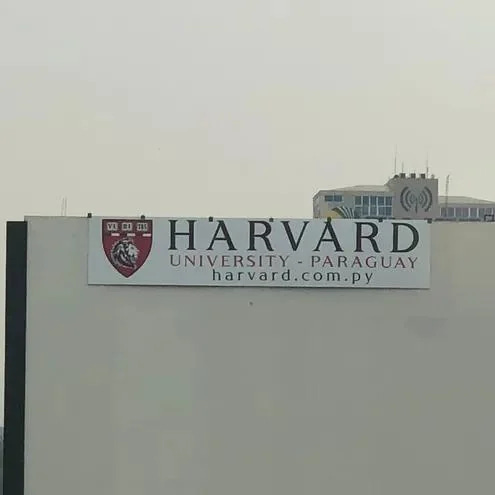
Until recently, “Harvard University Paraguay” doled out cut-price, fast-tracked medical degrees and law qualifications from a tower block in the smuggling and shopping hub of Ciudad del Este.
In 2023, Paraguay’s higher-education authority Cones finally issued a warning that the so-called college — complete with crimson branding, but with zero connection to the more famous Harvard — didn’t legally exist.
Still, dozens of doctors and lawyers with bogus Cantab credentials may now be plying their trade across Paraguay and neighbouring Brazil. And Paraguay’s pay-to-practice doctor mill, with poorly regulated institutions churning out barely-qualified physicians, is bigger business than ever.
Last week, Cones approved three new medicine programmes after a two-year freeze. The new smalltown institutions tasked with turning out the trusted white coats of tomorrow are the Universidad Nacional de Pilar, the Universidad Nacional de Misiones and the Universidad Interamericana in Pedro Juan Caballero.
But critics claim the Hippocratic Oath — especially the injunction to do no harm — is on life support in Paraguay, as med-school mafias with political patrons flood the sector with poorly trained professionals.
According to the Paraguayan Medical Circle, the country (pop. 6.1 million) already has 43 medicine programmes with over 43,000 students — most of them Brazilians studying in border towns like CDE and Pedro Juan.
The guild says students from as many as six universities are jostling for teaching space in single public hospitals: slashing one-on-one supervision hours, and even producing a “simulation” of clinical practice in place of real patient contact.
Around 1,500 doctors compete each year for half as many residency slots. And by mid-2025, just half of all Paraguay’s medicine programs had passed mandatory evaluation by the national higher-ed accreditation agency.
In March 2024, Cones imposed a temporary suspension on new medical offerings after mounting outcry over the speed and quality of approvals. In 2022, it shut down two medicine programmes accused of peddling falsified academic certificates and graduating students after less than six years’ study.
Waving through dodgy doctors with patchy seminar attendance is commonplace in Paraguay. A 2021 study found a sharp rise in Brazilian enrollment in Pedro Juan Caballero, where the number of medical students jumped from around 10,000 in 2018 to 20,000: this, despite lacklustre infrastructure and teaching.
The attraction for Brazilian students is obvious. Becoming a doctor back home now costs more than US$2,000 per month on tuition alone. Paraguayan border cities meanwhile benefit from the influx of students spending on rent, food, and services.
Such is the profit incentive that Cones has been reviewing a regime of “conditional” authorisation, under which new med-school programs could begin operating and only be required to guarantee clinical training two years later.
But what looks like local development can quickly become dangerous. The Medical Circle has already accused the Health Ministry of hiring graduates from non-accredited programs in Concepción, warning that doctors without bare-minimum competencies are illegally entering the public system.
The Circle has also asked President Santiago Peña to audit the process by which the latest three universities have been permitted to train doctors. Senior physicians allege the new programmes were greenlit despite an adverse technical opinion from within Cones itself.
What’s changed? Notably, each of the new programmes has a political sponsor.
Colorado Party Senator Derlis Maidana has celebrated the Misiones offering. Vice President Pedro Alliana and Supreme Court Justice Víctor Ríos (also part-time rector of the local university) have hailed the one in Pilar. The rector of the Interamericana in Pedro Juan doubles up as a cartista candidate for city council.
If all this sounds worrying — third-rate medical professionals given licence to practice for political and clientelistic motives — Education Minister Luis Ramírez has some words of reassurance.
When it comes to evaluating med schools, the minister says, “we cannot function with restriction and negativity as our only guiding logic.”
Or, as the under-qualified twenty-something wielding a scalpel or dialling up your anaesthetic dosage might put it should you find yourself in a Paraguayan emergency room: “Trust me, I’m (kind of) a doctor.”
THE POST TAKE:
Paraguay has for years tolerated a broader ecosystem of “garage universities”: dozens of thinly regulated private institutions selling paper qualifications in fields where incompetence is not merely embarrassing but lethal.
Some of these for-profit institutions have been accused of serving as conduits for money laundering — and worse. In 2021, Brazilian federal police investigated the Universidad Central del Paraguay (UCP), allegedly used by PCC drug traffickers posing as medical students to cross the border freely.
Aparecido Carlos Bernardo, the rector of the UCP, surfaced in the infamous Lalo Gomes chats in 2023. The Colorado congressman — killed during a police raid for alleged ties to traffickers — was recorded negotiating the lease of a ranch seized from border kingpin Jarvis Pavao in favour of Bernardo.

Last year, cartista Senator Hernán Rivas was ordered to stand trial over the alleged use of a fake law degree to become a member — and eventually the short-lived president — of the Jurado de Enjuiciamiento de Magistrados: the public body in charge of disciplining and removing judges and prosecutors.
Paraguay is not just producing too many doctors, lawyers, and officials from shady institutions. It is asking the public to trust authority figures whose credentials are often dubious — and sometimes outright fabricated.
A few diploma mills on the margins may be normal. But unqualified and unscrupulous individuals exercising life-and-death power over patients, defendants, and citizens should set off alarms for the health of the nation.
Welcome back to The Weekly Post, your essential briefing on all things Paraguay.
Also in this issue:
Itaipú talks resume · EU-Mercosur deal advances · Pension reform becomes law · ATOME gets IDB backing · Big maquila moves · Another prison boss found dead
Want to keep reading? Claim your free trial — and unlock exclusive Insider Insight.