


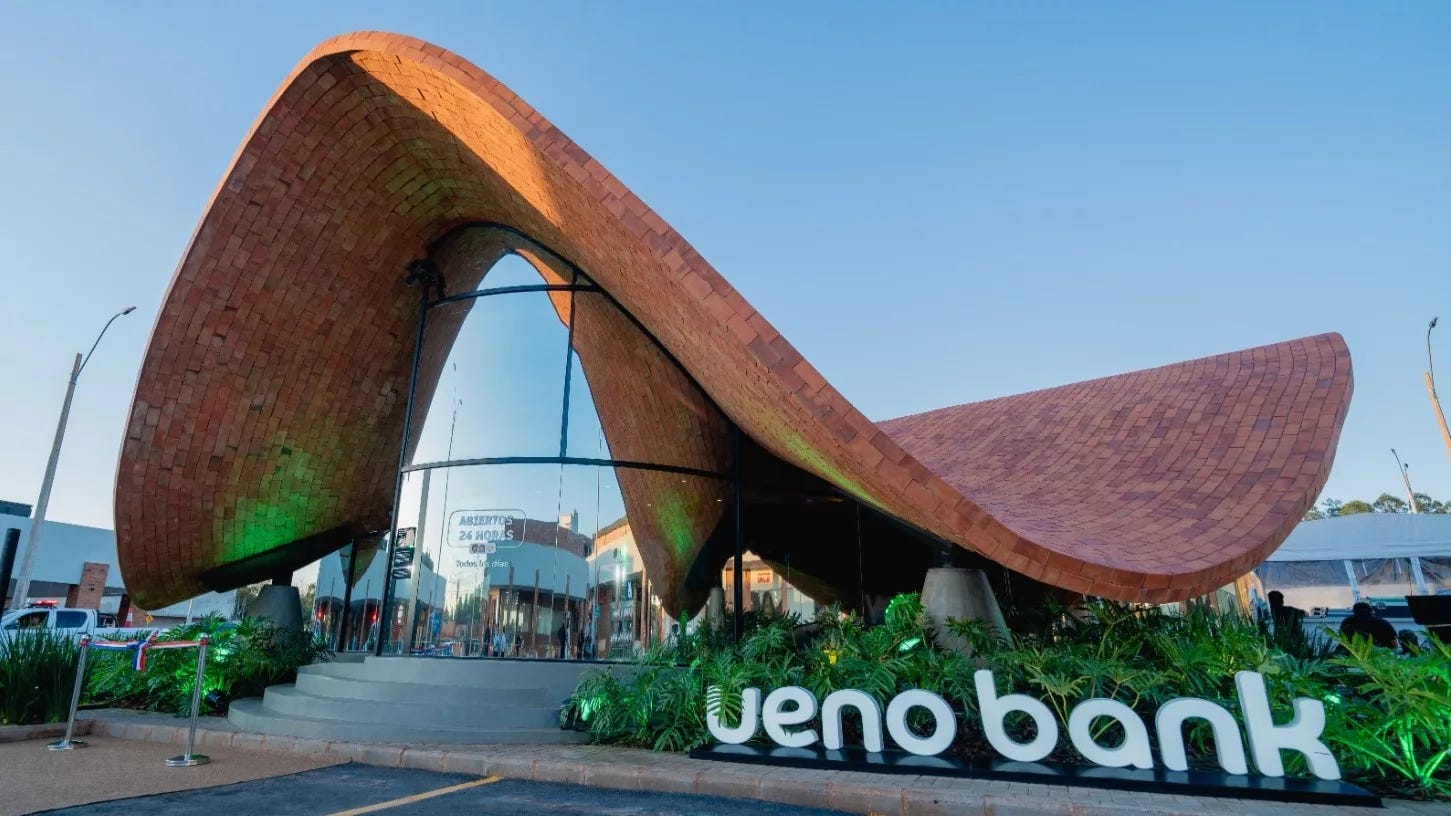
Paraguay’s Central Bank (BCP) is putting ueno bank into resolution: the regulator’s most serious step for winding down a failing financial institution short of immediate liquidation.
The dramatic move was announced on social media at 03:24 this morning and also posted to the BCP’s website. Ueno account holders reported that they couldn’t access their money via the bank’s app. Police have moved to guard ueno branches and prevent disturbances.
It follows weeks of speculation that the rapidly growing digital bank – sometimes called Paraguay’s answer to Nubank, Monzo or Revolut – is heading towards the rocks.


Controversy has swirled over ueno since its former boss was appointed to lead the BCP by Paraguay’s president, Santiago Peña, in 2023. Critics said it was a clear case of revolving doors.
Soon after, the regulator granted ueno a banking licence, and ueno acquired Visión Banco along with more than 70 high-street premises across the country.
Last year, under media pressure, Peña claimed to have divested from the Grupo Vázquez business group that owns ueno, whose name is not capitalised in company documents.

But press and regulatory scrutiny of ueno and the BCP has intensified after recent reports indicated the bank had made $150m in loans to small companies that were transferred to Grupo Vázquez employees, seemingly breaching regulatory rules.
The Central Bank says ueno’s solvency ratio has recently fallen below 50% of the minimum requirement, triggering the intervention. The BCP says savers’ deposits up to $38,000 are guaranteed, and that the broader financial system is not at risk. It called a press conference for 7am local time.
But the unanimous decision by the Central Bank’s board to intervene in the bank is still likely to produce shockwaves.
This morning, critics from across the political spectrum — including former president Nicanor Duarte Frutos — slammed Peña and the BCP for damaging Paraguay’s institutional credibility and putting vulnerable people’s money at risk by being slow to act.
Ueno claims to have 2.9 million clients, about 63% of Paraguay’s adult population.
It also holds about $850m in public deposits: including roughly 10 percent of the portofolio of the IPS social insurance scheme. The broader Grupo Vázquez also holds dozens of public contracts.
As the scandal repeatedly resurfaces, so has talk of Peña’s impeachment: even reportedly raised by the president himself.
Senior and long-serving Central Bank officials have recently resigned or been reshuffled. Opposition lawmakers, and even Peña’s vice-president, have suggested the BCP’s boss Carlos Carvalho should be fired. This morning, Carvalho said he had signed his resignation but would stay in place for now.
The Paraguay Post has been following the turbulent rise of ueno for the past two years: speaking with former employees, founders and investors, ex-BCP regulators, government officials, financial experts, and many others.
In lieu of the Weekly Post, this morning we’re bringing you a need-to-know briefing on the apparent downfall of Paraguay’s most powerful bank.
Below the paywall, we dig into what comes next for ueno, whether people’s savings are at risk, the rumours of a potential buyer — and what the political fallout could be from Paraguay’s most serious banking crisis in years.
Paid subscribers get our essential weekly briefing on Paraguay, more Insider Insight like this, and many extra benefits.
What’s happened?
The BCP’s board voted unanimously yesterday (2 November) to put ueno into resolution, but the decision was only communicated early this morning.
The central bank says that ueno’s solvency ratio, a measure of its regulatory capital relative to risk-weighted assets, has fallen below half the legal minimum.