


TOP STORY
Kidnapped by Stroessner, could Agustín Goiburú finally be found?
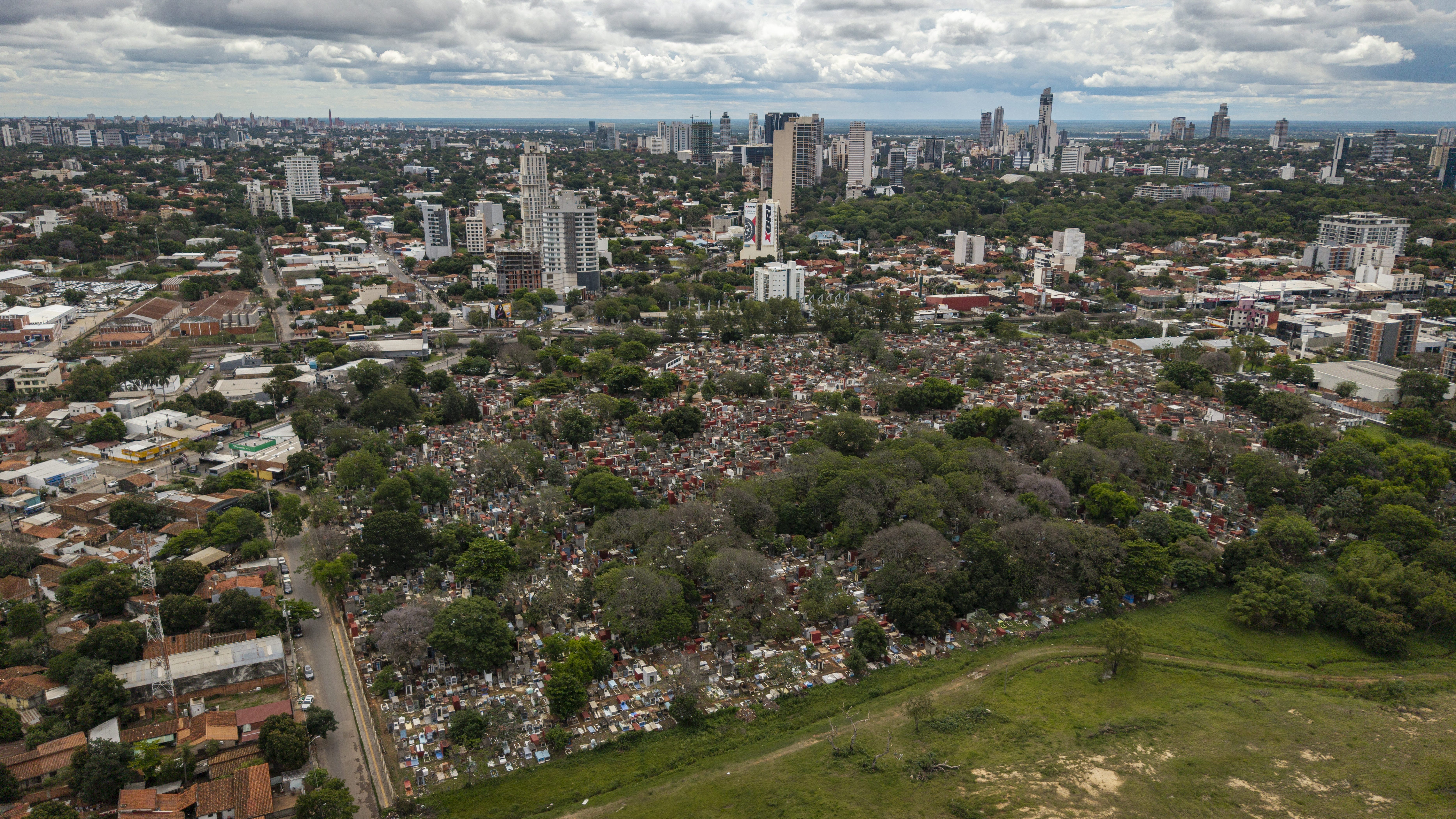
Forty-nine years ago, a mother was burying her child in a cemetery on the eastern outskirts of Paraguay’s capital, Asunción, accompanied by a young couple, when a truck pulled up nearby.
Four police officers and a gravedigger took out a roughly hewn coffin of nailed-together wooden boards. They interred it, without ceremony, in an unmarked patch of earth beneath a mango tree.
It was March 1977, and Paraguay was nearly a quarter-century into South America’s longest dictatorship.
The 1954-89 regime of General Alfredo Stroessner, armed and bankrolled by the United States, made critics vanish. Asking questions was dangerous.
But curiosity got the better of one of the bystanders. He approached and asked the gravedigger, in the native Guaraní language, who was in the box.
“They say they killed Dr. Agustín Goiburú,” came the reply. “And at least he will rest easy here in the shade.”
Agustín was the regime’s public enemy number one.
A surgeon and a leader of the dissident MOPOCO movement, he patched up torture victims, denounced their treatment, and helped them escape.
Agustín also plotted to assassinate Stroessner by planting explosives near the dictator’s motorcade. After being kidnapped in 1969, he tunnelled out of his cell and returned to exile in Argentina.
So the Stroessner regime – a founding member of a region-wide scheme to exterminate leftists called Operation Condor – had him abducted once more in February 1977, tortured, and disappeared.
Rogelio Goiburú, then 20 years old, never saw his father again.
Today, Rogelio, also a doctor, leads a state body tasked with searching for the hundreds of people forcibly disappeared by the Stroessner regime: including Agustín.
His lifelong quest has now been given precious new hope.
Decades-old testimony recently came to light – passed on by the son of one of the eyewitnesses, whose memory was jogged after seeing Rogelio on TV – that Agustín’s remains lie in the Cementerio del Este in Asunción.
The story, as Rogelio relays it, is outlined above.
He also spoke to workers at the municipal graveyard, who said retired colleagues had told them about the clandestine burial near the perimeter wall.
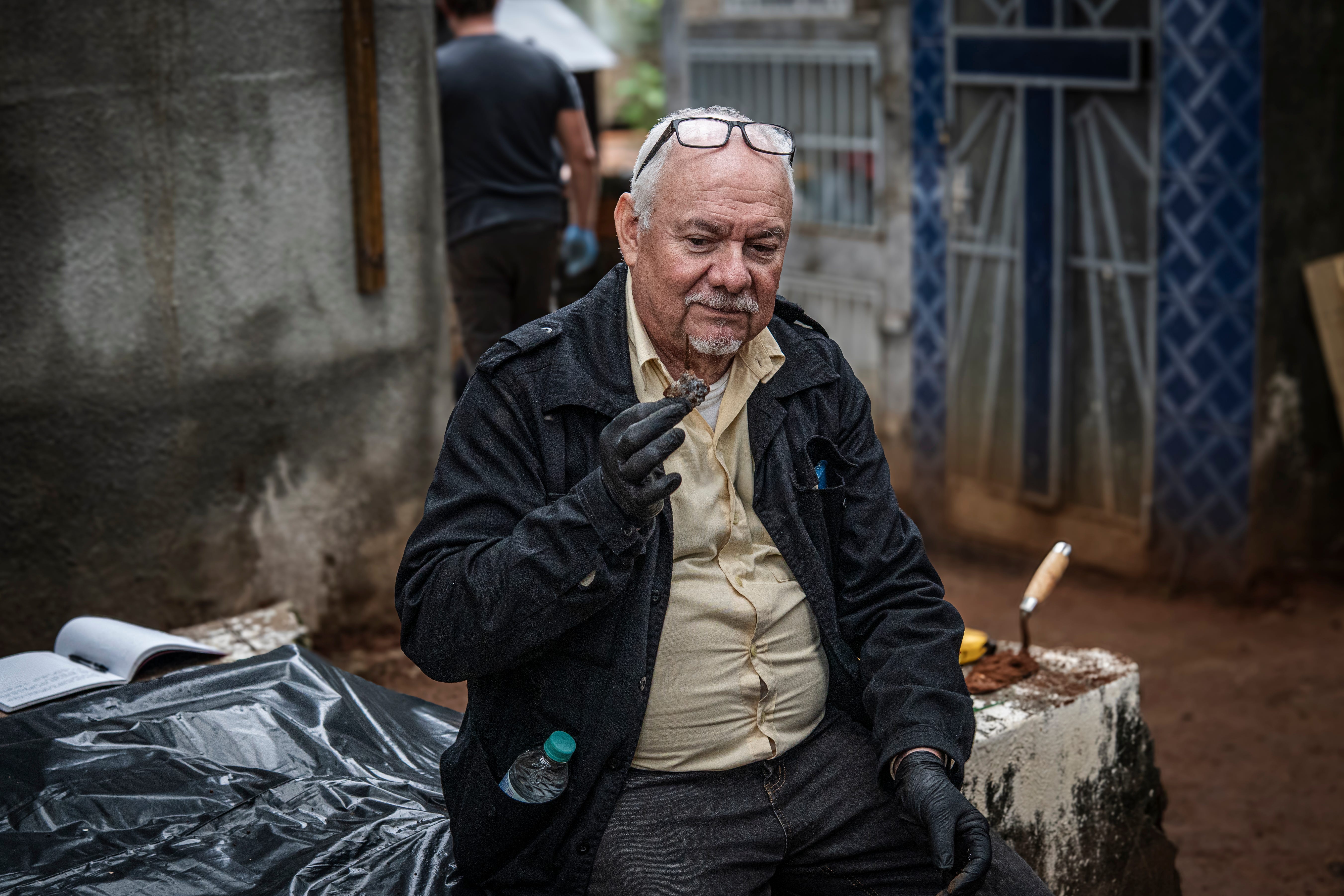
“That’s why we have to dig here,” Rogelio, now 70, told The Paraguay Post last week, as helpers shovelled the soil beneath the gnarled mango tree, now shading a jumble of family crypts.
The result is a macabre version of searching for a needle in a haystack: trying to locate one particular body hidden among thousands.
“We’ve found fragments of bone,” says Adriana Sartorio, part of a team of forensic scientists from Arizona State University who are supporting the investigation. “We can’t say absolutely anything about their origin.”
The hope, she says, is to extract DNA, compare it with samples from Rogelio and his family, identify Agustín, and restore some of the dignity denied him in death.
Her own father knew many of those disappeared by the dictatorship, adds Sartorio, 44, originally from Paraguay: “It’s also personal.”
And after decades of dead-ends, Rogelio is quietly confident.
“Dad was a little big-headed,” he adds. “If we find him, I’ll recognise him from the size of the skull.”
He is also appealing for other witnesses, including the police officers who buried Agustín, to come forward and “lose their fear”.
Asked why they would still be afraid, Rogelio smiles, gesturing to the small group of survivors and supporters accompanying his search.
“Anyone here could answer that question,” he says. “Stroessner was exiled, he fell from power, but stronismo remains in force.”
Associates of Stroessner still hold office. The dictator’s Colorado Party remains in power. Few of his functionaries have been convicted.
“It’s never occurred to anyone,” Rogelio continues, “to make an act of repudiation, of asking for forgiveness for all the damage [the dictatorship] caused: not only to the surviving victims but the Paraguayan people.”
Paraguay’s current president, Santiago Peña, has said Stroessner brought “stability” and progress, while criticising the regime’s “deficit” in terms of human rights.
The Post asks Rogelio if his office, the Dirección de Memoria Histórica y Reparación, receives any government funding.
“How do you say zero in English?” he responds. “Nothing.”
Where Paraguay’s cops drive Hiluxes, Rogelio commutes to the dig in a timeworn 1986 Mercedes Benz sedan.
Sometimes he borrows his mother’s truck, “which is even older.” A government-provided vehicle has broken down, he adds, and he doesn’t get reimbursed for repairs.
The specialists from Arizona have paid for their own flights, loaned their instruments, and donated their time. A UN grant has helped pay the gravediggers and cover costs.
After four days of shovelling and sifting, the dogged optimism fades a little.
The group exhumes several skeletons already registered in the cemetery’s records, as well as fragments of at least two other bodies.
“The bones are very degraded,” Rogelio explains. “I don’t know right now whether the lab will be able to extract any genetic material.”
The remains will be analysed in a judicial morgue next week, he adds, before being sent for testing at ASU. “Together, we can determine the way forward.”
Before leaving, the search party fills in the graves once more, leaving bouquets of flowers on the humid red earth.


THE POST TAKE:
Rogelio’s latest excavations take place at a sensitive moment.
Visiting Paraguay this week, senior US diplomat Christopher Landau has signed agreements on border security and helping Paraguay intercept planes thought to be transporting drugs.
“For me these will be very emotional days, being back in Paraguay,” said Landau, the US Deputy Secretary of State.
The son of George Landau, Washington’s ambassador to the Stroessner regime between 1972 and 1977, he has reminisced fondly about his childhood in Asunción, which he departed aged 13.
Declassified US government files indicate Landau senior was aware of Operation Condor from at least August 1976. The US government continued to give Stroessner weapons and money for years afterwards.
Consulted by the Post, the US embassy in Asunción confirmed Deputy Secretary Landau had made no reference to the Stroessner dictatorship on this visit.
Landau’s charm offensive – he travels to Javier Milei’s Argentina this afternoon – comes as Donald Trump’s White House pushes regional allies to join its assault on alleged “narco-terrorists.”
A year-long US bombing campaign on land and sea has killed more than 230 people on flimsy evidence, say human-rights watchdogs.
While Paraguay has so far ruled out US troops fighting gangs on the ground, it has authorised joint training and exercises. Meanwhile, its own security forces are increasingly trigger-happy.
In August, anti-drug agents shot dead a teacher and Indigenous leader in the community of Tekoha Y’apo, supposedly in self-defence. The community says the two men were ambushed and executed as part of a land dispute.
In December 2023, police and soldiers stormed the lawless Tacumbú jail in Asunción to reimpose order, leaving one officer and 11 prisoners dead. President Peña hailed the operation as “historic and unprecedented.”
In 2020, then-president Mario Abdo Benítez posed triumphantly for photos after a task force stormed a camp supposedly belonging to the EPP, a leftist armed group, in Concepción.
It soon transpired that two 11-year-old girls, children of EPP members, had been killed during the operation. The authorities buried them on the same day in a local cemetery without performing an autopsy.
“Today, at least, they can’t kidnap us with impunity, torture and murder us, and hide our bodies,” Rogelio argues.
“But we know that, in remote parts of our country, these things keep on happening.”
Young people know little about the dictatorship, he adds, arguing schools should be made to teach the findings of a Truth and Justice Commission that investigated the regime’s grim toll: 3,470 exiled, 18,722 tortured, 59 murdered and 336 disappeared.
Nearly two thirds of Paraguayans were born after 1989, when Stroessner’s generals packed off the aging autocrat to a Brazilian beach.
According to the latest report by Latinobarómetro, a region-wide opinion poll, Paraguayans are deeply ambivalent about the imperfect democracy that resulted.
71% said they wouldn’t mind if a non-democratic government came to power as long as it solved the country’s problems: the highest percentage of any Latin American nation.
55% of Paraguayan respondents said democracy could function without political parties, 33% without elections.
Asked by the Post at the cemetery what his message is for the Paraguayan public, Rogelio is emphatic: “This can’t be allowed to happen again.”
Also in this issue:
Peña the Powerful · Cartes checkmated · Flooding displaces thousands · Extreme weather warning · Revealed: water-hungry data centres · Paraguayan master ceramicist comes to the UK · Local mayor bans Halloween, again
Want to keep reading? Claim your trial to unlock everything we publish, and access exclusive subscriber benefits.