You’re reading the weekly newsletter of The Paraguay Post, a new publication on all things Paraguay. For more about us, click here.
Gmail and other providers can often hide half this email. If you see three dots, click ‘em. For the best reading experience, read the full post on the Paraguay Post website.
Welcome back to The Paraguay Post! I’ve been blown away by the response since we launched a week ago. It seems like people are crying out for more news on Paraguay.
Over a hundred people have subscribed. And many of you have chosen to chip in $1.25 (just die’mil-i) per week, $40 for a year, or even become founders.
That means we can grow our team (stay tuned) and bring you original features and insider content sooner than planned. A huge gracias/thank you/aguije!
The Headlines:
The Paraguay River is drying out.
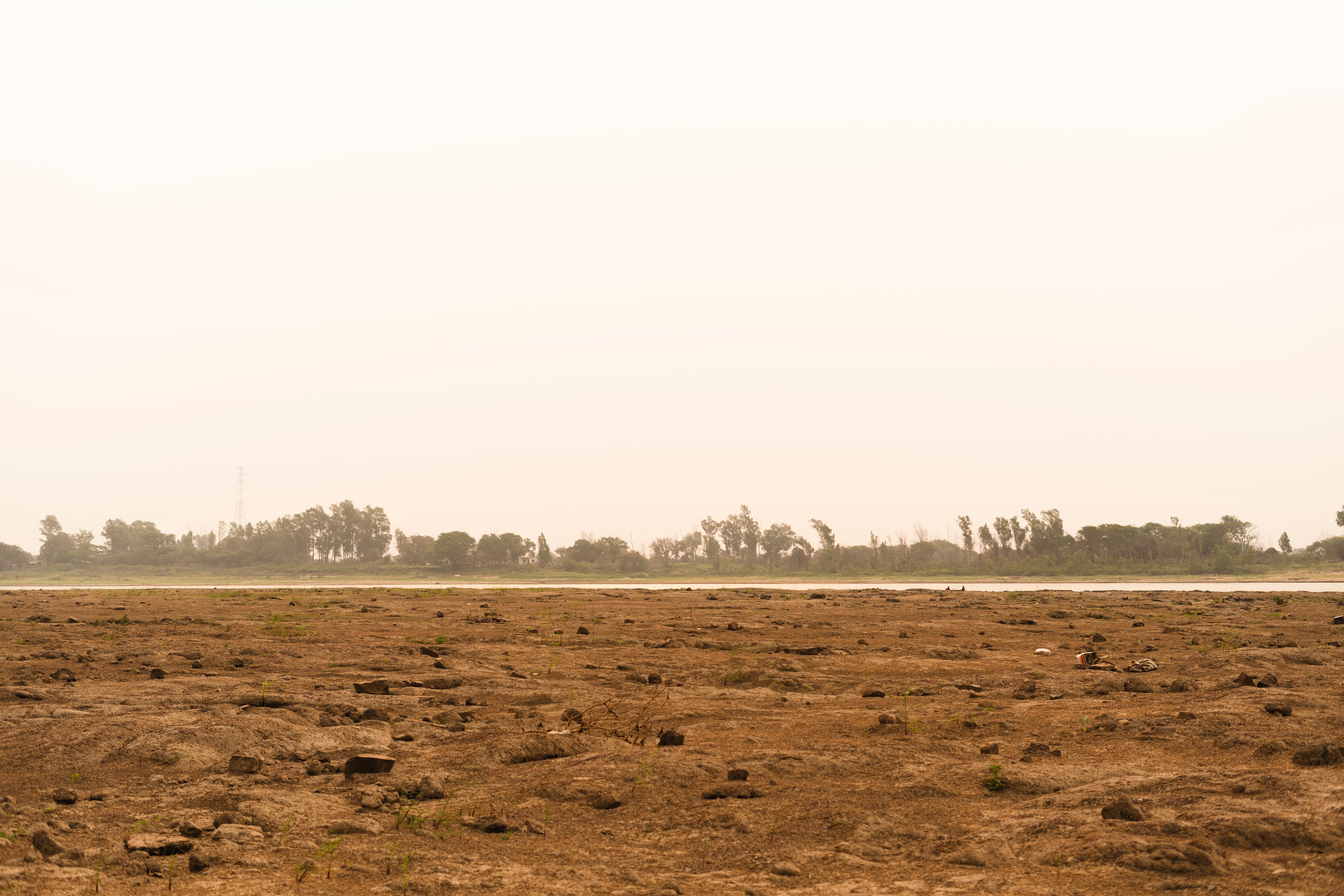
“I don’t remember the water ever being this low,” says Oscar Fariña, the head of the fishermen's association in La Chacarita.
The wiry 68-year-old pilots his boat out from the port of Asunción to a rocky island. “This only appears in times of extreme drought,” he explains, as a faint sun glows red through the haze of a billion trees burned by fires across the continent.
“All of South America is dry,” Oscar adds, sketching the region’s outline into a sandbank strewn with rubbish and once-submerged wrecks. “It’s fucked up.”
Earlier in September, the Paraguay River shrank to its lowest level at the capital since records began in 1904. Today, it hit a new low of -1.24 metres.
This is catastrophic for fishermen and their families. Their typical catch — striped surubí catfish, pacú and dorado — is going scarce, Oscar tells the Post, and if they can’t find work elsewhere, their families go hungry.
It’s also worrying news for Paraguay’s economy. The river is used to transport over 80 percent of Paraguay’s imports and exports, including the all-important soybean harvest and most of the country’s fuel.
Vessels have been stranded. Others have slashed their cargoes by 70% to pass through a narrow dredged channel. Another few weeks of this, importers warn, and prices in the supermarkets will shoot up even further.
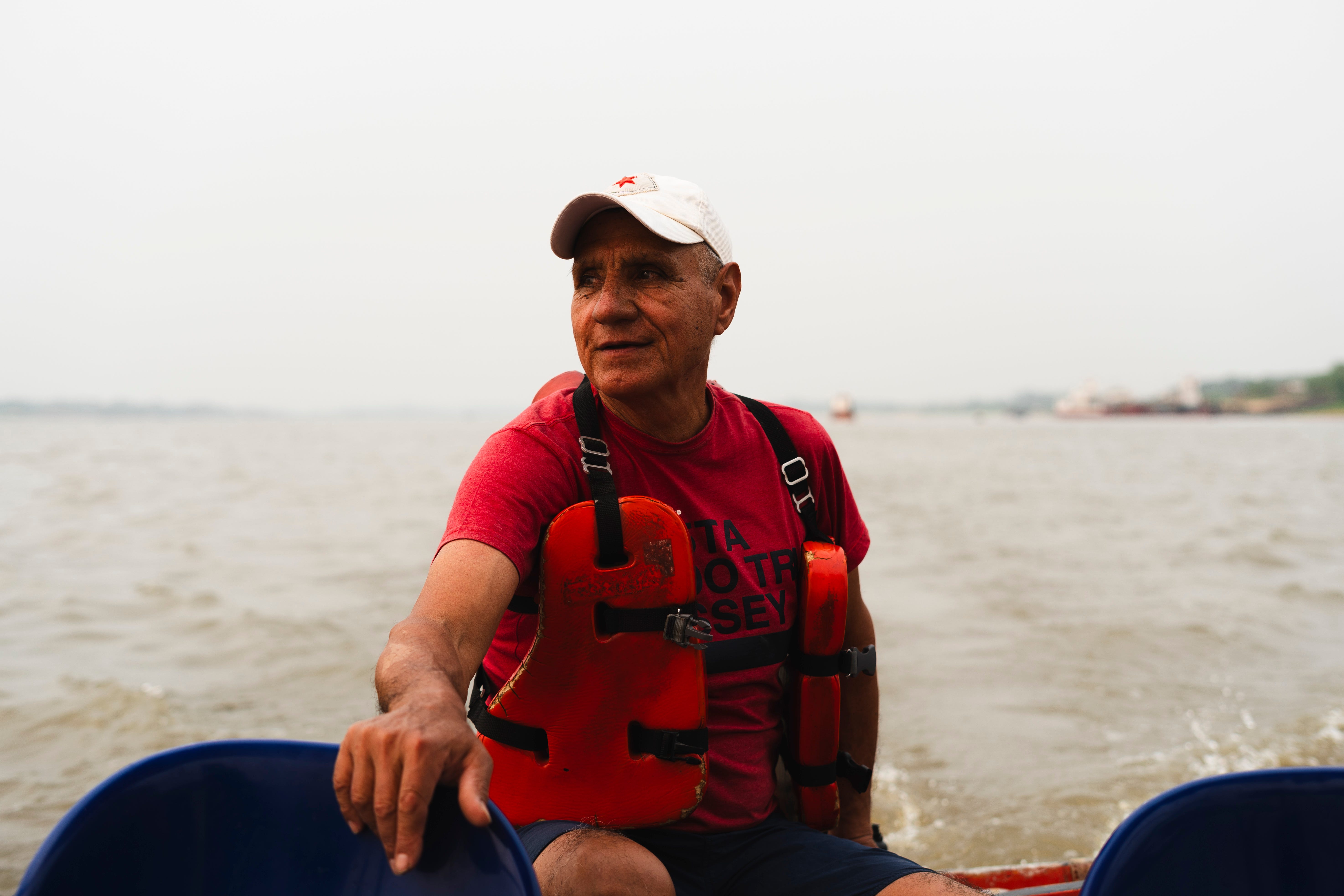
As ever with the climate crisis, there are global, regional, and local factors at work. The Pantanal wetland upriver has seen barely any rain this year: probably a product of the La Niña climate system, exacerbated by global heating.
But Paraguay is making things worse for itself. Farmers divert tributaries and siphon water off from the river. The Paraguayan Rice Federation (Feparroz) insists that water use by its members has no impact on river levels. The authorities in Argentina think otherwise. Pesticides used by producers upriver, Oscar argues, are killing aquatic life.
At the other end of the city, the fishermen of Remanso are threatening to blockade the river. They say a private company has been dredging sand from the riverbed for months to build a gated community, disrupting the watercourse and its breeding populations of fish.
“We can’t work,” says Dionisio González, president of the Asociación Pyapy Mbareté, adding that around 200 local families are now scraping by on one meal a day.
He freely admitted that he understood “little to nothing” about what was causing the river to dry up. But he was clear that the fallout was not being felt equally.
“Paraguay is a rich country, but only for one group,” Dionisio argued, describing an upscale new development that had flattened a patch of forest on the riverbank. “It’s a paradise for a few people. And the rest of us?”
Behind Paraguay’s economic boom? Child labour.
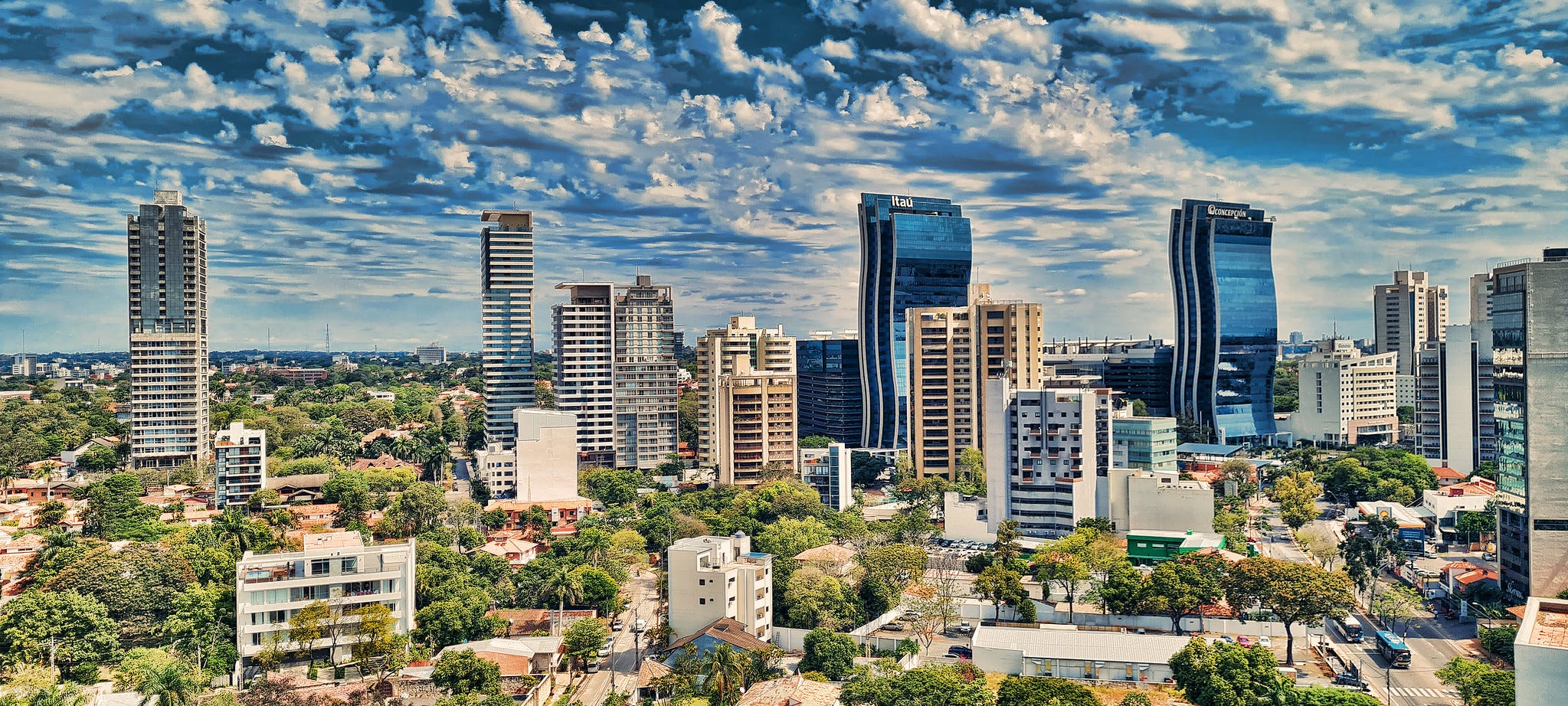
Politics aside, Paraguay is doing pretty well, right? Despite the drought, the economy is forecast to grow by 4% this year: faster than most of Latin America. This year saw a bumper soybean harvest of 10 million tonnes. You need only look out the window to see how the capital’s skyline is being transformed by a rash of sleek new skyscrapers.
But there’s a dark side to Paraguay’s agro and construction boom, reports Aldo Benítez for El Surtidor from Vallemí, where children as young as 11 are breaking rocks with hammers, breathing in noxious dust from explosions, and sorting through the rubble with bare hands (see the stark visuals by Sandino Flecha & Elisa Marecos).
The chalk quarries are owned by the Industria Nacional del Cemento (INC), the state-owned firm that provides much of the raw material for Paraguayan building projects. The nearby hillsides are also a source of dolomite, used by farmers — especially Paraguay’s soybean producers — to restore exhausted soils. A 30kg sack of quicklime earns the workers about US$2. It can fetch triple that in Asunción.
Child labour, defined in Paraguay as work by under 14s, is illegal. But when the choice is between working or starving, it’s a fact of life for many. Some of those quoted in Aldo’s story are third-generation quarry workers, and proud of putting food on the table. But surely their kids should have the option to stay in school — subsidised by the state if necessary — until they’re old enough to make a free choice?
Culture Corner
🎬🌻You can’t stop the spring. That’s the message of the beautiful Una Sola Primavera (dir. Joaquim Pedretti, 88 mins), in cinemas now. The 1947 civil war is raging, and Colorado Party pyrague (informants) are liquidating all opposition. Meanwhile, Nina (Majo Cabrera) chafes against a patriarchal society, from her uncle — a Colorado apparatchik who forbids her speaking Guaraní — to the hollow revolutionary ardour of Raúl. Salma Vera is fantastic as Nina’s sister Chichí, torn between bourgeois respectability and the promise of a new world.
🎵😇 It’s plucking heaven! The 17th Festival Mundial del Arpa is on this week in Asunción, with free concerts and workshops across the Brazilian embassy, the Manzana de la Rivera, and the Teatro Municipal (look out for the Juanjo Corbalán quartet on Saturday). What’s the deal with Paraguay and the harp anyway? Historian Tim Fanning has the backstory in the Irish Times: “Whereas in Europe, the harp is often associated with an ethereal sound … the Paraguayan harp is played in a much more boisterous, upbeat and rhythmic fashion.”
🏹🎨⚱️Indigenous art makes waves. On October 5, POpore is launching CHACO, an exhibition of animal carvings in palo santo wood, feather art, caraguatá weaving, and hypnotically intricate line-drawings. August saw the inauguration of Confines, a new gallery curating ceramics, masks, and paintings. It feels like Paraguay is starting to value the creations of native and campesino communities not only as artesanía (handicrafts) but as art in its own right.
🌴🔉🔥 Bolivia is back. Nope, it’s not Chaco War II, but the latest outing of the Latin dance party. Boli Fiesta Grande: Cumbia Sobre el Río is happening October 18 at the port of Asunción, and tickets are going fast. Come for the street food, vino tinto and perreo, stay for the ex-ASA chetos dressed up like Boricua gangstas.
📚✊ It’s here! October 2 is publication day for Paraguayan Sorrow: Writings of Rafael Barrett, A Radical Voice in a Dispossessed Land by William Costa (Monthly Review Press). It’s the first-ever English edition of Dolor Paraguayo, the definitive anthology by the turn-of-the-century essayist and agitator. Not only has Will deftly translated Barrett’s searing reportage from post-war Paraguay, he’s also tracked down fresh biographical details. (Also on Amazon).
In other news:
In E’a, José Cabrera reviews LAS DENSAS, the latest piece of agitprop theatre by writer-director David Amado and la Posdramática. I won’t pretend to have understood everything, but it made me want to head down to Sala Piloto ASAP.
Legislation passed in 2023 green-lighting Paraguay’s billion-dollar carbon credit industry may have been marred by a conflict of interest involving senator Patrick Kemper — the bill’s key sponsor — reports the Alianza Carbono Opaco at Mongabay. Kemper’s brother-in-law is a director at Swedish-funded pulp giant Paracel, which stands to benefit from carbon-mitigation initiatives.
Santiago Ramos ponders artistic freedom and censorship in a provocative essay for The Plough. He posits that literature and the arts were paradoxically more vibrant under Stroessner than in contemporary Paraguay’s hyper-capitalist democracy. “Could it be that these people all lived in a reality where the very act of writing carried a weight and meaning lacking in our own time?”
Rincon Guaraní, a Paraguayan restaurant and bar, has opened in London’s Broadway Market, reports the Tooting Newsie. “We're proud and excited to be the ONLY Paraguayan restaurant in the UK,” says co-owner Miguel, “and we can't wait to welcome local residents to serve them the amazing food from our country, such as sopa paraguaya, vori-vori, chipa, and asado!” Will definitely drop by when I’m next in the big smoke.
The Santi Peña World Tour continues. Last week, Paraguay’s president spoke at the UNGA in New York, where he posed for photos with Biden and Lula and visited the New Jersey diaspora. Today, he arrived in Mexico for Sheinbaum’s inauguration and meetings with business figures including Carlos Slim. Peña has taken 25 foreign trips in a year, spending a fifth of his term abroad.

El que puede, puede. (Source: @SantiPenaP)