



The community of Takuarita is now surrounded by eucalyptus plantations. Video: Matteo Fabi.
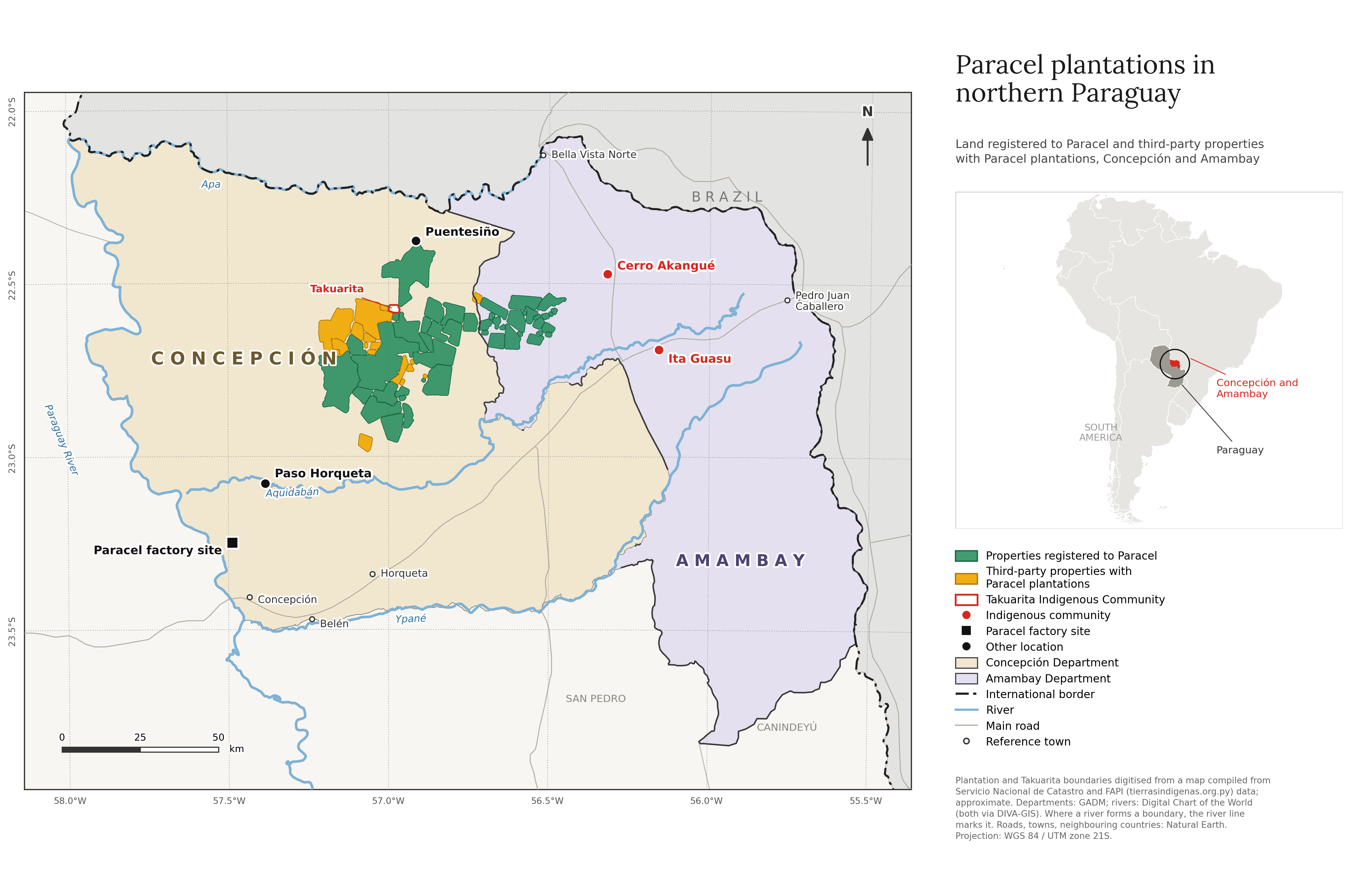
Six years ago, a company called Paracel arrived in Takuarita, an Indigenous community of barefoot children and dwellings made from planks and plastic sheeting in Paraguay’s poorest region.
The visitors said they had come to help.
They donated beekeeping boxes. They improved the dirt roads and power lines to the isolated settlement. They dug an electric well with a 20,000-litre storage tank, saving villagers a two-mile journey to fetch water from a cattle pond that often made them sick.
“They fulfilled all their promises,” says Florencio Garcete, 55, the chief of this Mbya Guaraní community of 211 people.
Paracel also gave dozens of locals jobs planting eucalyptus trees on the former cattle ranches that surround the community. It left firebreaks, and trained a local fire brigade. And it preserved native forests for them to forage and hunt.
But the minimum-wage work often dwindles. Visitors have to show ID to security guards in order to pass through Paracel property. The well stops working during power cuts.
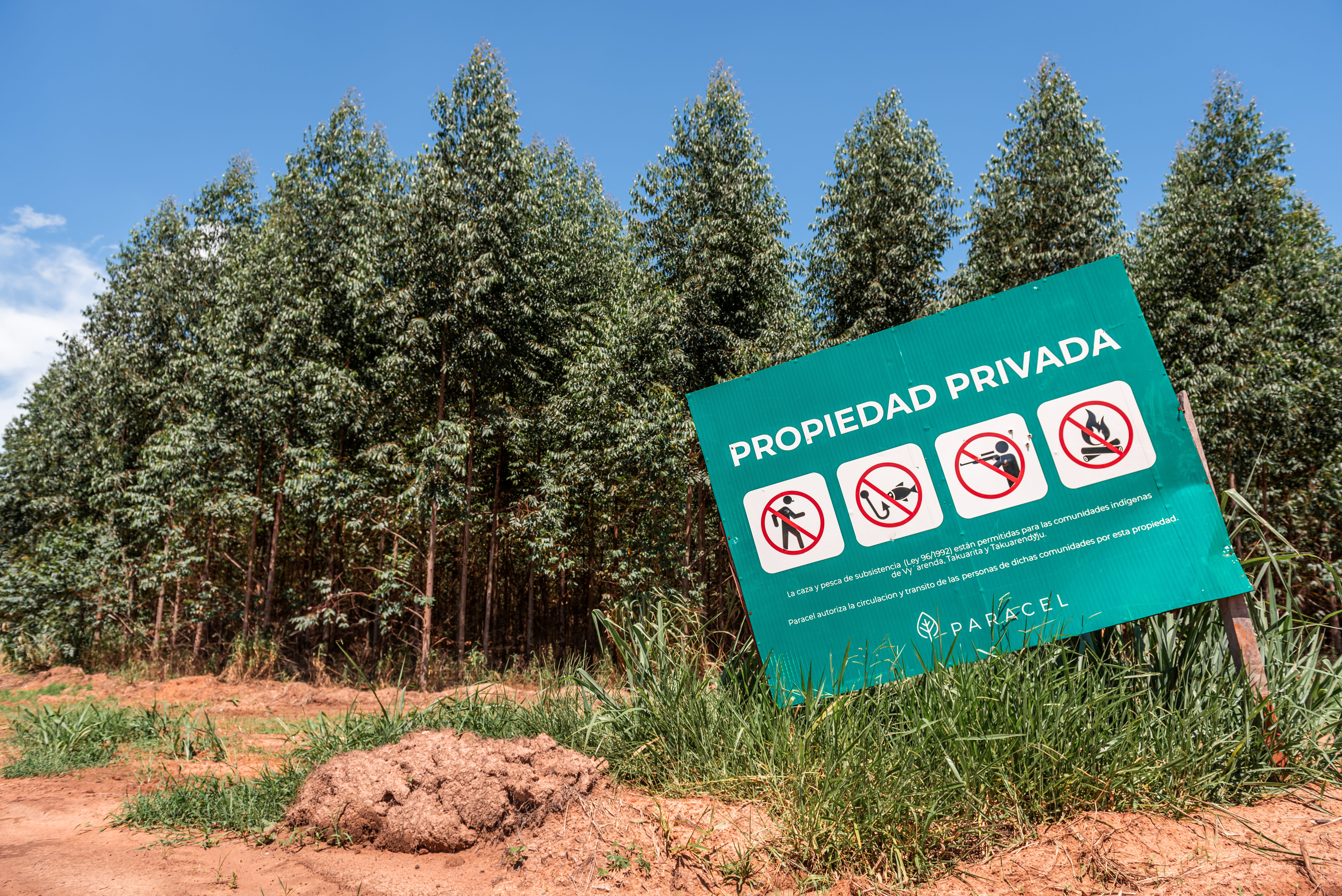
Paracel also warned against drinking from the nearby pond, Garcete recalls: it would now be further contaminated by the “poison” used in its forestry plantations, which begin less than 200 metres from their crops and homes.


Paracel – made up of Paraguayan conglomerate Grupo Zapag, Austrian pulp producer Heinzel Group, and Swedish forestry firm Girindus Investments – is slated to be the largest private project in Paraguay’s history.
The firm will reportedly invest nearly US$5bn in the developing South American nation and create 7,000 jobs, mainly in the northern department of Concepción.
Financed by the Inter-American Development Bank (IDB) and Paraguay’s government, Paracel says it is protecting existing ecosystems while “reforesting” former ranchland with 160 million eucalyptus trees, which it claims will fight global heating.
It is also building an industrial plant to process these non-native plantations – which already cover an area greater than New York City – into pulp. This material is essential for the global paper and packaging industry, predicted to be worth over $500bn by 2035.
“This is a project for the Paraguayan people,” said Santiago Peña, Paraguay’s president, attending the factory’s groundbreaking ceremony in May.
Peña was impeached and arrested last week amid a sprawling corruption scandal. Prosecutors accuse him of directing nearly $1bn in public funds to Ueno, a digital bank closely tied to his administration that spectacularly imploded last week.
Paracel is likely to still go ahead. But an investigation by the Guardian with local media organisations Consenso and The Paraguay Post has documented deep skepticism towards the project’s claims to be planting sustainable prosperity.
Residents of twelve communities near the pulp giant’s area of operations shared grave concerns about its impact on the environment, human health, and even the global climate.
Paracel “is a hidden monster that has quietly taken root,” said Benjamín Valiente, an award-winning human rights defender who works for the local Catholic diocese. “They’re murdering nature for profit.”
Official documents indicate Paracel’s plantations are being treated with sulfluramid, an insecticide which breaks down into PFOS: a “forever chemical” linked to cancer in humans.
Sulfluramid is banned in the EU, one of Paracel’s two main export markets along with China.
Paracel said it had had “no record” of staff saying bodies of water near Takuarita would be affected by its chemicals. In a 39-page response to questions, the company said it was closely monitoring possible ecological impacts – including through confidential complaint procedures – and highlighted its “significant contributions to economic, social and environmental development in the area.”
Carolina Juaneda and Marco Vermaasen of the Bank Information Center, a U.S. non-profit, said Paracel is one of several new South American megaprojects hinging on supposedly sustainable, carbon-capturing forests.
“They’re not forests: they’re industrial plants,” Vermaasen argued. “People are being sold a false model of development that offers nothing apart from contamination.”
Advance of the clones
Many locals worry about the impact of Paracel’s plantations on a drought-stricken area – and the chemicals used on the expanding monoculture of cloned eucalyptus trees.
On a 39.8-degree Celsius day earlier this year, as the region broke extreme heat records, a group of peasant farmers or campesinos gathered in the town of Puentesiño.
Paracel’s plantations also lie on their doorstep. And they accuse the company of squatting on land earmarked for the poor fifty years ago by presidential decree.
In March 2024, their organisation occupied part of a property disputed with Paracel and planted corn and cassava. At night, they say, the company fumigated the area with drones.
Eusebio Ramón González says he suffered headaches, vomiting, and diarrhoea as a result. “I used herbal remedies,” adds González, 66, who has no health insurance.
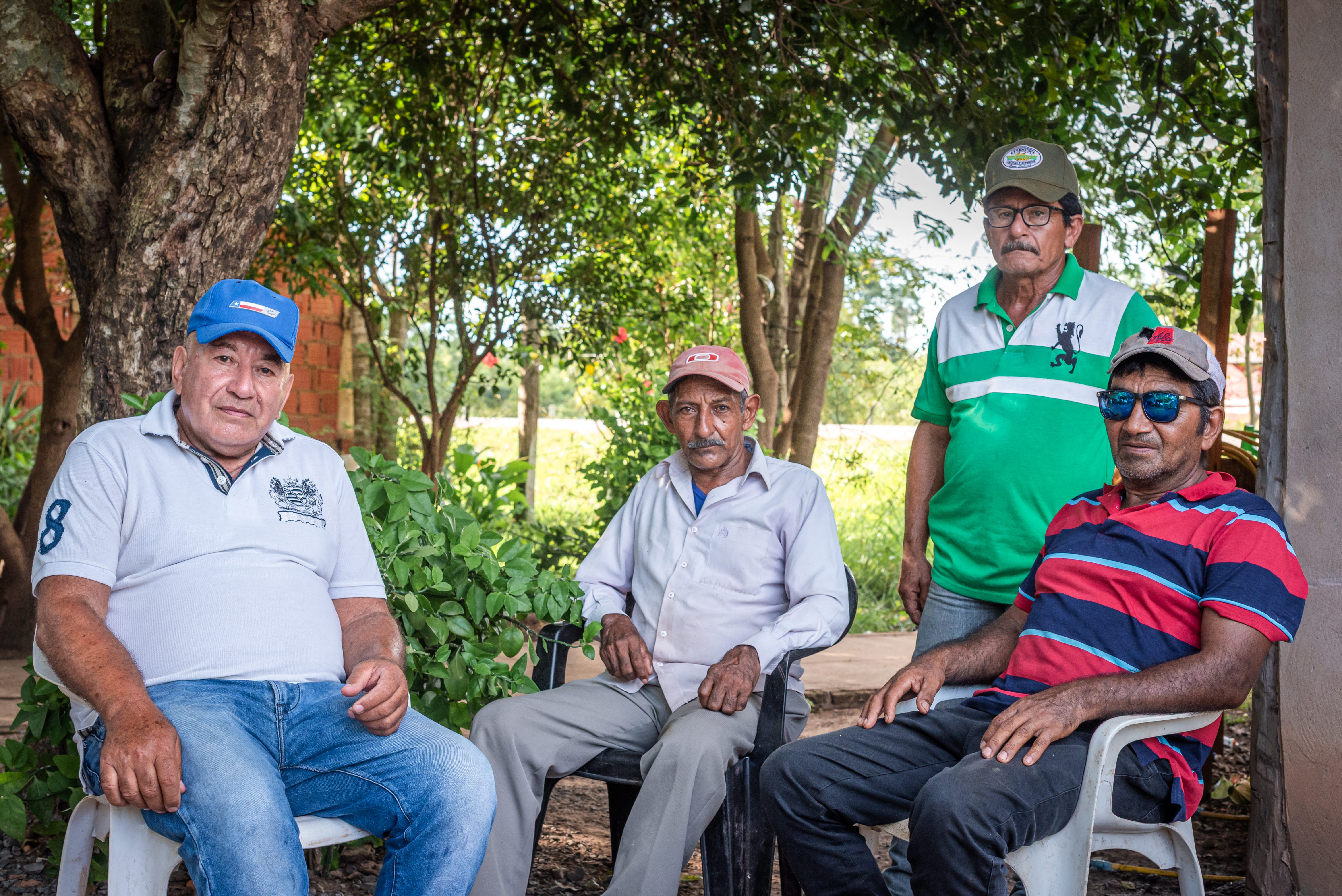
They held talks with Paracel. Then, in September 2025, they were evicted by police, leaving several still visibly shaken.
“We left crying like children,” said Bernardino Galeano, 67, the leader of the group, who is facing criminal charges.
Paracel’s agrochemicals have made other residents of Puentesiño sick, said Margarita Centurión de González, 61. “I used to have chickens, pigs and orange trees,” she added. “They don’t survive, because of the poison.”
Paracel said a government demarcation had confirmed its property title, and it had only conducted ground-based spraying during the occupation. It said claims of harm from its chemicals would need to be reported and verified on a case-by-case basis.
The campesinos said Paracel’s plantations had also caused streams and wells to dry out. According to Paraguay’s environment ministry, Paracel’s area of operations — along with most of the country — is facing a “critical situation” in terms of water resources.
“It’s not just us humans that are suffering, but the animals too,” Galeano added. “What will they do without water?”


Such fears were echoed in the next-door region of Amambay.
At a meeting of four Indigenous Paĩ Tavyterã villages, some described how the spread of soybean farms and eucalyptus plantations in the area seems to have caused surviving patches of native forest to sicken.
”By destroying the forest, they destroy the animals we eat, our medicines, our water, the fish,” said local resident Roque González. “Our children today will have nothing to eat tomorrow.”
Local leader Silvino Mendoza says Paracel held four consultations with his community, Cerro Akangué.
“We could clearly see that it wouldn’t benefit us,” says Mendoza. “We want to look after our forests, our water, and what is above and below the soil.”
“We said no, no, and no,” said Ana Valiente, also from Cerro Akangué. “But non-Indigenous people are pushy. They don’t stop insisting.”
According to participants, Paracel indicated the project would go ahead regardless: and the meetings were only to determine if they wanted solar panels, wells, and jobs.
A 2022 report by the Bank Information Center and five other NGOs said Paracel had not translated key documents into Spanish or the native language Guaraní, misled communities into consenting, and failed to record those that objected.
Paracel “categorically” denied these claims and said it has held 52 meetings in the area in Guaraní accompanied by INDI, the government agency for Indigenous peoples.
It said that the year after Cerro Akangué declined to participate, the company received an environmental licence to begin planting eucalyptus on a property 40km by road from the community.


Paracel’s plantations lie downstream of local watercourses, residents said, meaning they will still be affected by the project.
“What sense does it make,” asks Mendoza, “to consult us once the government has already given them permission?”
A model factory?
Paracel says its industrial plant is being built to “the highest global sustainability standards” and creating stable jobs.
But a few miles away, several locals weren’t convinced.
They said construction workers were prohibited from bringing mobile phones or food on-site, had suffered mass poisoning from meals provided, were made to work overtime, and were fired if they spoke up.
“It’s gig work,” said Pedro Calonga, a 54-year-old farmer, “not long-term employment.”
Paracel said its Code of Ethics prohibits compulsory and unpaid overtime, and that nobody had been dismissed over complaints. It said cell phones are banned in certain areas and outside food is prohibited for safety reasons. It said a contracted firm to blame for the food poisoning incident has since been replaced. The company said it currently employs 1,013 workers, all of whom are registered with the social security system.
Some locals also claimed swathes of native trees had been cut down to make way for Paracel’s factory and plantations.
Documents obtained by this investigation show an official enquiry found 252 hectares of forest cover – equivalent to 350 football pitches – were lost between 2004 and 2021 at a property called Rancho Z, which Paracel bought in 2020. A further 259 hectares were affected by fires in 2021. Paracel had the case dismissed, but was ordered to take restorative measures.
Paracel denied carrying out illegal deforestation on any of its land. It said the forest loss at Rancho Z had taken place before it purchased the property. Satellite images show eucalyptus plantations on the former ranch a year before Paracel acquired it.
Margarita Amaral, a retired teacher, said she once sought to persuade her neighbours to support Paracel. Today, she uses a Paracel-branded planner to coordinate protests against the project.
“I woke up,” explains Amaral, 64. “Those eucalyptus plantations will last five, six years. And what will be left? Sand, sun, and earth. Paraguay will end up like the Sahara Desert before long if this continues.”
According to public statements by the company, Paracel’s plantations will be harvested and replanted on a seven-year cycle.


Paracel’s factory falls within one of Paraguay’s newest and smallest districts. Created in 2020, Paso Horqueta has 11,000 inhabitants and 25 civil servants, mainly secretaries and road workers.
“We started with nothing,” says mayor Cynthia Cabañas. “We do what we can.”
The town hall is a silent, single-storey building, with no environmental officer and no working taps. Locals drink orange, silty water from a river downstream of Paracel’s plantations.
Paracel pays no taxes locally, Cabañas adds: the industrial plant sits in a free trade zone. But the company has refurbished a local beach, and left a suggestion box in the town hall.
“We’re hoping to get something back through corporate social responsibility,” the mayor adds.
Guillermo Achucarro, a researcher with Paraguayan think-tank BASE-IS, said Paracel had come to “replace the state in the poorest areas.”
The firm has brought vaccination clinics and Red Cross medics to rural populations and helped Indigenous communities get ID cards.
“It’s become a kind of enclave economy,” Achucarro added. “It’s like everything revolves around Paracel’s needs.”
Paracel said it pays construction and property tax in other districts, as well as contributing $3.6m to the national treasury in VAT and corporate income tax in 2025.
The company added that it had invested $1.4bn in Paraguay as of December 2025 and spent over $7m on social programmes between 2023 and 2025, benefiting 22,000 people in the latter year alone.


At the time of asking, Paracel said it was unable to receive visitors to the site of its future pulp mill.
But drone images taken from a boat on the far side of the Paraguay River showed a roughly 300-hectare area had been cleared of vegetation.
Paraguay’s first pulp factory will use the bleached kraft pulp process and avoid elemental chlorine, instead using chlorine dioxide.
Treated wastewater will be discharged via an underwater pipe in the Paraguay River, two kilometres away. Paracel says it will monitor for chemical spills.
But experts say even state-of-the-art pulp mills can release contaminants when treatment plants fail or monitoring is weak.
In Uruguay, where similar factories have operated since 2007, pulp companies have “systematically” violated environmental laws, says Daniel Pena Vergara, a researcher at the Universidad de la República in Montevideo.
In August 2023, roughly one million litres of caustic soda leaked from the country’s Paso de los Toros plant – owned by Finnish paper producer UPM – contaminating a nearby stream and killing large numbers of fish. The episode led to a $188,000 fine from Uruguay’s Ministry of Environment.
In March 2025, a tonne of sulphuric acid was released at an older UPM mill, resulting in a $40,000 penalty.
“The forestry industry has generated serious environmental, economic and social problems over the past forty years,” Vergara adds, describing chemical spillages, factory emissions, and the use of prohibited pesticides. “The jobs that were promised never materialised.”
After financing delays, Paracel’s factory is due to begin operations in 2028. Video: Matteo Fabi
A contested territory
The regional capital, also called Concepción, lies 20km downriver from Paracel’s factory and downstream from the bulk of its plantations.
From a beach near the city centre, Paraguay’s state sanitation company Essap pumps water for treatment and distribution to 30,000 households.
“We drink that water,” said Crispín Díaz, 57, the president of a fishermen’s association. “With the poisons they’re using for the eucalyptus plantations, even young people and kids will get cancer. Even the fish will suffer.”
He fears planned dredging for Paracel’s river port and other commercial shipping will further drive down fish populations. His collective has threatened to blockade the river in protest.
“The public doesn’t know the reality,” argues Díaz. “Within five years, we’ll see the real cost.”


Concepción has long been “contested territory”, said Valiente, the Catholic community organiser.
A local uprising in 1947 was crushed by the conservative Colorado Party, which still governs Paraguay.
Starting in 2008, a shadowy armed group called the Paraguayan People’s Army (EPP) has extorted local businesses. Most of its leaders have since been captured or killed.
Today, Valiente likens the local population to “a tame ox” in the face of Paracel’s “ecological crimes”.
“We need to address this from the pulpit,” he argued, citing Pope Francis. “If we let our common home perish, we’ll be next.”
According to a recent annual report, between 2023 and 2025 Paracel used 703 tonnes and 118,000 litres of solid and liquid herbicide, insecticide, fungicide, and surfactants and spray oils – typically petroleum-based substances that help agrochemicals penetrate leaves. It also applied nearly 43,000 tonnes of fertiliser.
Glyphosate, a plant-killer used in Paracel’s plantations, has been described as a “probable human carcinogen” by the World Health Organisation.
Sulfluramid – which the company uses to kill leaf-cutter ants – typically degrades into PFOS, recently classified by the US Environmental Protection Agency (EPA) as likely to cause cancer. The EPA says there is no safe level of PFOS in drinking water.
Chemicals used by agribusiness have been linked to paralysis and genetic damage among Paraguayan children. The UN has sanctioned Paraguay for several related deaths.
Paracel acknowledged that sulfluramid can degrade into PFOS, and that glyphosate, imidacloprid, and fipronil – herbicides and insecticides also used by the company – come with “known dangers”. But it said the risk depended on concentration and the application method, and that workers were trained to use chemicals “responsibly.”
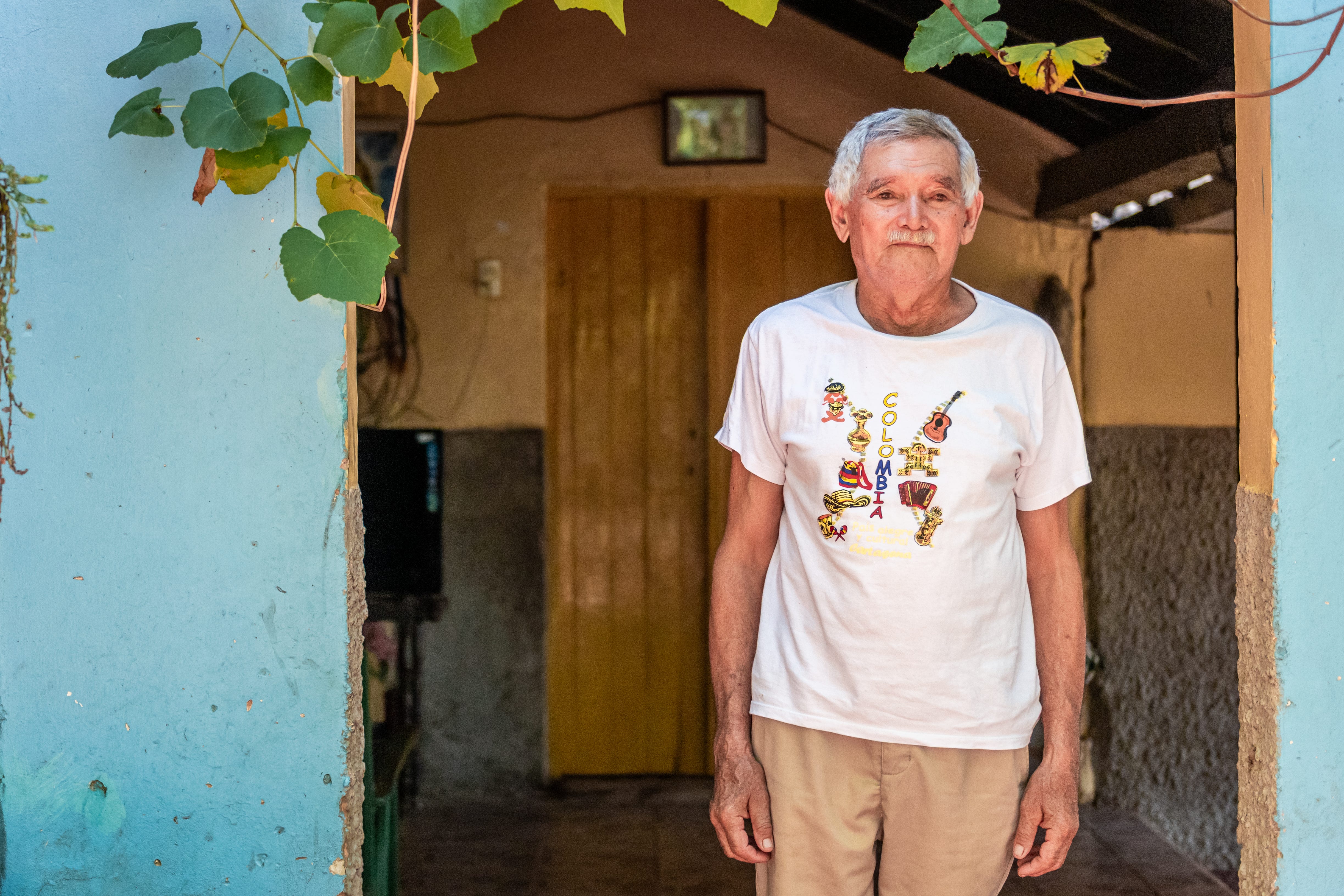
Liza Rodríguez, Concepción’s agriculture secretary, said the national environment ministry was closely monitoring Paracel’s use of pesticides. She called fears of contamination “hearsay,” and said “no studies” had proved eucalyptus plantations cause drought.
“Paracel is having a positive impact,” she added, “in terms of work, the economy, and people’s income.”
Ana Urbieta, the president of Concepción’s business chamber, agrees that Paracel is bringing “dynamism” to the city.
Hotels are adding rooms and traditional horse-drawn carts now share the cobbled streets with the company’s trucks.
“Paracel is a project of national importance,” Urbieta adds. “It’s going to diversify our country’s export matrix beyond soy and beef.”
When Governor Liz Meza took office in 2023, she says, Concepción was “abandoned” and “at war”.
Certain communities “welcomed you with gunshots,” the former doctor recalls.
But Meza says the authorities have since worked “hand-in-hand” with Paracel to “change the fate” of the department, including by paving roads, building a new general hospital, and unveiling a cancer clinic.
“Every project has its pros and cons,” she said. “Our job is to get ahead of the downsides.”
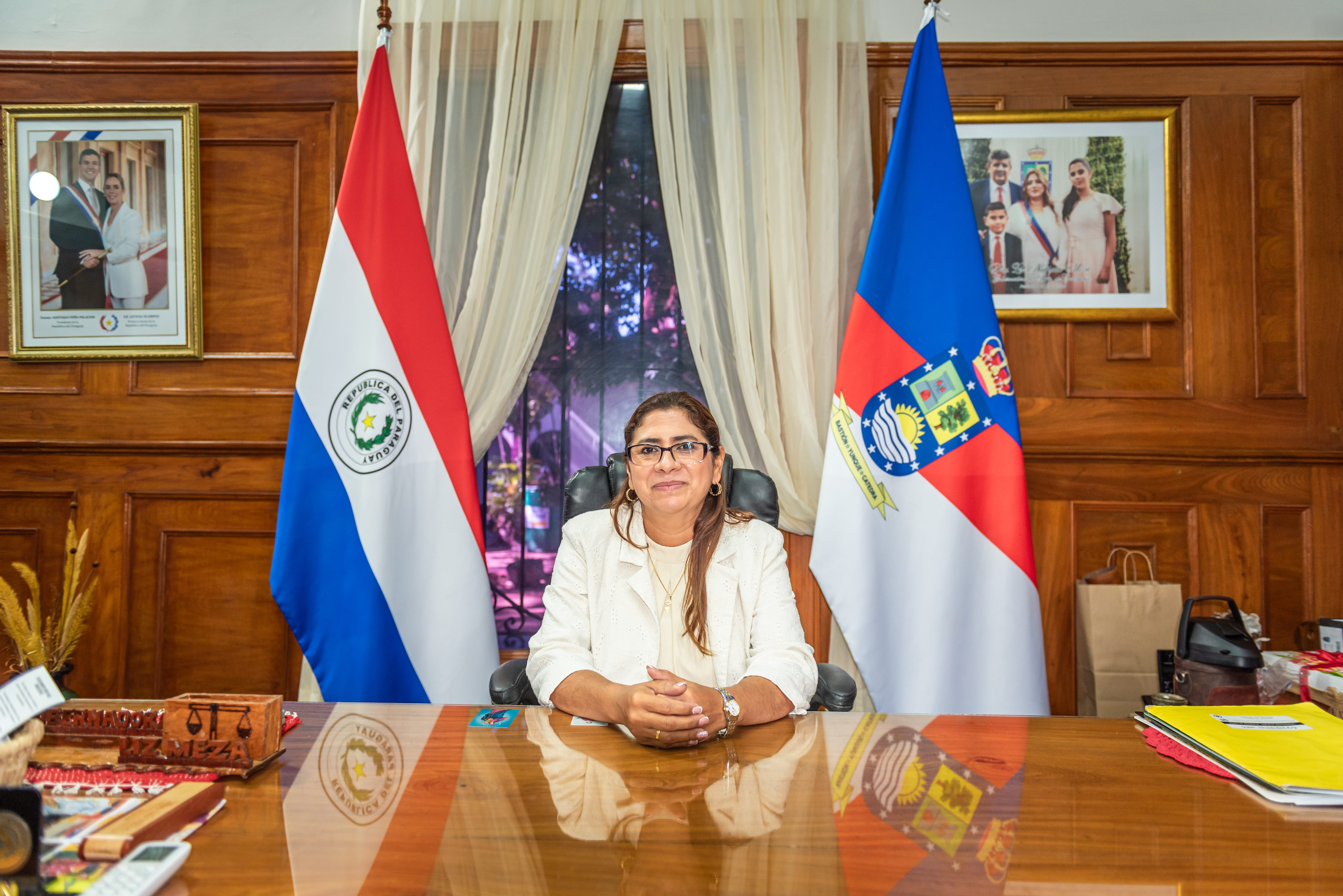
Paracel, Meza argues, represents a “once-in-a-lifetime opportunity” for a region where “a small handful” exploit its resources while a quarter of people remain poor.
In February, the governor herself sparked national outrage after spending $100,000 on her daughter’s fifteenth birthday party. Meza called the scandal a “political persecution.”
Paracel said it monitors water quality near its factory, its plantations, and Concepción, and shares results with the authorities and civil society. It said it had not detected its agrochemicals in ground or surface water to date.
The company said its agrochemicals are sprayed no closer than 100 metres from streams, communities, and native forests, observing restrictions during high winds and temperatures. It said it applies pesticides and herbicides only when necessary in low amounts, in compliance with Forest Stewardship Council (FSC) standards and manufacturers’ instructions.
Paracel said drought in the area is mainly due to lack of rainfall and climatic factors, and that its plantations only reduce water levels by up to 2.3%, according to the company’s modelling. It cautioned against “generalisations” about water consumption by eucalyptus.
It acknowledged that concerns over potential impacts were “legitimate” and said it was “constantly strengthening” channels for dialogue. “After six years working on the ground,” the statement added, “We have witnessed concrete transformations in the lives of hundreds of people.”
Green gold or pulp fiction?
Multiple European pulp producers besides Paracel are looking to Paraguay, where labour is cheaper, trees grow faster – and environmental laws are weaker.
One UN expert has slammed the “flagrant double standards” of the US and Europe in exporting “highly dangerous” agrochemicals prohibited at home to emerging economies like Paraguay.
In 2022, the latest year for which data are available, 94% of all trees planted for forestry in Paraguay were eucalyptus.
“The idea is to turn Paraguay into this whole pulping landscape,” said Jamie Gagliano, a doctoral candidate in geography at Rutgers University who studies the sector. “But that’s only if this industry doesn’t collapse.”
Despite close links to the lawmakers who drafted Paraguay’s carbon-market legislation, Paracel has struggled to secure international certification to sell carbon credits.
In 2023, Verra, the world’s leading carbon-credit certifier, rejected Paracel’s carbon certification over doubts about additionality, with the company having claimed it needed carbon revenue despite securing a US$200m loan from the IDB.
Earlier this year, Paracel managed to reverse Verra’s decision without having responded to the original concerns.
Instead, it stated that without the money from the carbon markets, the remaining forest areas in the region would be converted into land for livestock and soybean farming.
In 2020, the company’s own environmental review projected that emissions from harvesting and pulping its trees would make the project a net producer of greenhouse gases.
According to the document, Paracel’s gross annual emissions will be over 400,000 tonnes of carbon-dioxide equivalent: similar in impact to 93,000 petrol vehicles.
Paracel said the 2020 figures were outdated, and that it was still calculating the pulp mill’s long-term net emissions. In September, the company announced that Verra had approved its first batch of carbon credits, covering nearly 24,000 hectares of its plantations.
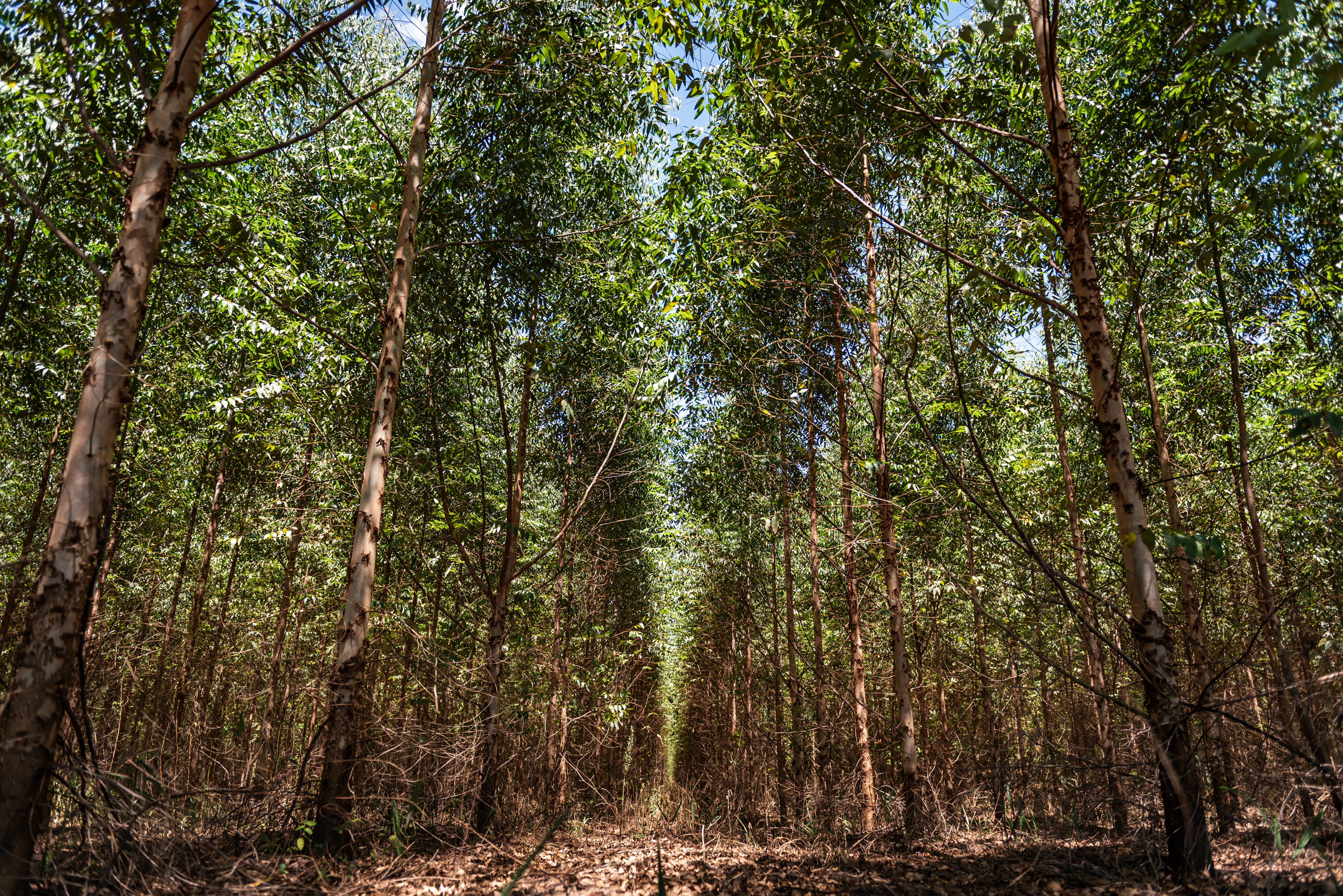
And beyond a growing body of evidence linking eucalyptus plantations to soil degradation, water scarcity, and forest fires, the business case for such multi-decade projects is uncertain.
International demand for paper and cardboard – which are often marketed as a renewable alternative to plastic packaging – “is not growing at the rates that everyone is saying it will,” Gagliano adds. In 2025, European paper demand and production fell.
Some worry that the promised green gold rush will divert attention from Paraguay’s fast-vanishing native ecosystems.
The native Paĩ Tavyterã community of Ita Guasu sits amid one of Paraguay’s last fragments of Atlantic Forest, hard-pressed on all sides by soybean and cattle.
Luis Arce sits in a clearing sipping tereré – a cold infusion of the ancestral yerba mate plant – with his sister, Silvia, and her daughter, Sandra.
The community leader, 70, describes how their traditional way of life is tightly bound up with nature and the spirits that inhabit it. All three, he says, are in crisis.
“The forest is now disappearing,” Arce explains, as a turquoise butterfly settles on his knuckles. “Without it, the planet itself is growing weak.”


Arce says individuals claiming to work for INDI, the Indigenous ministry, pressured the Paĩ Tavyterã to allow Paracel to plant eucalyptus nearby. But they stood firm.
They have nothing against the plant, introduced to Paraguay a century ago. Silvia, a healer, sometimes infuses the leaves in hot water to treat colds.
But wherever they plant even one or two eucalyptus trees, their wells dry out. “I like the plant,” says Sandra, “but it doesn’t feel natural.”
“It impoverishes the earth,” Silvia agrees.
In a statement, INDI denied telling Ita Guasu to support Paracel.
The family also worries the exotic species could invade their home. And shown photos of what Paracel calls its “eucalyptus forests”, they laugh in disbelief, pointing out the empty space between the thin, identical trunks.
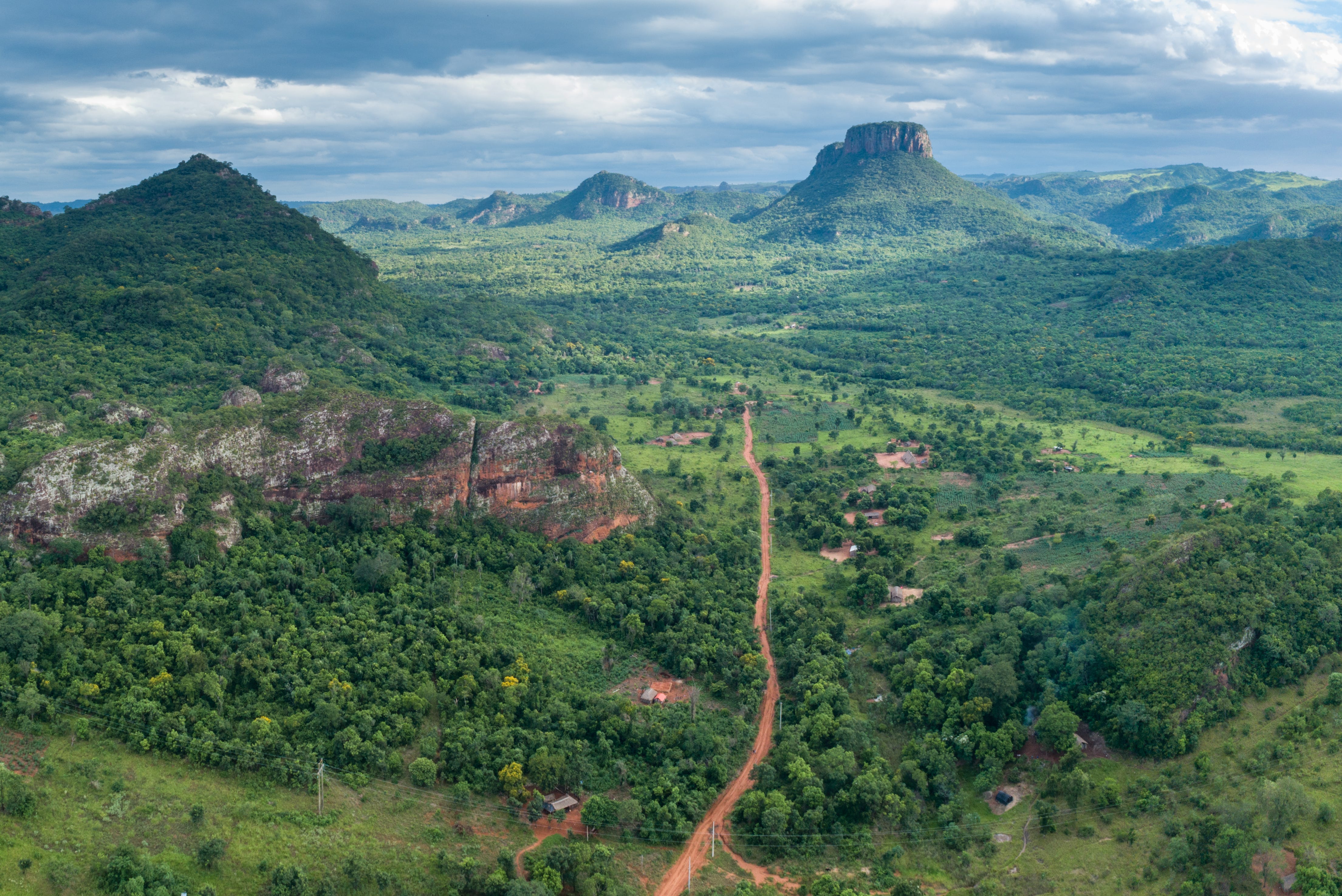
Arce gestures to the tall yvyra pytã trees, yellow-flowering lapachos, and spiky caraguatá shrubs that cloak the surrounding hills.
“This is a forest,” the Indigenous elder adds.
Additional reporting by Laila Bareiro and Sebastián Olazar.
This article was developed with the support of Journalismfund Europe.

Before you go: We’ve made this investigation free to read because we think it’s in the public interest. But it wasn’t free to make: we spent days reporting and travelling over hundreds of miles, and months researching, writing, editing, and fact-checking this story.
Grants, though important, only cover a fraction of our costs. We don’t have government or corporate sponsors either, meaning we can publish without fear or favour.
If you value this work, please consider subscribing — you’ll unlock everything we publish and receive exclusive benefits: