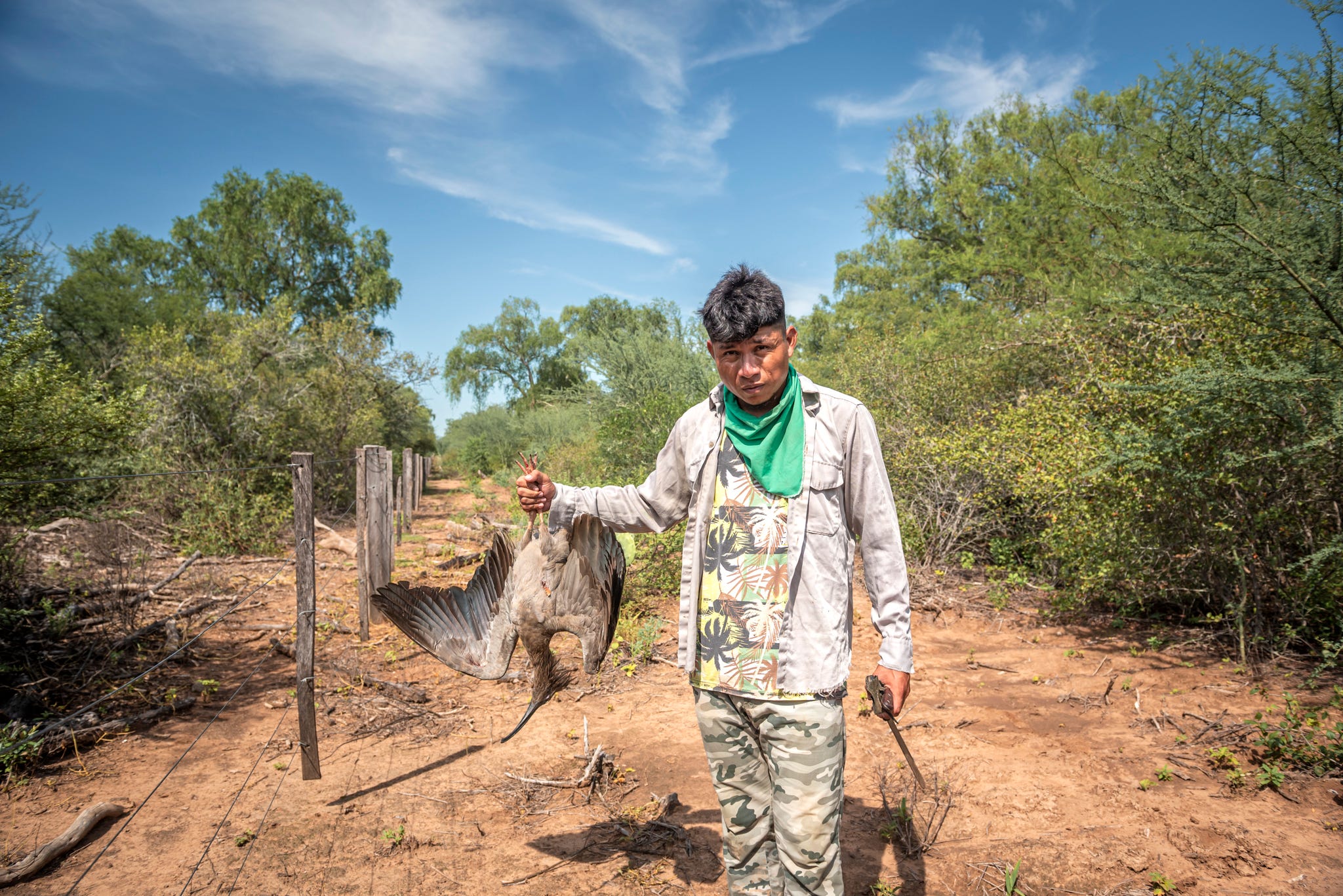
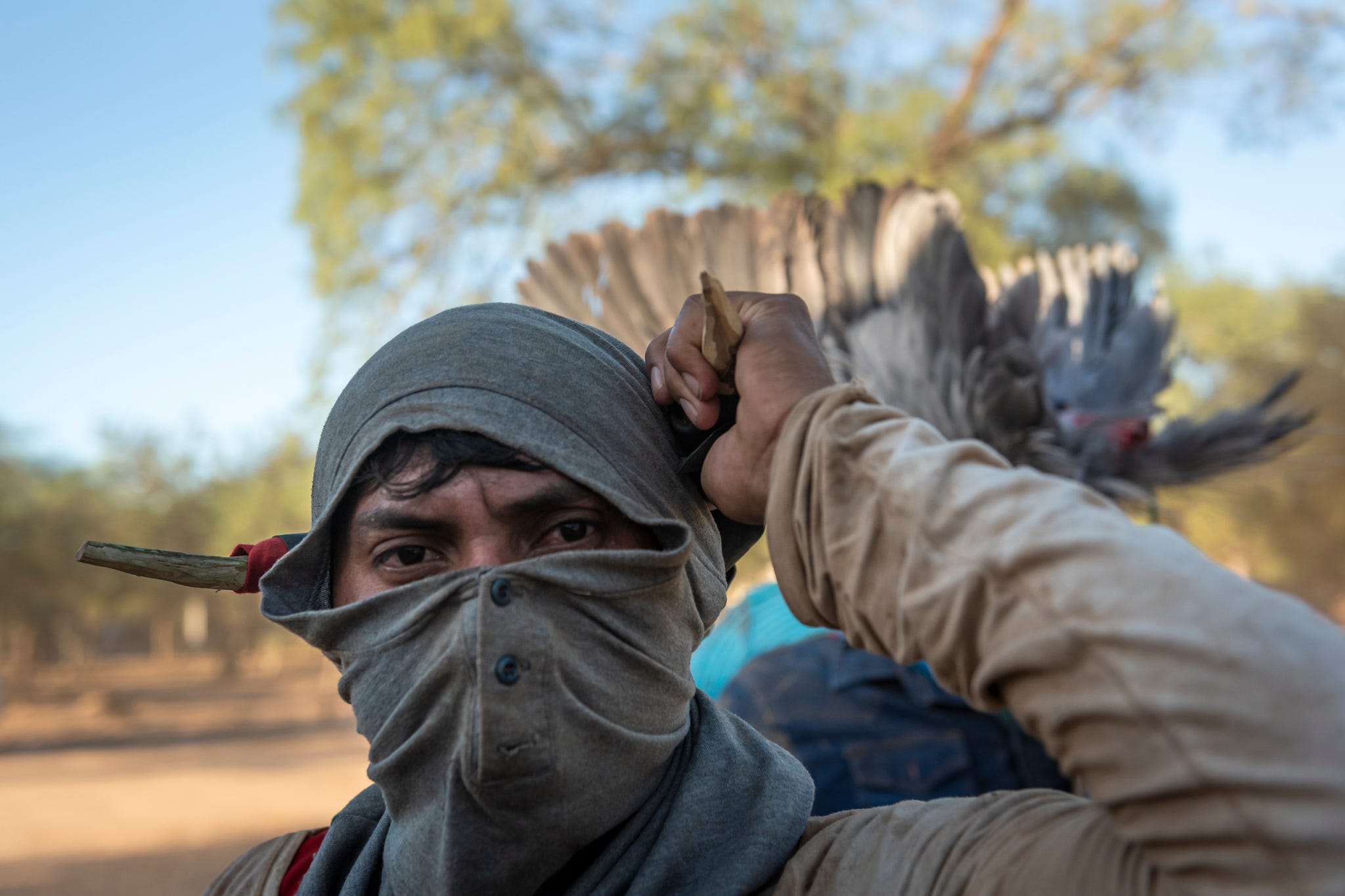
Ángel Soria holds up a bandurria mora (blue ibis), whose plumage he will fashion into a mask. View this story on our web page for full-size photos. All photography: Matteo Fabi
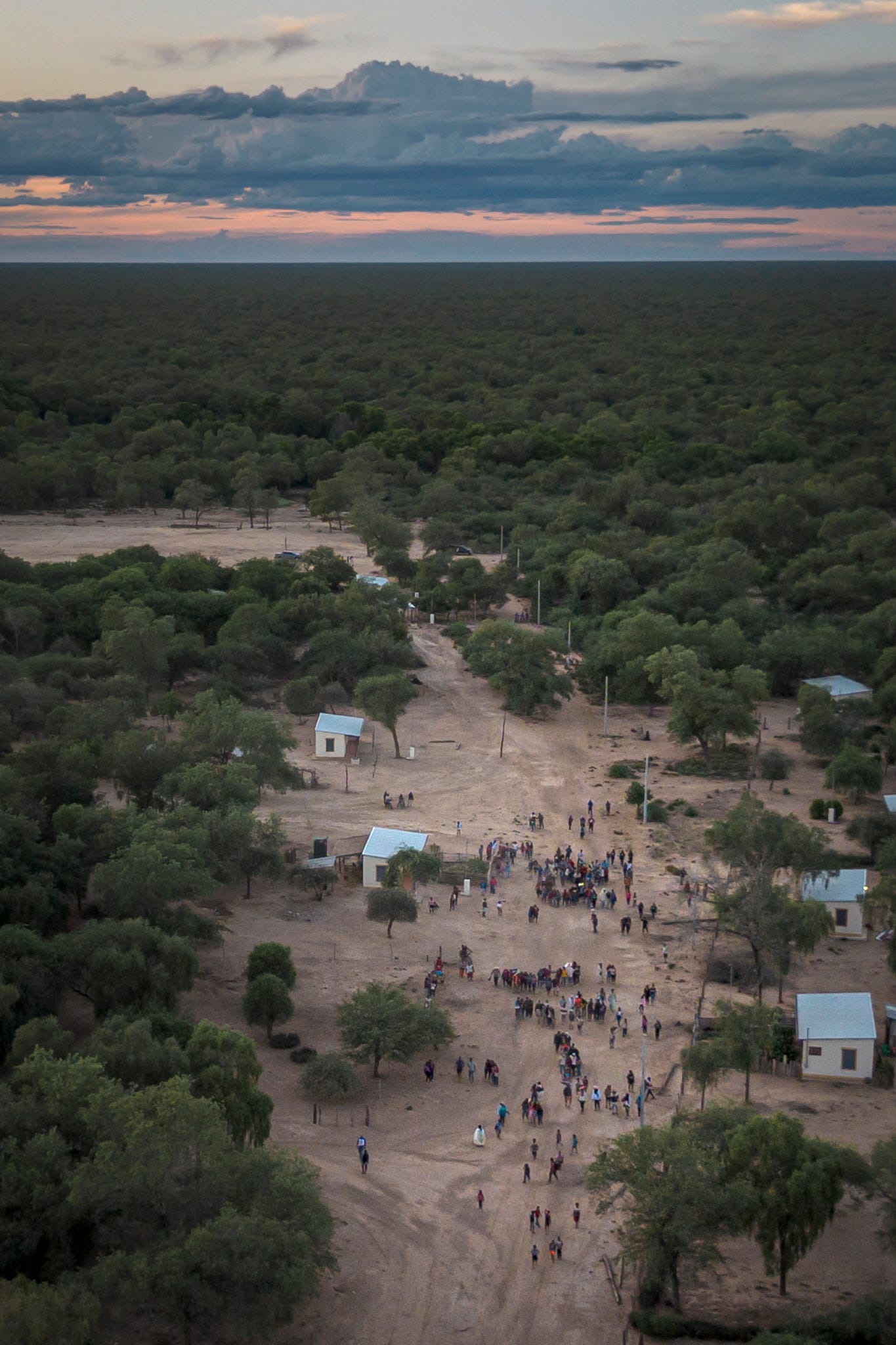
Ángel Soria and Óscar Durán trace their roots back to Bolivia. Their Guaraní forebears, historically known as the Chiriguanos or Guarayos, migrated southeast along the Pilcomayo River before settling in San Agustín, an Indigenous community in the Paraguayan Chaco close by the Argentine border. Their heritage endures through the Arete Guasu (“the great day”), originally a harvest festival later intertwined with Carnival by Catholic missionaries.
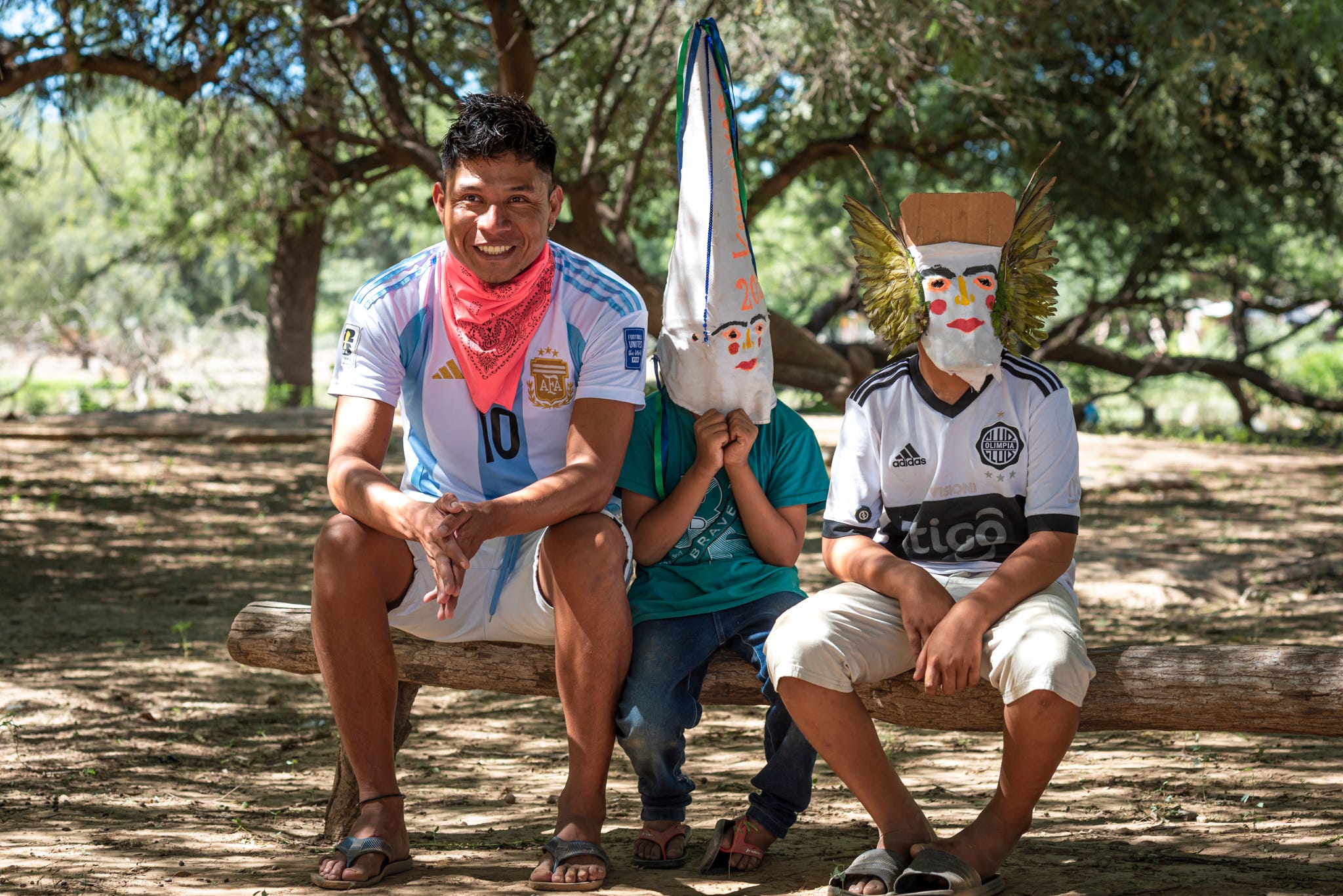
Central to the Kandavare, as the community also calls it, is the ritual act of reviving their ancestors through elaborate, otherworldly costumes. Ángel and Óscar are leaders among the young men preserving this practice, donning Agüero-güero masks — beaten iron plates adorned with colourful fabrics and feathers — to embody ancestral spirits during the celebration, which lasts for four days prior to Lent.
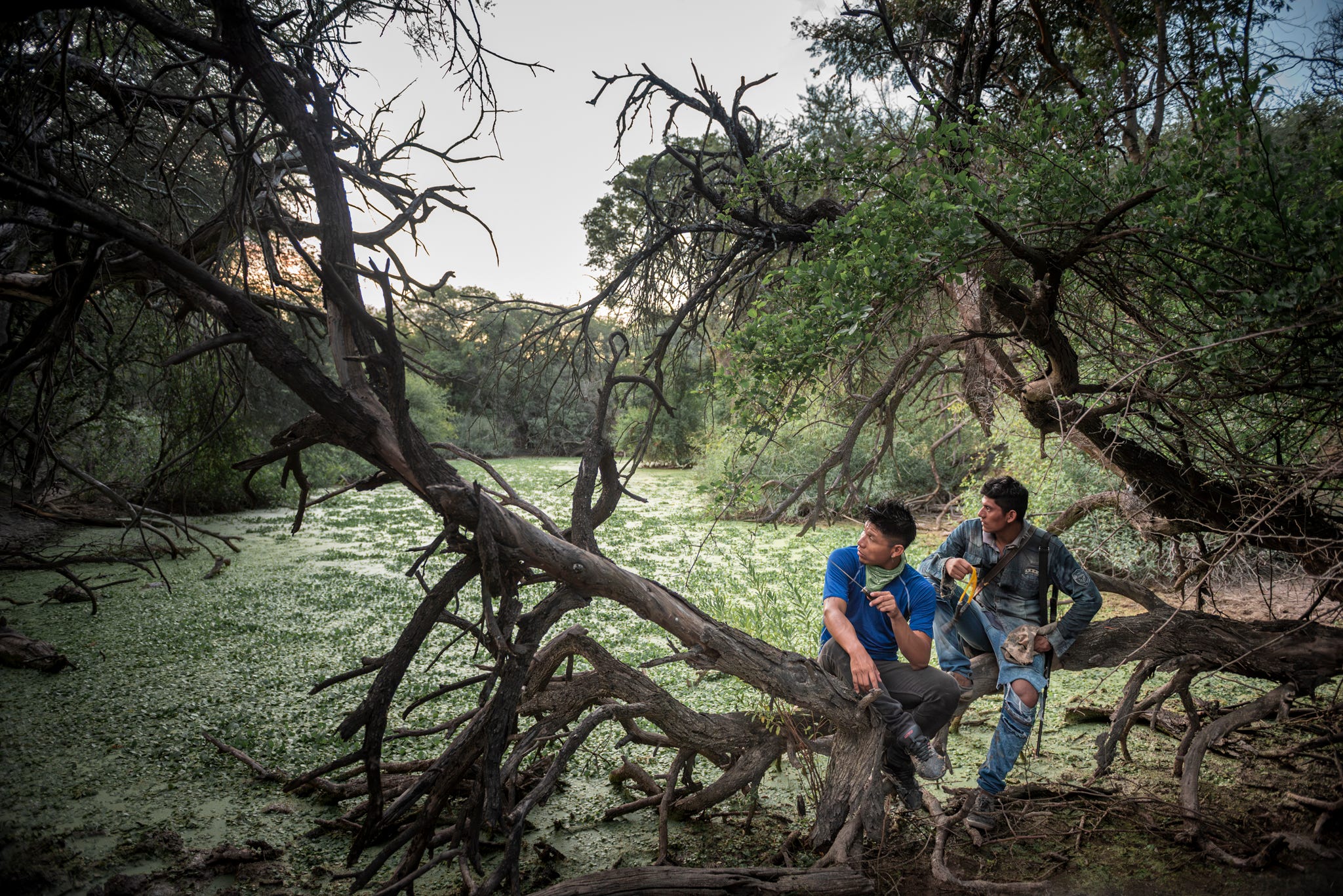
Two weeks before the festivities, the pair set out in search of the birds whose wings will adorn the masks. Óscar, one of the community’s finest hunters, gathers feathers for participants’ costumes, and will also inhabit the roles of different deities in the ceremony. Ángel, meanwhile, guides the younger generation, passing down the deep-rooted traditions of the Areté Guazú.
Together, the cousins forge a slender but vital bridge between their people's past and an ever-changing future.
Ángel Soria and Óscar Durán are cousins who live in a Guarani community near the Pilcomayo River, some 700km from Asunción.
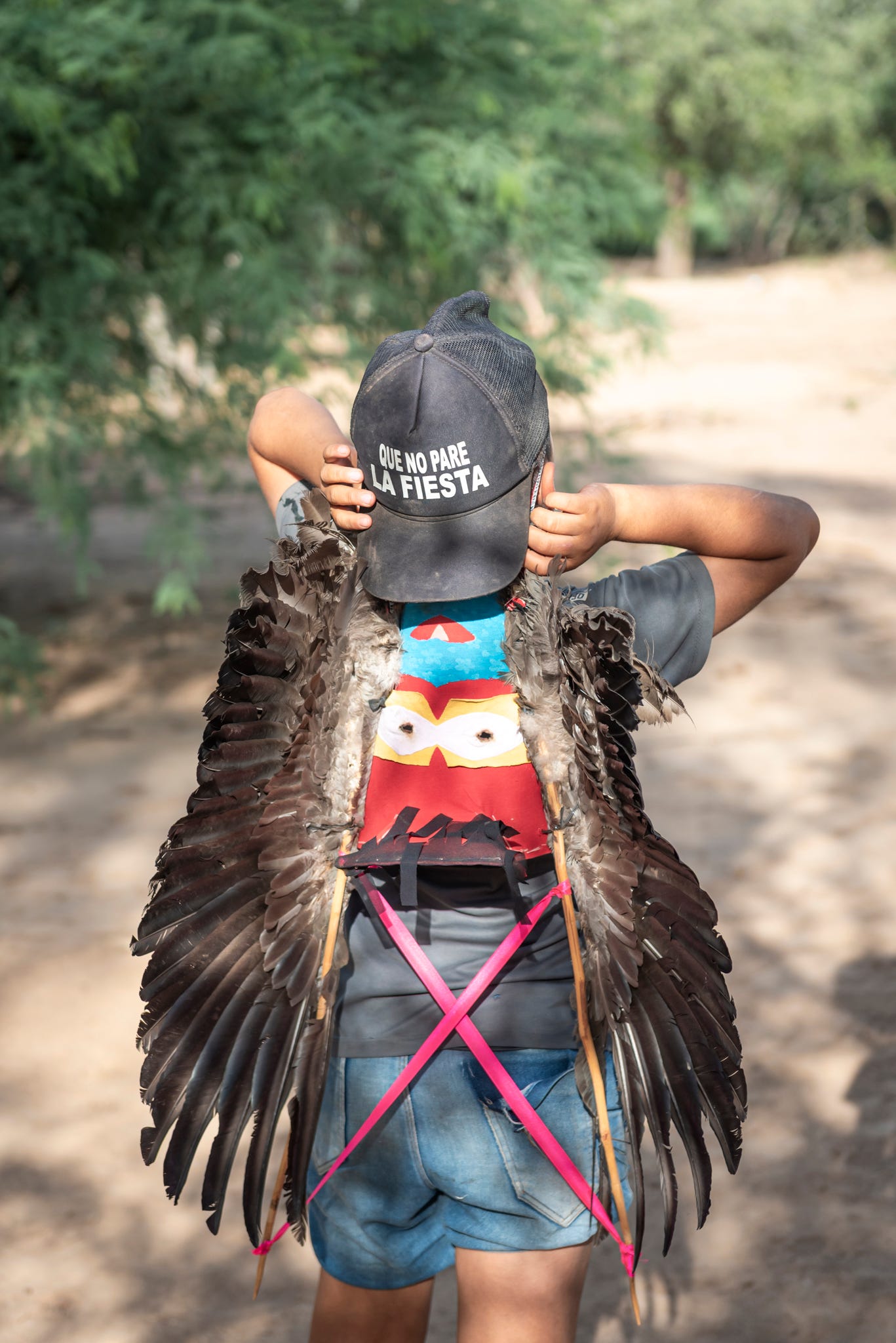
Clockwise from top left: Óscar takes aim at a blue ibis / Ángel and Óscar shape the wings before the bird's body becomes cold / Romauldo Soria, Ángel's nephew, gets his own bird to practice mask-making / The cousins make final adjustments to their Agüero-güero masks.
Romualdo wears his mask for the Arete Guasu with pride.
Subscribe and never miss a photo essay:
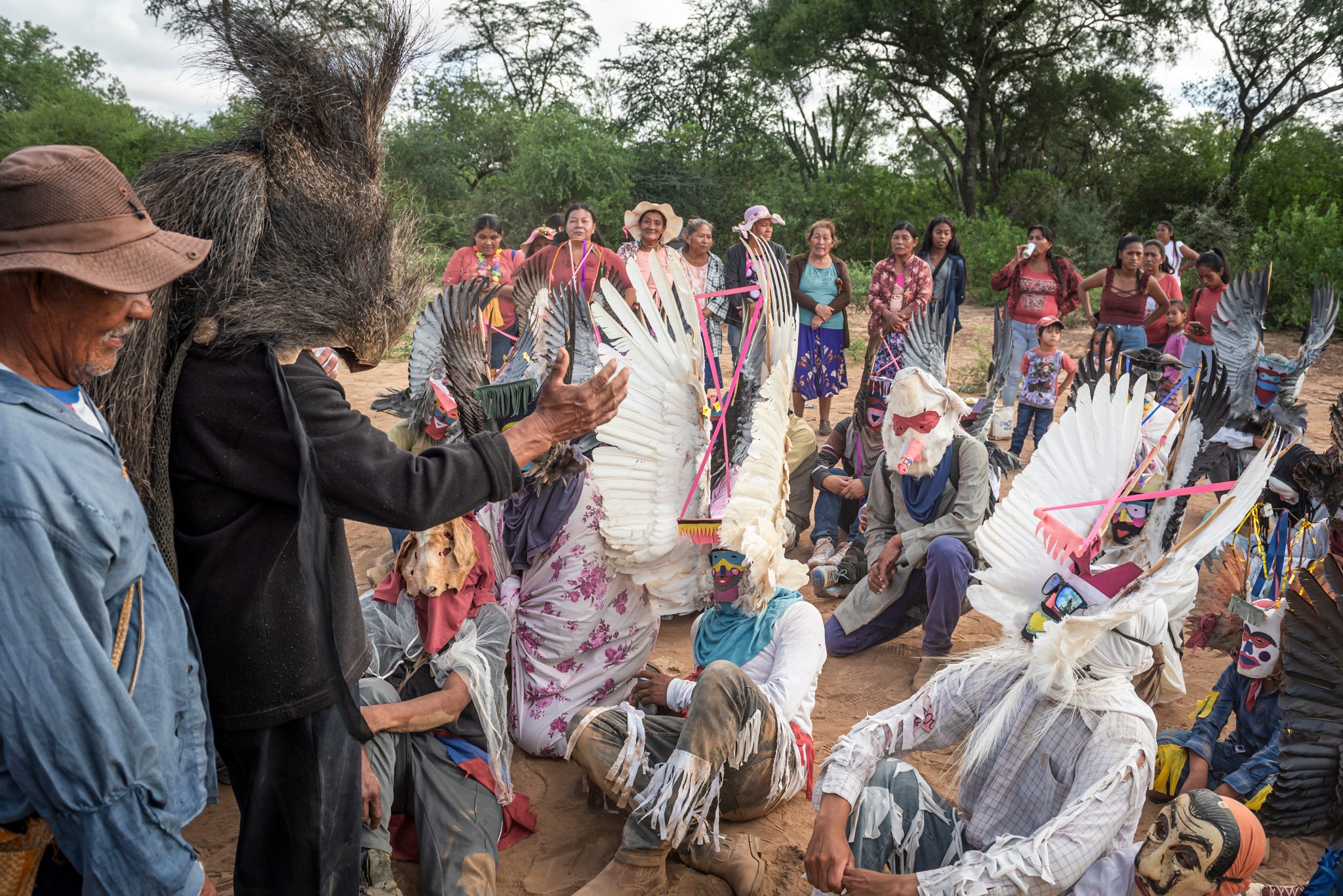
Ángel and Óscar (front right) listen attentively to the ringleader of the Agüero-güero, who wears a mask fashioned from anteater hide.
The Arete Guasu, four days of music, dance and traditional rituals, is officially underway / Óscar inhabits the role of the kuchi-kuchi, a pig smothered in mud that represents tortured souls who seek to pollute others with negative emotions.
Ángel chats to younger community members about the meaning behind the masks.
Óscar plays the jagua-jagua, a jaguar that represents the spirit of the forest fighting for its survival / The Agüero-güero (Ángel) and jagua-jagua (Óscar) are locked in a symbolic struggle between the spirit world and the elemental.
Óscar dons the horns of the toro-toro, which represents the European colonisers.
Ángel is embraced by the women: both as an ancestral spirit, and a brave member of the community / The Agüero-güero masks are returned to the earth, symbolising the ancestors' return to the underworld.
At dusk on the fourth day of festivities, a procession through the community marks the end of this year’s Arete Guasu.
Matteo Fabi (Italy, 1987) is a photographer and writer. After training in London, various projects took him to Asia, Oceania and South America. A member of photography collective El Ojo Salvaje, he lives in Paraguay and regularly works with local NGOs.