


TOP STORY
Paraguay sidelines Bitcoin — and announces “the world’s largest” AI hub
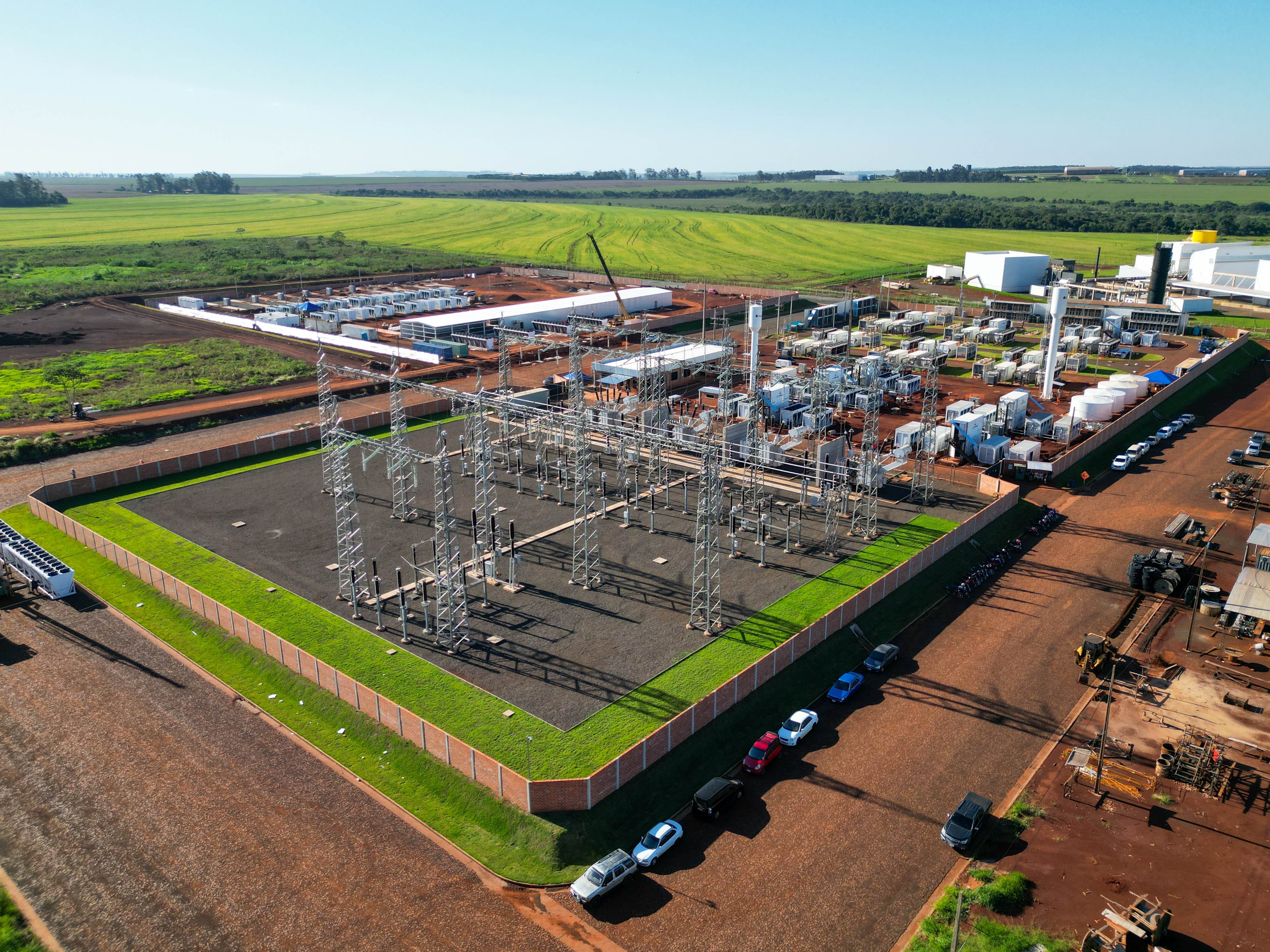
Paraguay is now the fourth-biggest Bitcoin mining jurisdiction in the world. So why are its largest crypto operations changing trades or packing up altogether?
According to a new survey of the local industry by Hashrate Index, Paraguay accounts for roughly 4.3% of global Bitcoin computing power: behind only the U.S., Russia, and China. It’s an incredible stat when you consider Paraguay’s comparatively tiny size.
The country’s attraction for miners is obvious: a 100% renewable electricity grid anchored by the Itaipú and Yacyretá dams, shared with Brazil and Argentina respectively. Paraguay’s half of Itaipú alone represents 7,000 MW of installed capacity — far more than the country has historically been able to consume, meaning power prices have long been among the region’s cheapest.
But the digital gold rush is entering a trickier, more expensive phase. In 2021-2, miners could reportedly secure electricity at an industrial rate of around $0.03/kWh. Medium-tension rates have since doubled, while Paraguay’s state electricity firm ANDE has imposed steep guarantee deposits: 40 MW operators have to set aside $4.5m before they can plug in. And the price of Bitcoin itself has also plunged in the past six months.
The result for Paraguay’s Bitcoin industry is not collapse but consolidation. ANDE expects crypto mining to bring in $350m in tariffs this year, up from $295m collected in 2025 and $100m in 2024. Yet the number of legal operators has nearly halved from 71 at the start of 2025 to 41 in 2026, largely reflecting tariff hikes squeezing out smaller projects.
The remaining 41 legal crypto clients now reserve 943.8 MW, equivalent to 13.5% of Paraguay’s share of Itaipú’s power. Four companies alone consume 730 MW: more than the output of one of the dam’s 20 turbines.
Crypto mining has become a major cash cow for ANDE, an underfunded state utility facing pressure to invest in the creaking national grid. But every current crypto contract expires on December 31, 2027: a deadline ANDE says is non-negotiable as it looks to recover power for domestic consumption and traditional industry, amid forecasts that Paraguay’s surplus electricity will soon run out.
Miners with deep local integration, high-tension infrastructure and close working relationships with ANDE are in a stronger position to negotiate fresh contracts. Operators relying on lower-voltage connections, thinner margins or looser Paraguayan ties are already diversifying or heading for the exit.
The split is visible among the sector’s big names. Penguin Group, which signed the country’s first 100 MW power purchase agreement, is now redirecting its Bitcoin mining facilities towards AI and high-performance computing. Alps — a European miner that invested around €40m to scale to 40 MW across 10 sites in Paraguay — is now reportedly looking elsewhere, including Bolivia and Venezuela.
The government is tightening the screws on the wider crypto ecosystem, too. Tax authority DNIT is now requiring taxpayers and non-registered individuals alike to declare crypto transactions that generate taxable gains. Officials say the goal is to detect evasion, apply Paraguay’s 10% income tax where relevant, and improve traceability. But Bitcoin enthusiasts say that easily-leaked public records could put them, their families, and their fortunes in danger.
Social and legal risks are also mounting. In Villarrica, the local representative of Canadian firm Bitfarms is currently facing trial: Paraguay’s first criminal proceeding tied to cryptocurrency mining. Prosecutors say the site operated some 16,000 machines around the clock in a residential neighbourhood, generating constant noise and causing mass insomnia.

For now, Paraguay remains a significant crypto-mining player. The cheap hydro, global hashrate, and money flowing to ANDE are all real. The state electricity firm is even exploring whether it can mine Bitcoin itself, using around 1,500 confiscated machines in conjunction with private partners.
But the easy-arbitrage era — plug in, get to mining, and court investors with tales of abundant, cheap and green energy — increasingly looks like yesterday’s story: not least because there’s a powerful new player on the block.
THE POST TAKE:
Bitcoin has long been sold as the little guy’s rebellion against centralised finance. But in Paraguay, mining is morphing into a game for operators with lawyers, cosy institutional relationships, and enough capital to absorb multimillion-dollar deposits, build private substations, and manage see-sawing regulations.
In other words: the libertarian dream has met the Paraguayan state.
From the government’s point of view, large industrial users are also easier to monitor and bill than hundreds of smaller farms — including those illegally tapping the grid. And it has given clear signs that it is moving on to the next big thing.
Paraguay’s president, Santiago Peña, has just signed a memorandum with Taiwan to build what he claims will be world’s largest AI data centre. Discussing what should happen when crypto contracts expire in 2027, national telecoms chief Gustavo Villate was blunt: “Unplug crypto and plug in AI.”
That pitch serves two purposes. It lets the government argue that Paraguay is moving up the value chain from the murky world of crypto mining to respectable-sounding “high-performance computing.” And it helps justify Paraguay’s increasingly lonely relationship with Taiwan as business groups, opposition figures, and even Colorado Party lawmakers ask hard questions about what Paraguay leaves on the table by shunning Beijing.
But AI data centers are not just shinier crypto farms. They need near-perfect uptime, serious cooling infrastructure, specialised talent, and a grid that can support them. Hashrate Index notes that Paraguay’s sweltering heat, bandwidth limitations, and infrastructure constraints — including regular blackouts — make the AI pivot a major technical challenge.
Local experts aren’t buying the hype. Luis Benítez, secretary of the Paraguayan AI Society, called Peña’s mega data-center plan “a delusion” designed to serve geopolitical interests.
The policy framework is also still shifting. The government has recently revised the rules for “convergent industries” — AI data centers, crypto mining, and green hydrogen — after complaints from the electricity workers’ union, Sitrande, that they were overly generous and would end up pushing up prices for residential users. The revised framework puts AI data centers on ANDE’s technical tariff, around $0.044/kWh, removes a 15-year price freeze, and imposes adjustments tied to US inflation and periodic generation-cost reviews.
Paraguay’s crypto honeymoon is ending — not because the country has stopped being attractive, but because its cheap electricity has attracted competitors with deeper pockets and greater (geo)political leverage. In a further sign of the times, this week Peña received Palantir co-founder Peter Thiel in the presidential residence. Government-aligned media suggested they were discussing AI data centres.
The question now is whether Paraguay can turn this latest wave of investor interest into a real tech ecosystem with lasting benefits — or whether it will simply swap one insiders’ industry for another.
You’re reading The Weekly Post, your essential briefing on Paraguay.
Also in this issue: Peña in Taiwan • Who really rules Paraguay? • Colorados ditch two senators • Independent macro forecasts • Fumigation nation • Independence Day parade to go ahead • Saving a feminist pioneer’s house from ruin • Milo J in Paraguay • Troll-gate scandal continues
Want to keep reading? Claim your free trial — and a host of benefits: