


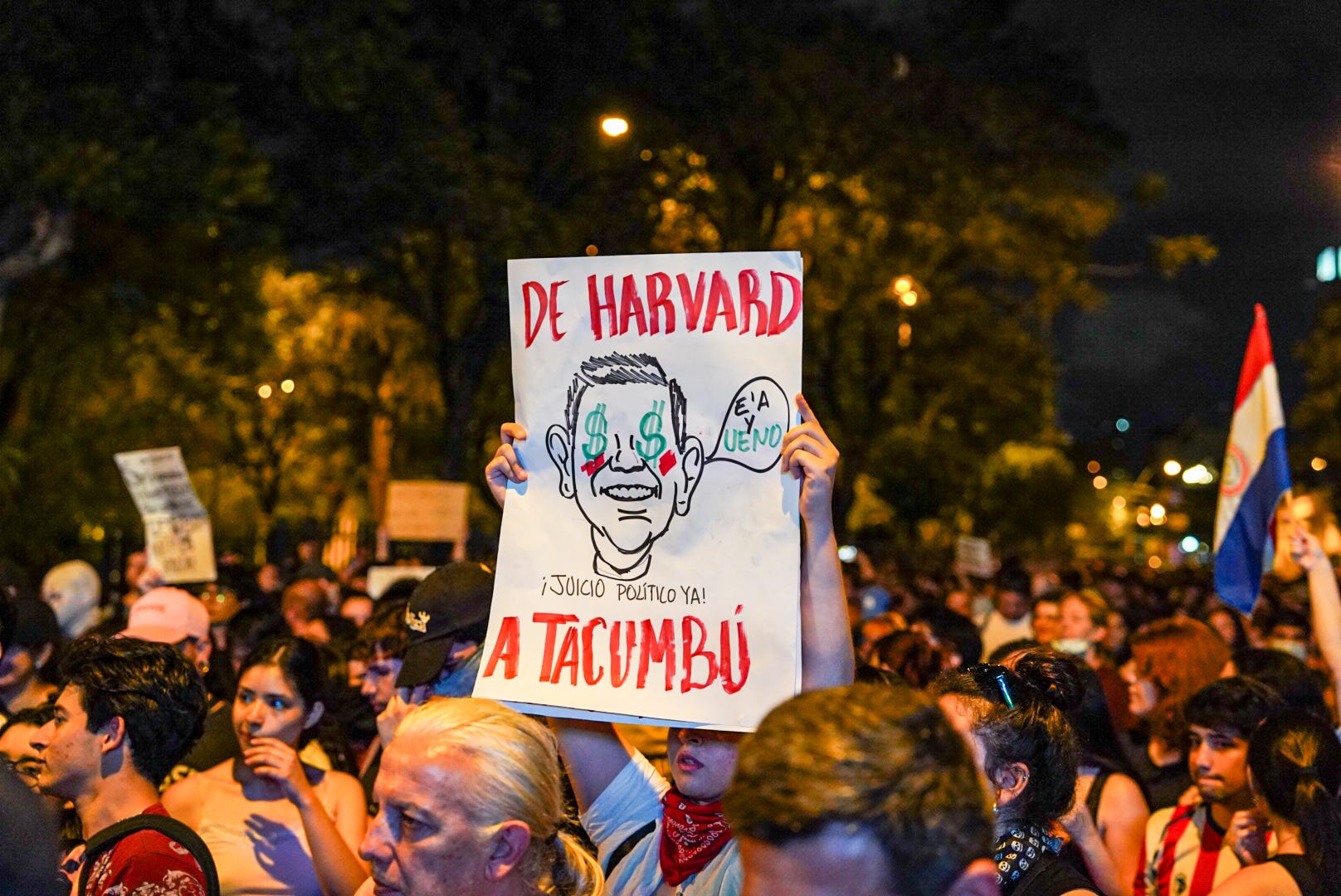
Paraguay has been thrown into political and financial turmoil after President Santiago Peña announced his resignation on November 5, days after the collapse of Ueno Bank left millions of customers unable to access their money.
The crisis has raised questions about the oversight of a bank with close ties to the government and the fate of hundreds of millions of dollars in private and public funds. Peña, dozens of Ueno bosses, and multiple officials face overlapping criminal investigations. Ueno’s CEO, Miguel Vázquez, is in pre-trial detention.
Peña’s announcement came as he faced impeachment and lost support within his own Colorado Party. Vice President Pedro Alliana, also a Colorado, is next in line to succeed him and complete the presidential term through August 2028. But Peña still remains president amid legal and procedural wrangling.
Last night, protesters scuffled with police in the blocks around congress and the flagship calle Palma store of Ueno. Some threw projectiles at the bank’s glass frontage. Police made several arrests; one officer was injured.
Below the paywall, we break down what you need to know: Why Peña resigned, what exactly happened to Ueno bank, how and if savers will get their money back, and whether this crisis could spread to other financial institutions.
Not a paid subscriber? You can claim a months’ free trial by tapping this link. After that, you can pay either $7/month or $60/year, access our flagship Weekly Post briefing and Insider Insight, and cancel at any point with a few clicks.
We’re Paraguay’s only independent news source in English, written and reported from the ground by locals.

Join us as we make sense of Paraguay — and bring you the stories that really matter.