


Along with protect your sources, make a recording, and triple check the spelling, it’s one of the golden rules of journalism: don’t carry a gun. No matter how ugly or unpredictable the situation — the theory goes — bearing arms blurs the lines between reporter and combatant, putting you and your colleagues more at risk. Better to leave the heroics to Hemingway, and hope that your notepad and pen prove mightier than the sword.
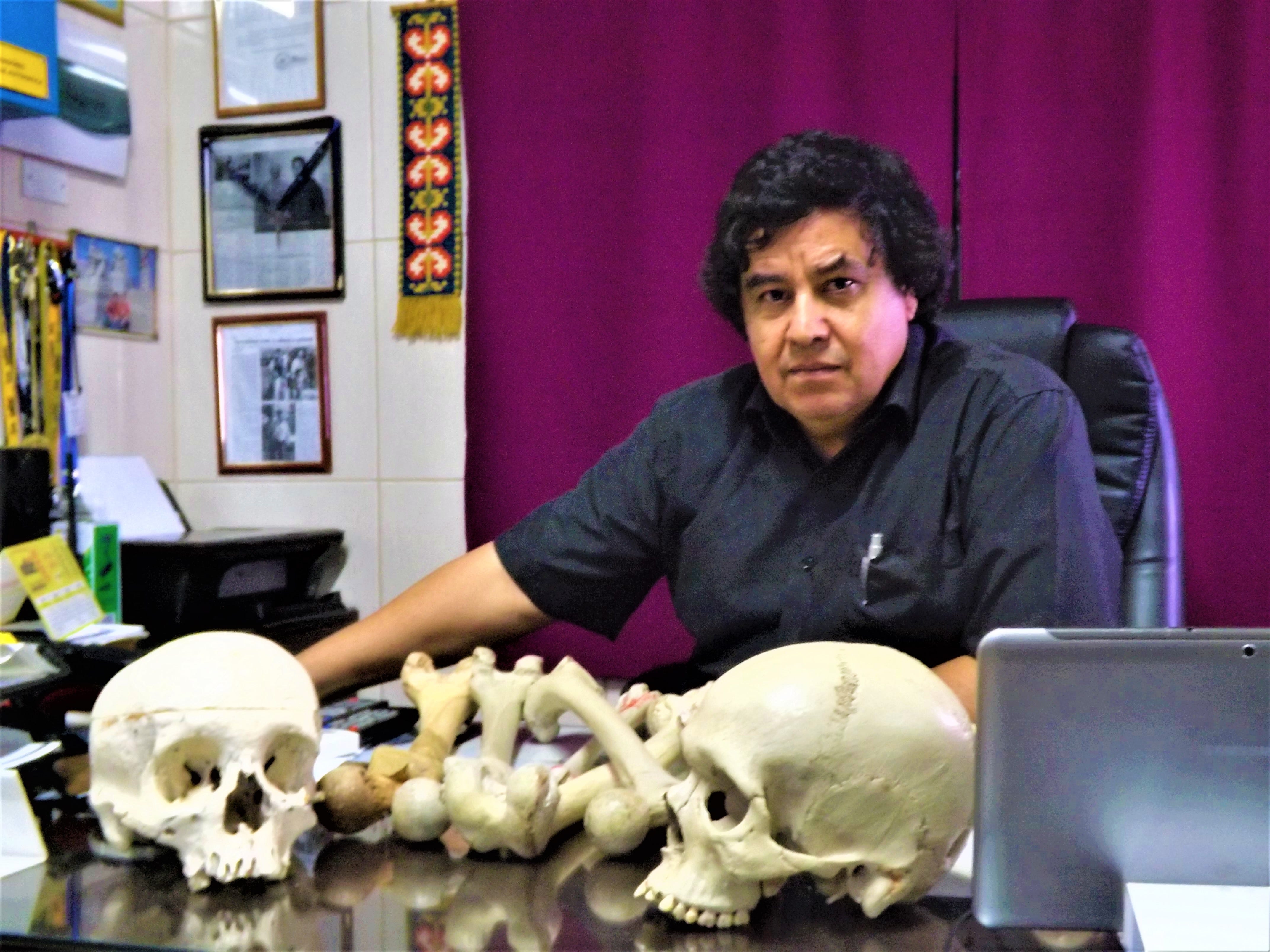
But Paraguay has a habit of throwing the rulebook out the window. When I stepped off the overnight bus to Pedro Juan Caballero, Amambay — on Paraguay’s northeastern border with Brazil — in early 2015, the local correspondent for ABC Color was there to meet me. His police escort with submachine guns weren’t the only unusual thing about Cándido Figueredo. Strapped beneath his belly was a Browning 9mm. “If they come for me,” he dead-panned, “they’d better be quick.”
Cándido wasn’t paranoid. Warnings to watch his back often reached him through sources in the criminal underworld. Narcos had shot up his bungalow twice, he later explained, pointing out a hole in a picture frame. A few months earlier, his colleague Pablo Medina had been shot dead — along with with his assistant Antonia Almada — in the next-door department of Canindeyú. The order was given by a local mayor, a Colorado Party apparatchik who headed up a murderous marijuana-trafficking ring.
Medina’s assassination — the 10-year anniversary of which was marked by his colleagues last week — was a watershed moment in Paraguay’s struggle with organised crime, and its deepening penetration of the halls of power: a phenomenon known as narcopolítica. But it wasn’t the first of its kind, or the last. Twenty-one Paraguayan journalists have been murdered since the fall of the Stroessner dictatorship in 1989.
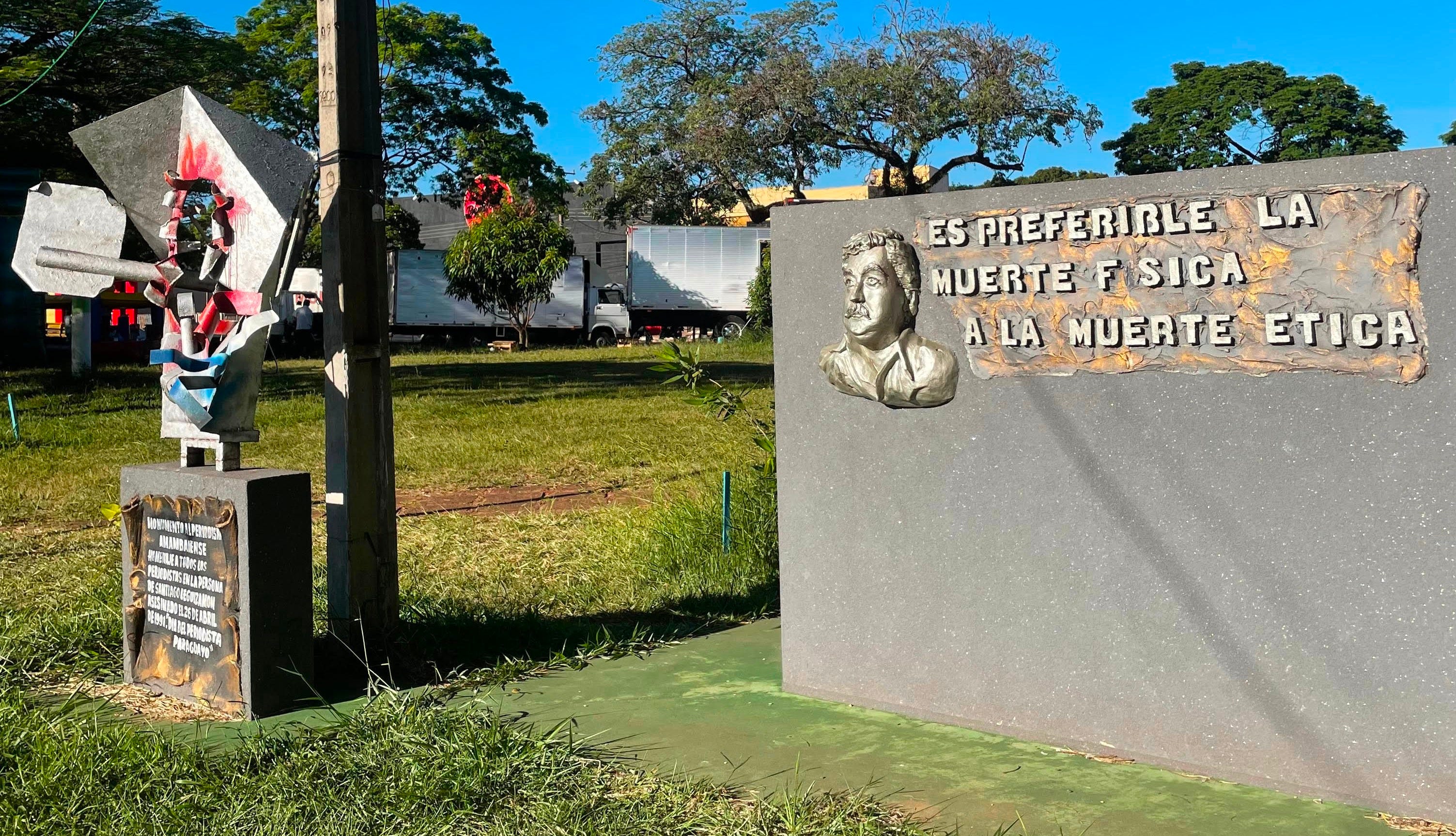
The first was Santiago Leguizamón. A seasoned TV, radio and print reporter who covered crime and corruption along the border, he was gunned down in Pedro Juan Caballero in April 1991. He feared for his life, and took protective measures, but refused to be cowed: “I’d rather physical death” — he said in one of his last broadcasts — “than an ethical one.” Those responsible have never faced trial.
The most recent was Alexander Álvarez in February 2023, and before that Humberto Coronel in September 2022. Both were radio journalists in Pedro Juan Caballero; Coronel, who often denounced police complicity with organised crime, had received written threats: “You know too much. We’ll make you pay.” Such killings in Amambay provoke relatively little alarm abroad, or even in Asunción. The border can feel far away.
But the journalists of the capital are not as protected as we might like to think. Contract killings are spreading here: a police officer, a former prison director. One veteran investigative reporter tells the Post that, earlier this year, they received credible information that a powerful figure was plotting to kill them — forcing them to leave the country until things cooled down. The plan, they said, was to make it look like an armed robbery gone wrong.
And there are other, more discreet ways to silence criticism. Political and legal persecution can have even more of a chilling effect than the barrel of a gun. Paraguay’s president — citing the separation of powers — has studiously avoided commenting in recent months as politicians from his party answering to Horacio Cartes go after the opposition, the press, and civil society.
But last week, at the general assembly of the Inter American Press Association in Córdoba, Argentina, Santiago Peña felt entitled to lecture the Fourth Estate on how to do its job. “Without freedom of the press, we’ll die of suffocation,” he conceded. But he accused journalists back home of an “out-of-date approach”:
“Many Paraguayan media are still clinging on to the logic of the dictatorship, where the only thing that mattered was resistance, struggle, and opposition. Under that binary logic, when darkness is on one side, the position of the press is clear. But today, Paraguay is fortunately no longer under dictatorship. In fact, we’re far, very far, from an authoritarian government.”
Yet the same day, the Committee to Protect Journalists issued a statement describing press freedom in Paraguay as under threat. Echoing the warnings of three UN special rapporteurs and nearly 70 Paraguayan non-profits, the CPJ called on Peña to veto a proposed law that “would impose burdensome restrictions on nonprofit news outlets and threaten their independence.”
“Many independent media in Paraguay are nonprofits that rely on international funding,” said Cristina Zahar, CPJ’s Latin America Program Coordinator. The new law, she explained, would force them to disclose information and data about people who work for them — or risk being shut down. “It could deter news outlets from speaking out against the government or investigating public interest matters.”
Will the president listen? Peña has been increasingly stand-offish towards the press as his political honeymoon comes to an abrupt end. Several international colleagues tell the Post that his team have cancelled interviews at short notice. He has made no objection as Colorado congressmen leak journalists’ home addresses, or physically lash out at reporters who ask uncomfortable questions about nepotism.
“Narcopolítica has deepened in recent years,” says Santiago Ortiz of the Paraguayan Journalist’s Union (SPP). “The same mafias that murdered Santiago [Leguizamón] are still at work, and their collusion with the state is stronger than ever, even if some of the faces and businesses have changed.”
“To that, we have to add the decision by the government to paint the press and journalists as their political enemy,” Ortiz added. Members of the ruling party, he argued, have reheated a rhetorical strategy from the Stroessner era “where those who disagree with or criticise the government are ‘enemies of the people and the nation.’ And that’s really dangerous.”
Not only in Paraguay but around the world, there’s a harshening of opinion towards the media, a sense that we’re fair game for daring to rake the muck. And while local reporters are always more at risk, Paraguay’s single-digit foreign press corps is not immune from threats.
In last week’s Post, I wrote about a public auction of luxury vehicles impounded from convicted money-launderers and drug-traffickers, and shared it to a popular online group. A Facebook user — whose name, message, profile and photo have been shared with colleagues — left a comment in garbled English below. “When the narco come out to the jail,” he wrote, “it will visit you with no words.”
What we’re reading
Gold fever intensifies. Campesino leaders Mariano Sachelaridi and Gerardo Loris Niefransch have been arrested for public order offenses after protesting against irregular gold mining in Paso Yobái, reports Codehupy. The global spike in value for the precious metal in recent years has triggered deforestation, mercury contamination, and human rights abuses in the eastern region of Guairá.
Ueno Bank is everywhere these days. The former financial start-up sponsors football clubs, rally drivers, and — since it merged with Visión Banco in June — has a neon-green physical presence across the country. Ueno’s former boss, Carlos Carvallo, is now the president of the Central Bank (BCP); Santiago Peña has some US$800,000 in shares with sister-company Ueno Holding, reports ABC Color. So it provoked questions when it emerged last week that IPS — the public health and pensions provider — has invested US$98m (8 percent of its portfolio) in Ueno. The bank, and IPS, deny any conflict of interest.
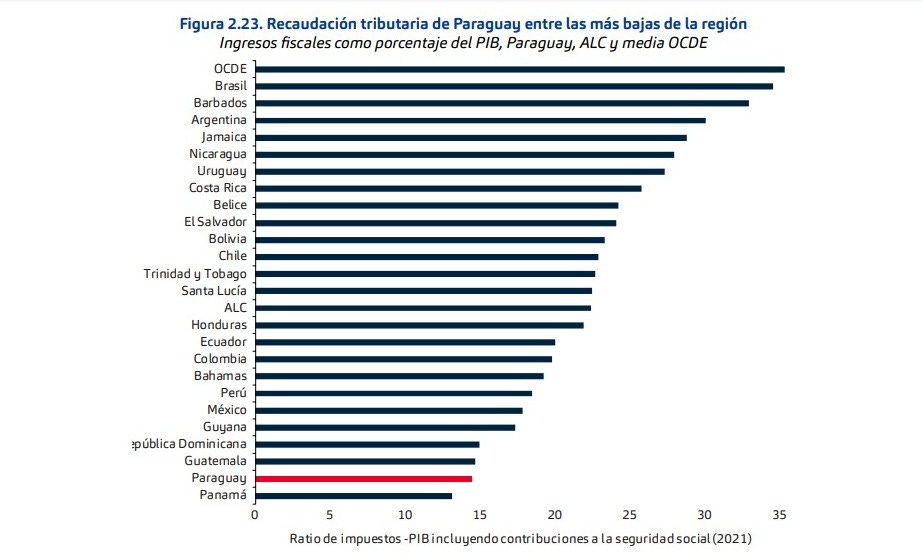
More progress needed against poverty. Paraguay has slashed poverty in recent decades — according to a new World Bank report — from 51.4% in 2003 to 24.7% in 2022. But since 2013, the rate of reduction has slowed sharply. The Bank recommends investing in rural schools, creating high-quality jobs, improving Paraguay’s resilience to climate-related shocks, and taxing the rich more to spend on the poor. Let’s see if anyone in the Palacio de López is listening.
Culture Corner
🍿 🎥🎬 Cine de Barrio, the creation of director Marcelo Martinessi (Las herederas, La voz perdida) has quickly established itself as a fixture in the Asunción cultural scene since it opened in Las Mercedes in 2023. The intimate movie theatre champions Paraguayan and Latin American cinema; they’re also screening Hitchcock flicks every Wednesday this month. There’s sometimes wine, coffee, and talks by directors (Defensa Nacional/Washington, book via Instagram).
🎨🖌️🖼️ Last weekend saw art fair Oxígeno take over the port in Asunción, with sculpture, paintings, photography and Indigenous weavings, drawings and carvings occupying all three floors of the recently restored port building. It’s a beautiful, semi-industrial space, complete with mid-century historical murals. And it was great seeing the work so many Paraguayan artists in one place, from the sinuous woodcuts of Carlos Colombino, via the ethereal sketches of Claudia Casarino, to the pixelated paintings of Rolo Ocampos.
💀🤘🎸 Slipknot are coming to Paraguay. The mask-wearing Iowa rockers play the Jockey Club on Wednesday night, with support from Ciudad del Este’s thrash metal finest Kuazar. It’s set to be one of the capital’s biggest concerts for years. Not everyone’s happy, though: members of the Centro Familiar de Adoración, an influential evangelical church, have reportedly called on the faithful to pray and fast to prevent the “Satanic” metalheads from reaching Paraguayan soil. Maybe lightning will hit their plane like it did with Miley Cyrus.
In other news: wacky races | “digital nomads” and AI propaganda | Payo’s back | La Costanera up for sale | ex-officials fear for their lives | James Robinson loves El Surti | Robinson to speak with Economy Minister | Santi pours cold water on EU-Mercosur deal | Paraguay thrashes Venezuela | La Virgen de la Candelaria turns white
The Paraguay Post launched exactly a month ago. Since then we’ve received thousands of views, been joined by hundreds of subscribers, and published over 10,000 words of original journalism — entirely free of charge.
Bigger things are coming, but we need your support. Please share The Paraguay Post with your friends and colleagues to help us reach as many readers as possible. If they sign up, you’ll get free access to paywalled content — political analysis, industry deep dives, travel tips and more — starting next month.