



You’re reading the weekly newsletter of The Paraguay Post. For more info, head here. Sometimes this email can be truncated. If you see three dots, click ‘em.
Welcome back to the Weekly Post! It’s chucking it down in Asunción today: here’s hoping it tops up the river a little.
Don’t forget to follow us on X and Instagram. We’ll be using them to share breaking news and exclusive photos, and, in the coming days, a call for pitches.
And do think about bunging us just $1.25 a week: the more readers that support us, the more original stories, photography, and investigations we can commission.
Without any further boludeces: let’s get to it.
The headlines:
Narco cars up for auction.
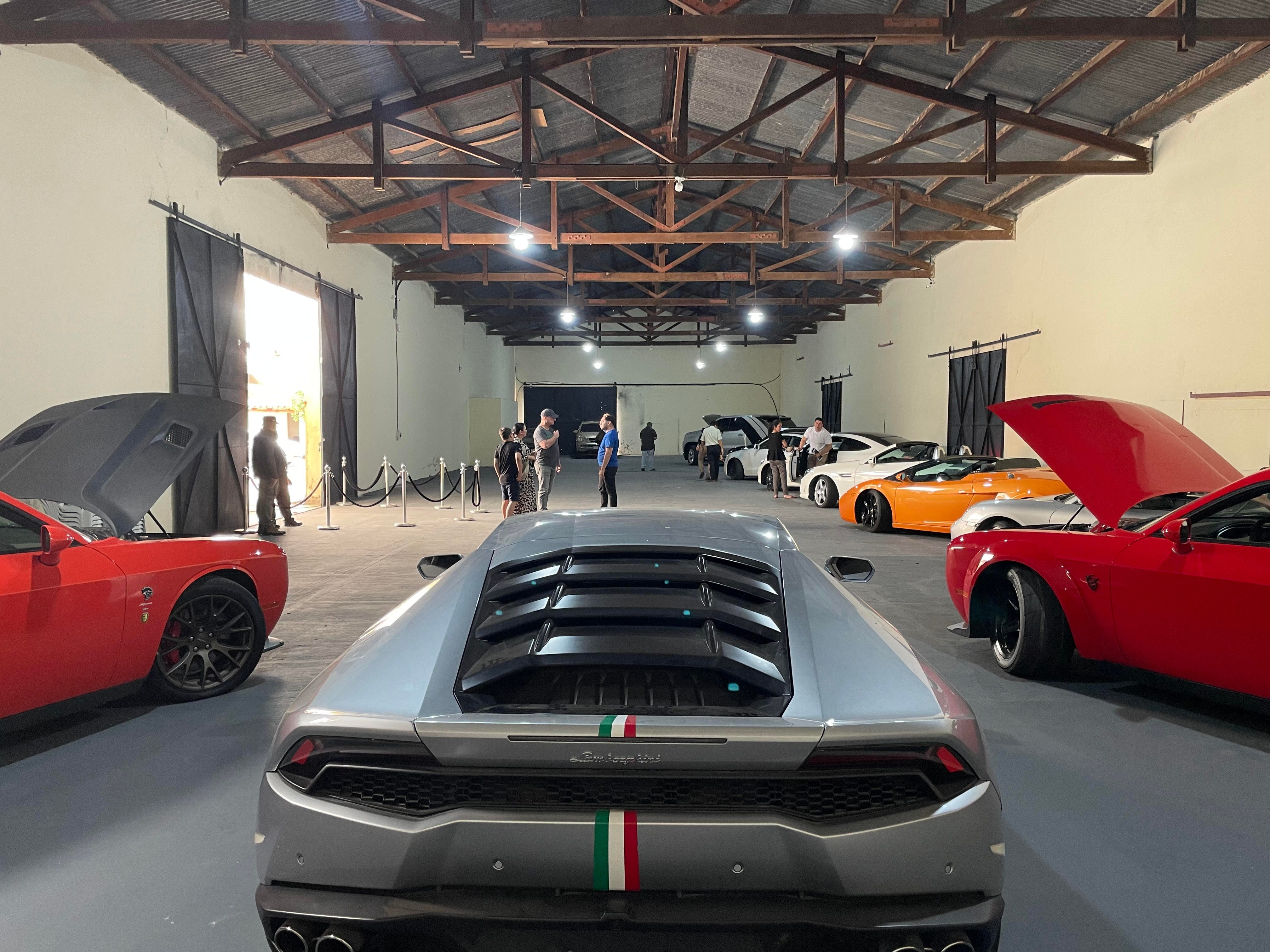
Tucked away in the riverside Asunción suburb of Sajonia — and across the street from a soup kitchen with a line around the block — sits a nondescript compound filled with luxury automobiles.
There’s a brace of racing-red Dodge Challengers, a sleek Porsche Boxster, a classic Ford Mustang, a Mercedes-Benz C 43, and — most eye-catching of all — a silver 2015 Lamborghini Huracán.
This temporary showroom belongs to SENABICO: a government agency that flogs property seized from debtors, drug traffickers, and other assorted crooks to car dealerships, collectors and people with cash to burn.
Maybe you fancy a cut-price combine harvester. Or some prime Asunción real estate, or a hotel in Pedro Juan Caballero. Or a Cessna or Beechcraft light aeroplane, like the ones SENABICO auctioned off in May.
“You can get in,” says Diego, a skinny young SENABICO official, fishing out the keys to a bright orange 2009 Lamborghini Gallardo from a jingling cellophane folder. “You don’t need to worry about who owned it before.”
The Post squeezes behind the wheel, turns the key in the ignition, and — with the stick in neutral — puts the pedal to the metal. The growl of the V10 600hp engine rolls through the hangar like thunder.
There’s more in an impounded warehouse across town: two brand-new Blackfin motor yachts on trailers, a flock of Vespa mopeds, two go-karts, a quad bike, four electric scooters, and a pair of tandem bicycles worth 2.7 million guaraníes ($340) each.
Most of this merchandise was seized in 2022, amid Paraguay’s largest-ever assault on organised crime. Operation A ULTRANZA PY unveiled a vast ring of front companies — ranches, luxury flats, an evangelical church — being used to store and transport Bolivian cocaine bound for Europe, or to launder the profits.
Local cops working with Europol and the DEA seized goods worth $100m, including 6,000 cattle, a hundred trucks, cars and motorbikes, 71 properties, 50 tractors and trailers, 13 light aircraft, a helicopter, an aircraft hangar and a Muy Thai gym.
Multiple members of the ruling Colorado Party were ensnared, including senator Erico Galeano and former deputy Juan Carlos Ozorio Godoy. It was the last operation led by anti-mafia prosecutor Marcelo Pecci, gunned down on a Colombian beach while on his honeymoon just three months later.
And last Thursday, the latest batch of loot was up for grabs at a packed auction held — oddly enough — at a meeting hall belonging to the Asociación Rural del Paraguay (ARP, the agro lobby) within the Expo Mariano Roque Alonso.
The crowd are well-heeled, and nearly all male. The Post spots Patrick Bendlin — Horacio Cartes’s son-in-law — with his brother, Adam, who picks up a beat-up cattle trailer for 25 million guaraníes ($3,200).
The most expensive item is the Huracán, which — after intense bidding — goes to a well-known rally driver for 1.5 billion guaraníes ($190,000). As the hammer comes down, the room ripples with polite applause.
The orange Lambo meanwhile fetches a mere 470 million guaraníes ($60,000). “We’re practically giving it away,” the auctioneer quips.
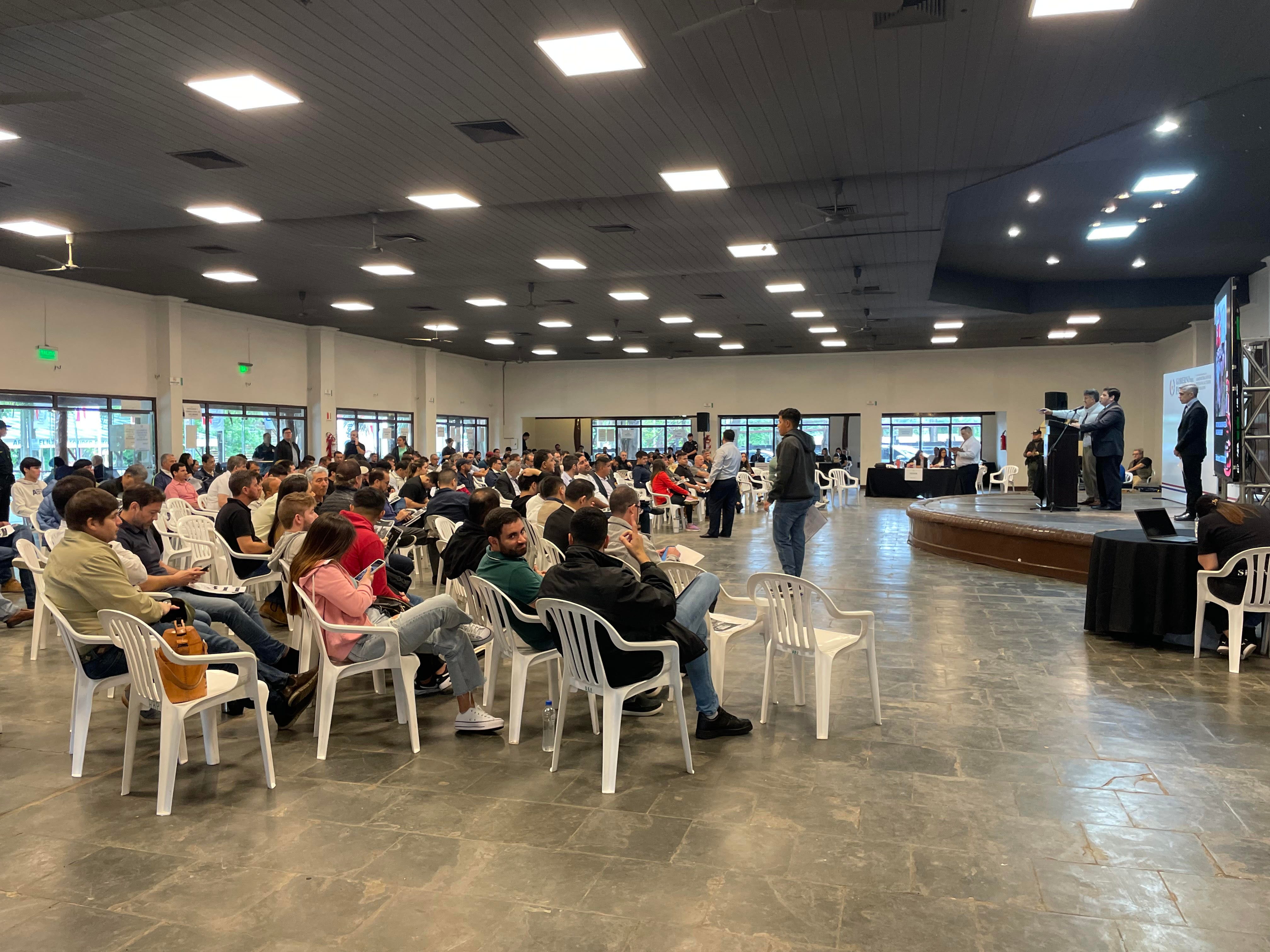
In total, the event raises some 7.2 billion guaraníes — nearly a million bucks — to be divided between SENABICO, the taxman, and drug rehabilitation programmes.
That’s no small injection of cash into the threadbare public purse. And it’s a rare and welcome sight to see the Paraguayan authorities seizing the ill-gotten goods of the rich. But something about the scene sits uneasy.
Maybe it’s witnessing the proceeds of organised crime seamlessly changing hands from white-collar bandits to their peers and possible associates. Or maybe it’s the flaunting of wealth unfathomable to the one in four Paraguayans who scrape by on less than 27,500 guaraníes ($3.50) a day.
“We’ve done 14 auctions, and between 300 and 900 people come,” Javier, another SENABICO official, tells the Post. “Sometimes, there’s not enough space.”
“If you want to pay with cash, that’s great,” he adds. “But we also do bank transfer, and cheque.”
Indigenous Peoples mobilise.
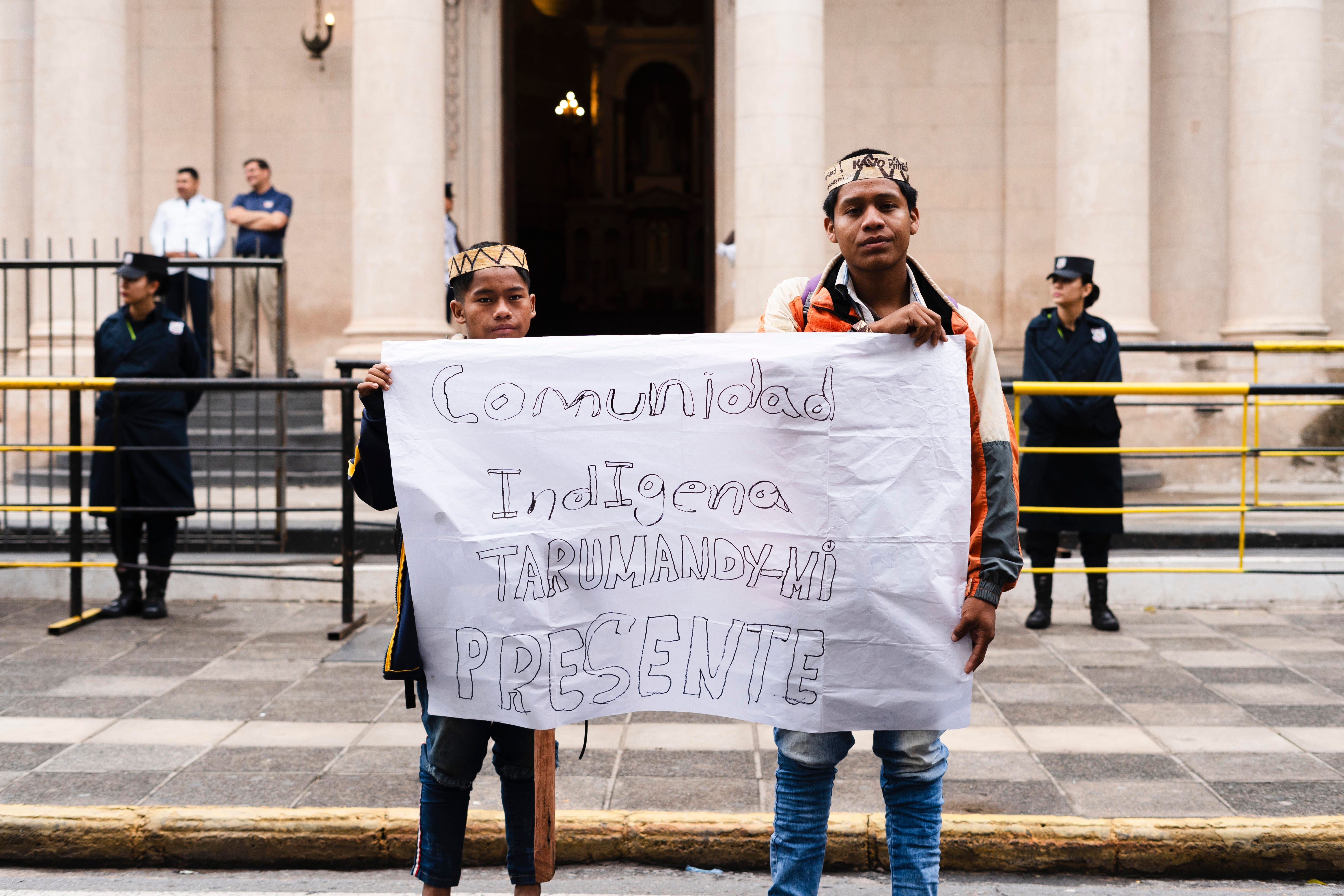
Across Spain and much of Latin America, October 12 is celebrated as Día de la Hispanidad: marking the day when Columbus “discovered” the Americas in 1492 and European colonisation began.
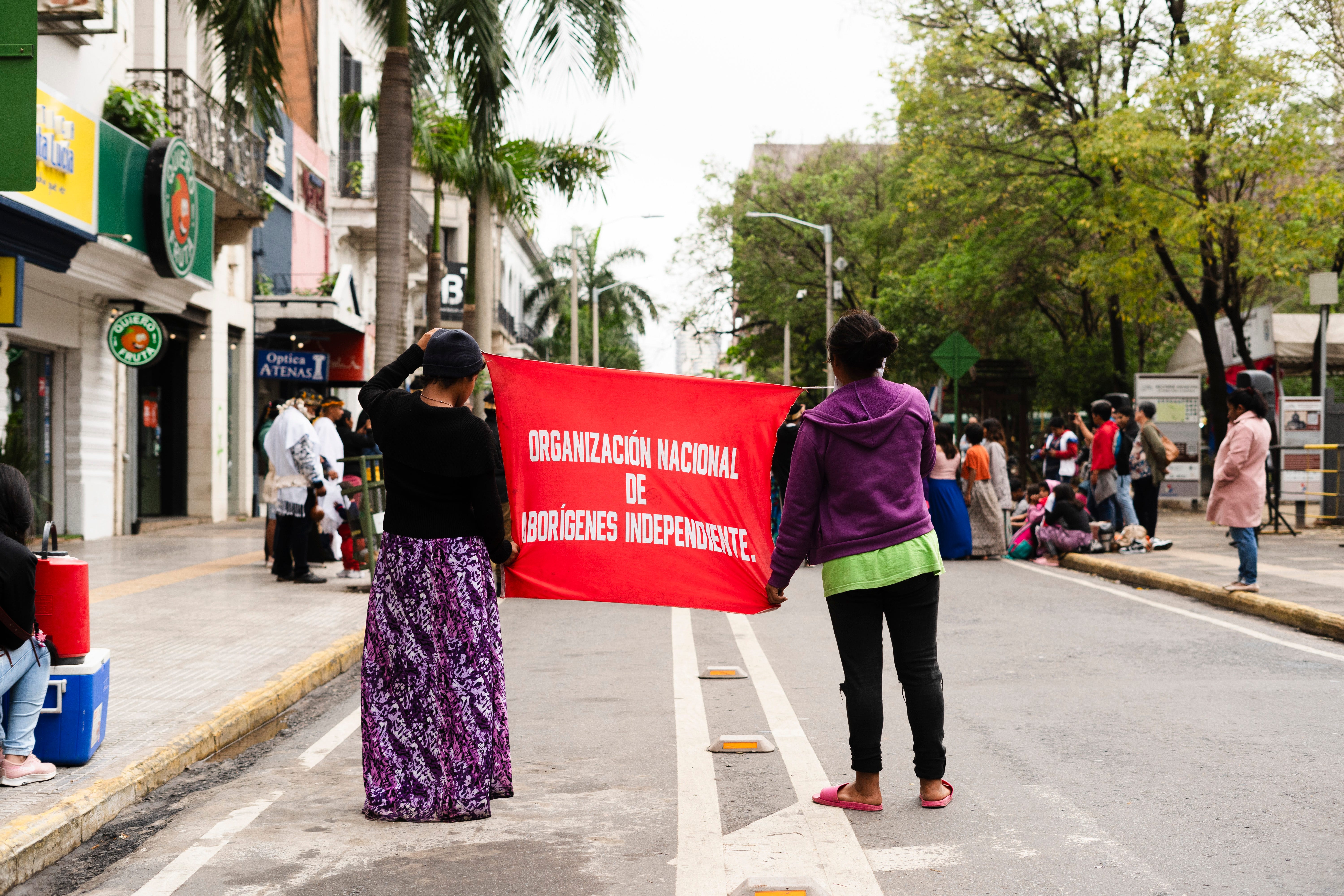
But many native communities in Paraguay choose to instead commemorate October 11 as Indigenous Resistance Day. Early last Friday, native peoples from across the country gathered outside the National Pantheon of Heroes in central Asunción.
“Today, October 11, marks our final day of freedom. Because on October 12 our suffering began,” said María Luisa Duarte, a member of the Aché people and general coordinator of ANIVID, a coalition of 36 organisations. “The massacre, the disappearance, the abuse, has sadly continued up until the present day.”
Amid spiritual chants and traditional dances, leaders described the crises afflicting their people, two thirds of whom live in poverty. Key among them was conflict over land. “The land is fundamental for us: it is our life itself, our very existence as Peoples,” said Duarte.
Yet a third of Paraguay’s native peoples lack deeds to their land, or have no land at all. And violence against their villages has soared since a 2021 law boosted the state’s powers to evict communities without title — despite constitutional guarantees for Indigenous territories.
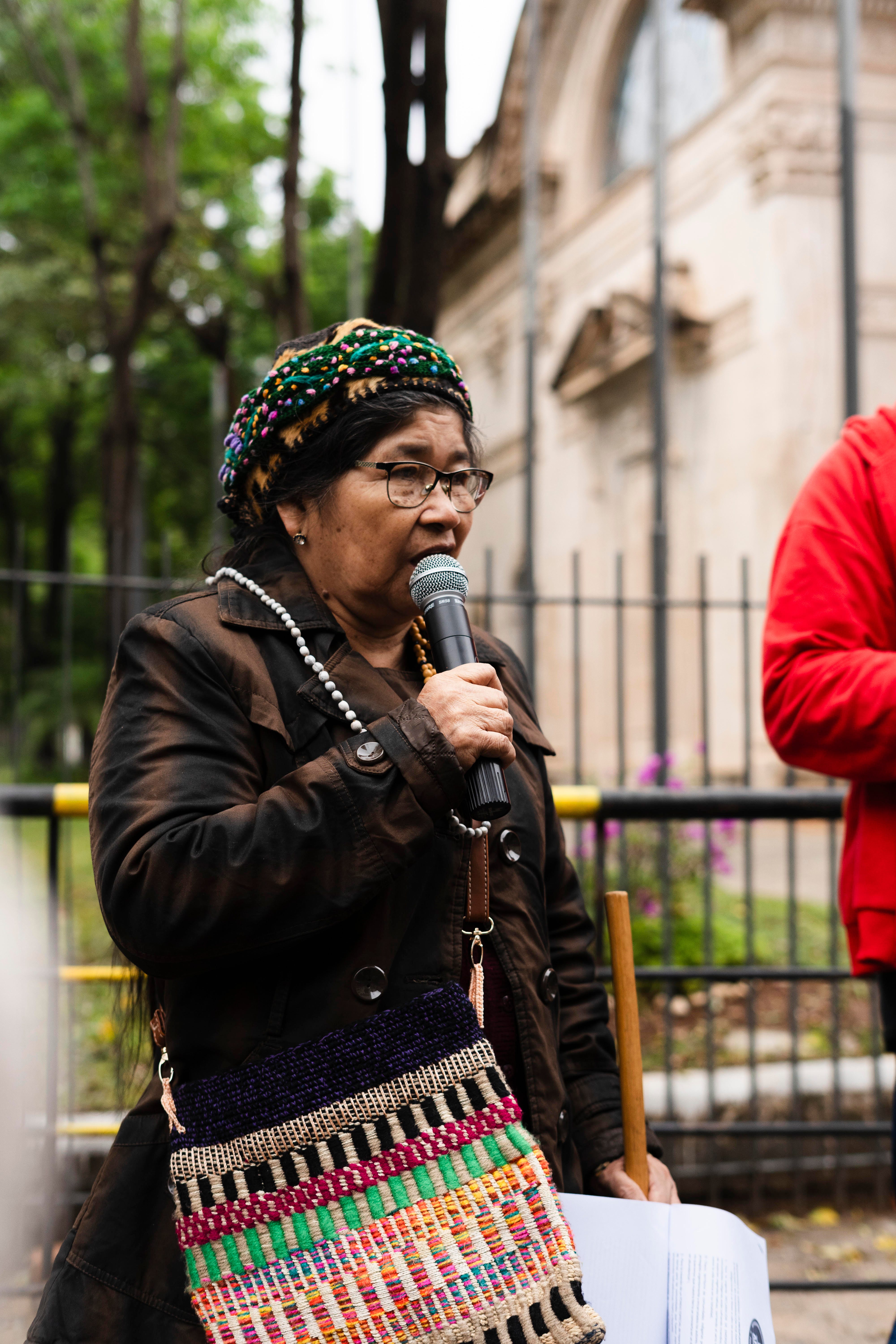
Silvino Mendoza, leader of the Paĩ Retã Joaju Association of the Paĩ Tavyterã Indigenous People, said fourteen of the communities he represents had spent years waiting to be recognised as owners of their ancestral territory.
“We’ve given all the necessary documents and proposals to the government — they know exactly what we urgently need,” he explained. “We’re here today to keep insisting.”
Protesters also lamented the dire situation facing Indigenous communities in the Chaco amid a punishing drought. The day before, demonstrators blocked roads at the central Chaco town of Pozo Colorado to demand solutions.
“The situation in the Chaco has never changed — we are still in need of drinking water,” said Nidia Morejuán, a member of the Guarani Occidental Indigenous People and the Mujeres Indígenas del Paraguay organisation. At the national level, three quarters of native people have no running water.
The vast diversity of Paraguay’s nineteen Indigenous Peoples was clear at the protest; their varying histories, worldviews and challenges reflected in different languages, dress and demands. But those present were united on one thing. Paraguay has failed to honour its historic debt to its first nations — and they will keep up the pressure until it does.
“We’re gaining strength,” Duarte emphasised. “We’re going to keep organising so that, one day, the state will truly recognise our existence”.
— by William Costa
What we’re reading
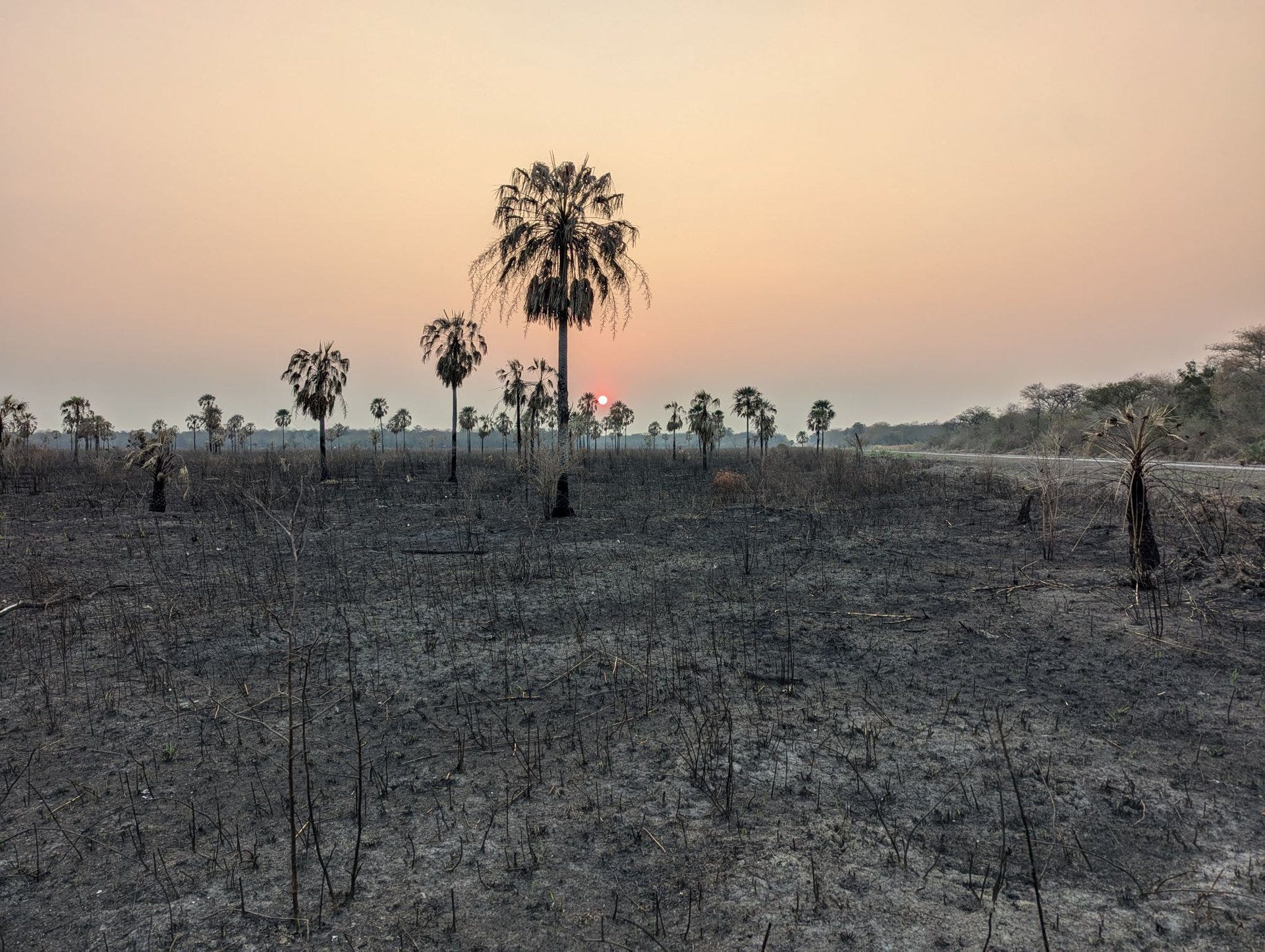
A new Global Witness investigation links Rousselot — one of the world’s largest collagen producers — to 75,000 hectares (7,500km²) of deforestation in the Chaco by meat giants Minerva and Frigorífico Concepción, much of it on Indigenous Ayoreo land. The findings highlight how an EU anti-deforestation law, recently put on ice by the European Commission, is desperately needed, says the NGO.
On Wednesday, the Cámara de Diputados approved legislation regulating non-profits, which critics have dubbed the ley garrote. It’s a naked attempt by Horacio Cartes and his henchmen to intimidate civil society. The executive has tweaked the draft to remove hefty fines for those that fail to comply with onerous audits, and reduce suspensions to six months for NGOs and five years for their staff. But the bill puts Peña in a bind, La Política Online reports. If he fails to veto it, he risks damaging Paraguay’s standing with the US, EU and multilateral funders.
In CADEP’s Economía y Sociedad, Esteban Caballero credits Peña’s proactive diplomacy with “helping to put Paraguay on the map.” Yet Cartes’s outriders are meanwhile freelancing their own foreign policy, betting the house on Trump and cultivating ties with the European far-right. And Peña’s support for Taiwan is unsustainable in the long-term — Caballero argues — as Brazil and Mercosur grow closer to China: “It would be advisable to have an exit plan.”
Associated Press photographer Rodrigo Abd visited five prisons across Paraguay. What he found wasn’t pretty. With 17,600 prisoners for just 10,000 places, five-man cells are shared by 15. Addicts smoke crack in the open. Guards carry knives. Prisoners spend months or years awaiting trial. “Justice in Paraguay doesn’t work if you don’t have money,” says one. And despite an operation last December to root out the Clan Rotela from Tacumbú, the homegrown cartel is still recruiting in other prisons, and on the outside.