


TOP STORY
POTUS <3 PY
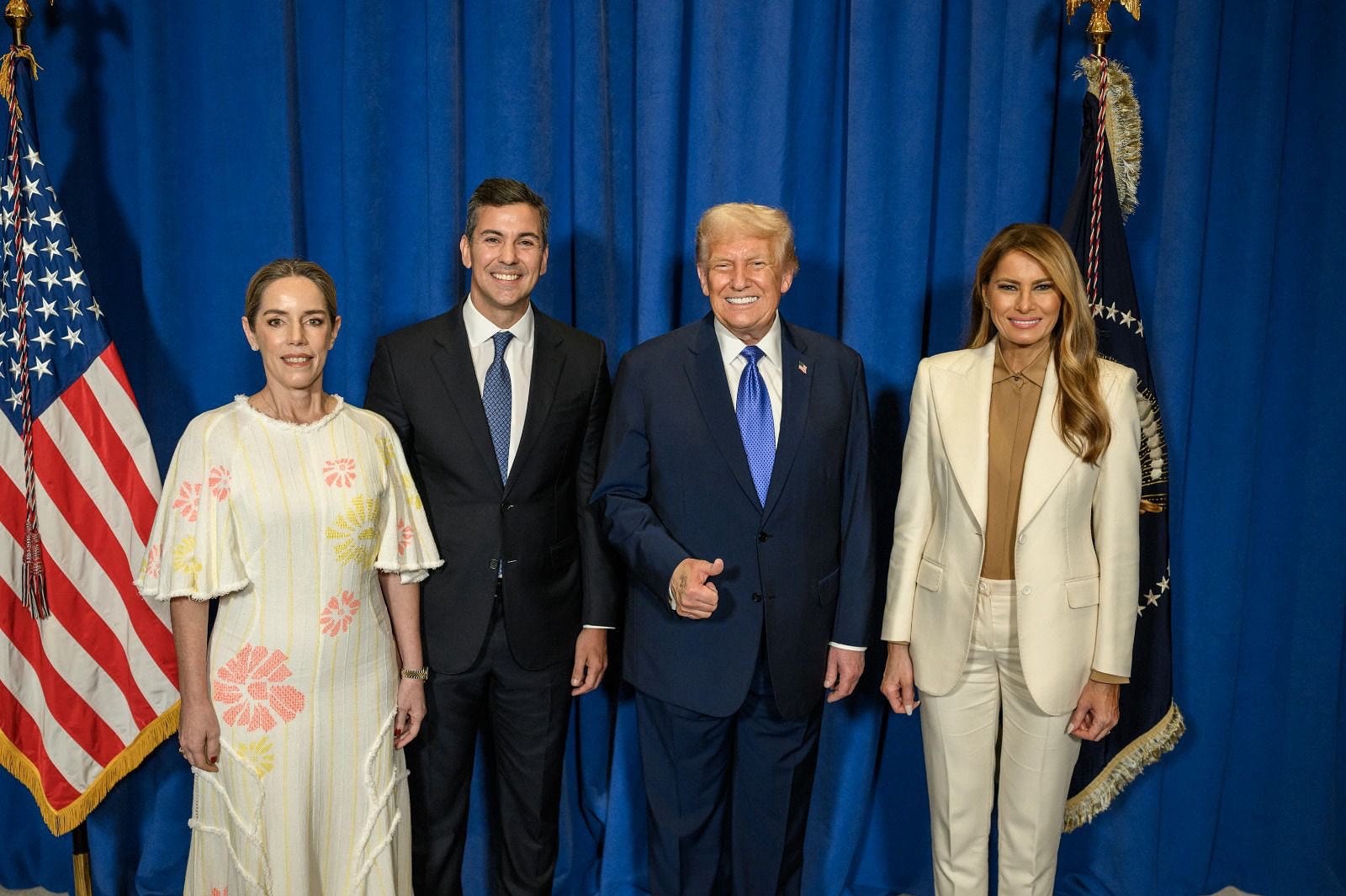
The Final Draw for the 2026 FIFA World Cup, held in Washington, D.C. on Friday, set the opening fixtures for next year’s tournament across North America. Paraguay – returning to the World Cup for the first time since South Africa 2010 – will face the United States on June 12, an early test of the mettle of Gustavo Alfaro’s side.
The ceremony also produced a bizarre piece of political theatre. Gianni Infantino awarded Donald Trump with a new “FIFA Peace Prize”, praising Trump’s “extraordinary actions to promote peace and unity around the world.” The accolade came with an ornate trophy and medal.
But thousands of miles to the south, the real buzz centred on comments Trump made about his Group D rivals. Stopped on the red carpet by Fabiola Martinez of VS Sports, the president asked where she was from. “Paraguay,” she replied.
“I love it,” Trump said. “It’s a beautiful country, we get along very well with them, we do a little trade deal with them, and they like us.”
The exchange set off of a wave of reactions online in Paraguay. “SCARY,” wrote one internaut. Of course Trump loves Paraguay, argued another, “If our president sold him his soul to save his boss.”
A third chipped in to mimic Trump, the bestselling author of Art of the Deal: “It’s a beautiful country; I’m about to buy it all.”
THE POST TAKE:
The current occupant of the Oval Office never met a photogenic female reporter he didn’t want to charm. It’s anyone’s guess whether Trump could point out Asunción on a map. But he’s not wrong to say that Paraguay-US relations are riding high right now.
President Santiago Peña has regularly intervened in favour of US allies Israel and Taiwan at the UN, returned Paraguay’s embassy in the former country to Jerusalem from Tel Aviv, fallen in lockstep with Trump’s plans for regime change in Venezuela, and in August signed a murky “Safe Third Country” agreement to host asylum seekers from the US.
Asked what Paraguay gets in return, Peña denied any quid pro quo: “I don’t believe in that kind of transactional politics.” Paraguay’s opposition thinks otherwise, arguing that the scrapping of US sanctions on Horacio Cartes in October is Peña’s reward for consistently kowtowing to Trump.
Whether regular Paraguayans are especially fond of the United States is debateable. With its Johnny Walker billboards and cavernous shopping malls, Asunción feels more yankified than many other Latin American cities. Asked to rate Trump’s performance last year by Latinobarómetro, Paraguayans scored him 5.5 out of 10: the highest level in Latin America and the Caribbean, and well above the regional average of 4.2. Meanwhile, 71% of Paraguayan respondents had a “somewhat” or “highly” favourable opinion of the US as a whole: slightly below the regional average of 74%.

Yet economic ties are slim, with Paraguay doing just $1.6bn in business with the US in 2024, compared to $7.7bn with Brazil and $5.7bn with China. (Trump probably misspoke when he referred to a trade deal). Paraguay’s embattled left is also unlikely to forget Washington’s role in funding, arming, and training Alfredo Stroessner’s torturers.
The violent deportation of Paraguayan migrants – who cluster in New York, New Jersey, Florida and Maryland – could eventually weigh on public sentiment. The World Cup may also test the friendship between the stars and stripes and the tricolor: not only what unfolds on the pitch in Inglewood in June, but whether fans of la albirroja are allowed to enter US soil and enjoy the tournament in peace.
You’re reading The Weekly Post, an essential briefing on Paraguay.
Also in this week’s issue:
Babies behind bars · Did police let a marijuana mega-convoy pass? · Lucipar conflict heats up · Budget approved · Paraguay: a rising star?
Want to see the rest? Get your free trial here:
DRUG WAR & LAND CONFLICT
Mums and babies behind bars
Paraguay’s female prisoners – nearly 1,200 of them – make up some six percent of the prison population, reports Juliana Quintana for The Paraguay Post from the Buen Pastor prison in Asunción. Four out of 10 are doing time for drug offences, half are yet to face trial, and at least 22 are raising babies and toddlers behind bars. Yet as press attention focuses on male kingpins and the government brands drug cartels “terrorists”, this vulnerable population – often pushed onto the lowest rung of the drug trade by poverty – gets scant attention.
