


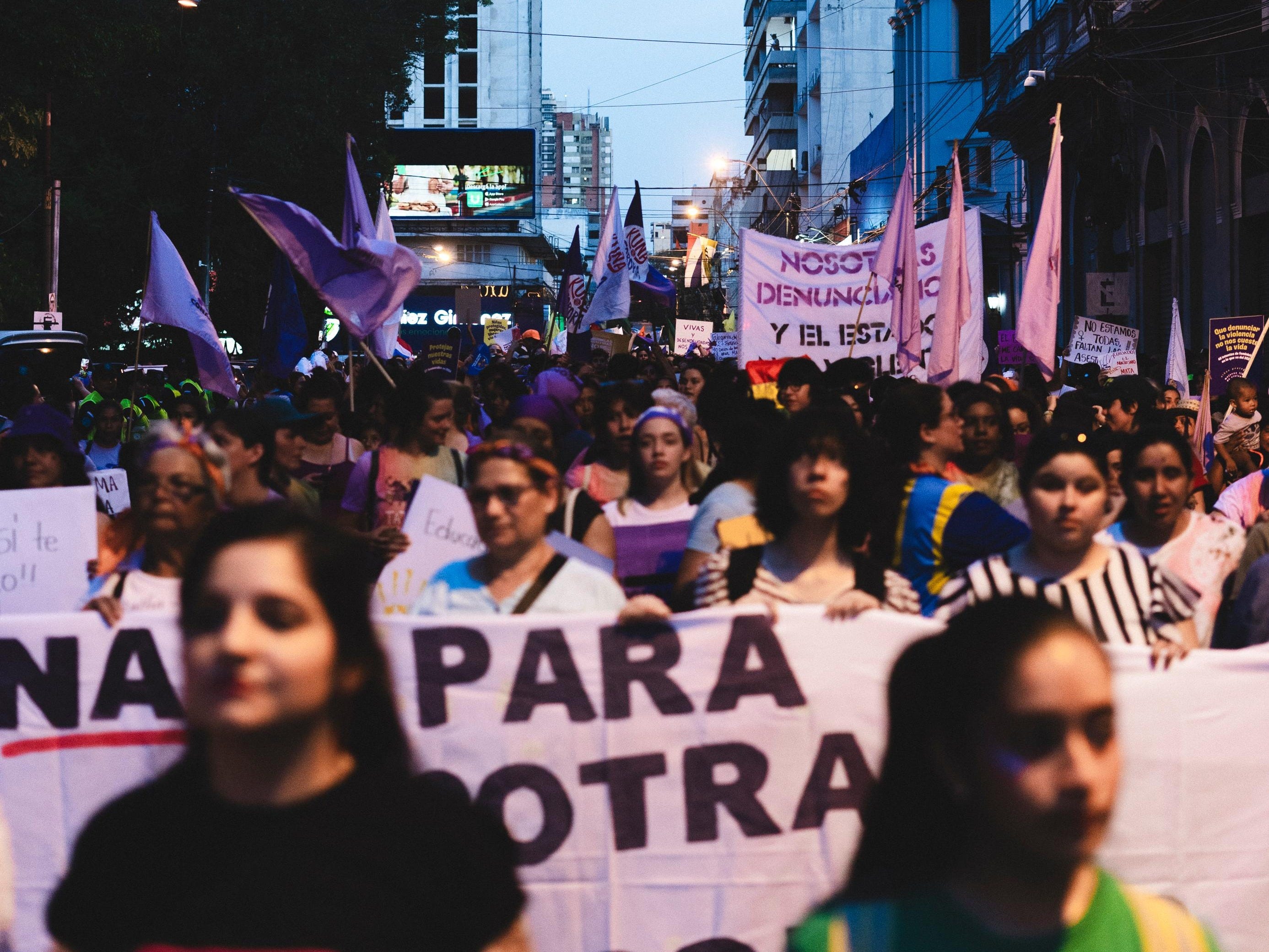
Last Monday, crowds gathered in Plaza Uruguaya, central Asunción, to mark November 25: The International Day for the Elimination of Violence Against Women.
As well as everyday citizens, organisations representing feminists and civil society, cis and trans women, those from the countryside and the capital’s working-class bañados, sex workers and Afrodescendants seized the opportunity to raise their voices, demand their rights — and call out violence of every kind.
Under the ruling Colorado Party — which has held power in Paraguay almost without interruption for three quarters of a century — gender-based violence is on the rise.
According to data compiled by the Economic Commission for Latin America and the Caribbean (ECLAC), the rate of femicides per 100,000 women has grown faster in Paraguay than anywhere else in the region since 2015.
And nearly 31,000 incidents of of intra-family violence have been reported so far this year: a sharp increase from 2022 and 2023, adding up to roughly 100 victims per day.
Last week’s march moved through the streets towards Plaza de la Democracia to the sound of protest chants and artistic interventions. Emancipa Paraguay — a feminist organisation of which I’m a member — dressed up as characters from The Handmaid’s Tale to highlight how the advance of conservative, anti-choice groups in Paraguay and around the world threatens to roll back women’s rights to dystopian levels.
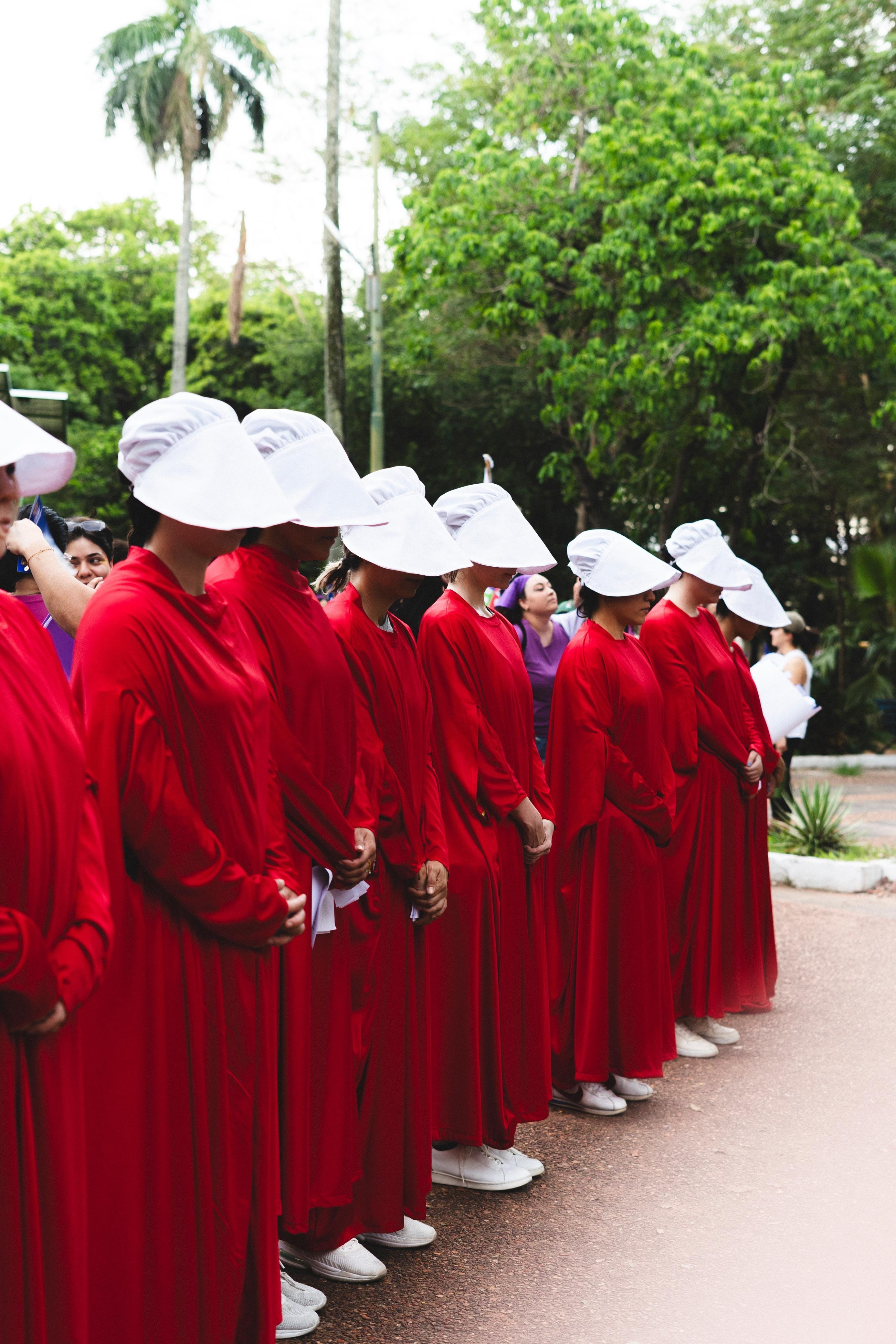
The presidency of Santiago Peña has so far been defined by negligence and outright backsliding in terms of women’s and girl’s position in society. He has invited evangelical and catholic lobby groups to shape government policy in their image, especially when it comes to sexual and reproductive rights.
A sex education curriculum recently adopted by the Education and Science Ministry (MEC) shows the clear influence of “pro-life” religious groups.
The document, obtained by the Associated Press, claims condoms are ineffective in preventing pregnancy, reaffirms traditional gender roles under a dogmatic religious perspective, and describes sex as “God’s invention for married people.” For political analyst Montserrat Fois, the success of unelected, anti-science groups in imposing their worldview on society is a clear threat to Paraguay’s democracy.
At last week’s protest, campaign group Articulación Feminista del Paraguay read a manifesto in which it warned:
“The advance of the fascist far-right represents a danger for the entire population, especially women, because they’re coming for the rights that we’ve fought for and won.”
For Mónica Aquino, president of UNES — a group representing Paraguayan sex workers — 25N is also a crucial moment to demand safer and more dignified working conditions. “Many of our friends and colleagues were murdered, disappeared, and the government [and] the judiciary never investigated,” Aquino told The Paraguay Post.
A 2021 report by human rights umbrella organisation Codehupy shows how Paraguay’s justice system is clearly negligent on this issue, failing to record both the number of murdered sex workers and the result of any investigations.
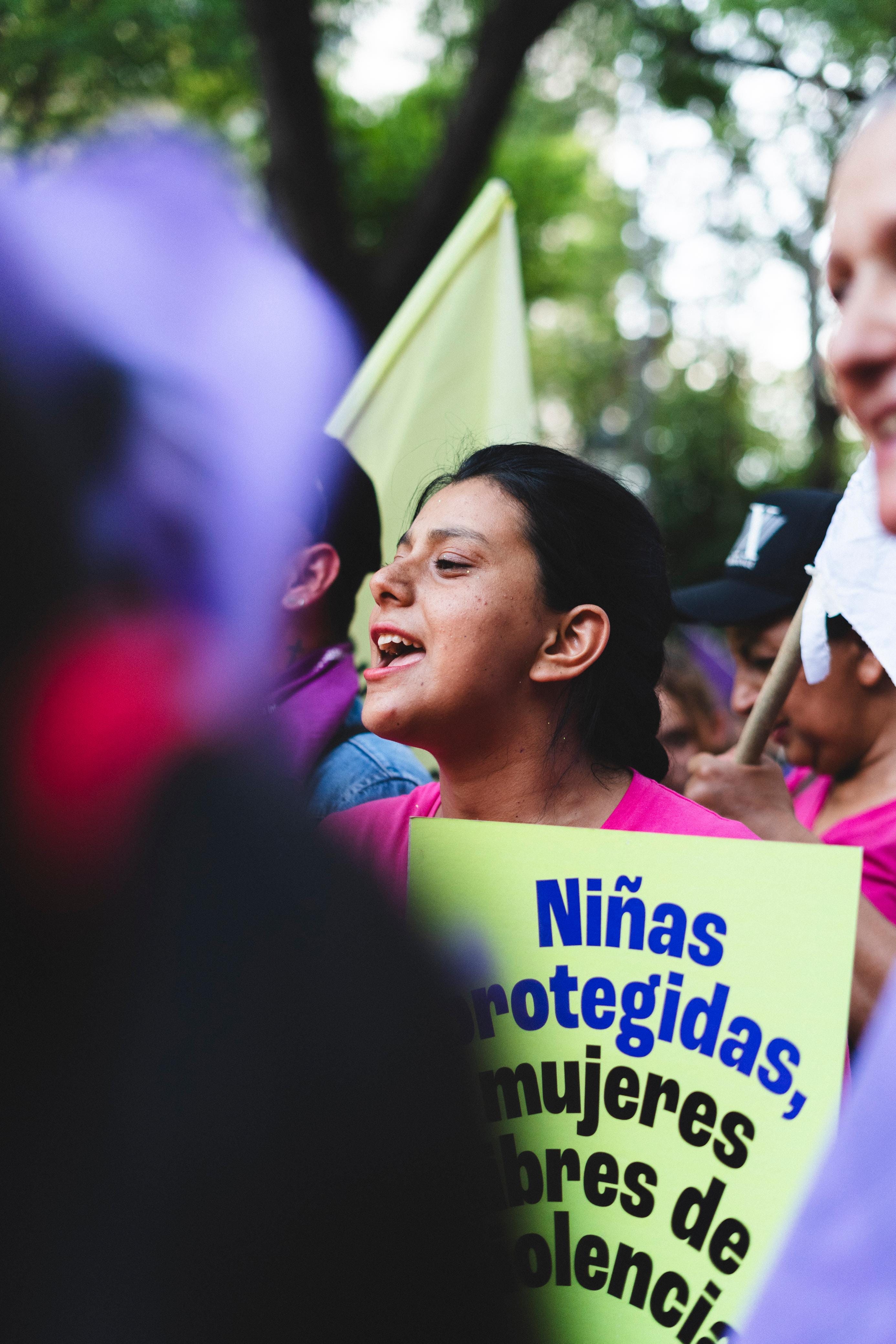
For Montse Vera —a psychologist and member of feminist mental health organisation PsicoFem — the lack of comprehensive sexual education in Paraguayan schools and the climate of growing hostility towards any discussion of gender-based inequality is deeply concerning.
“I really value the effort of our compañeras, who despite their tiredness, the heat, and the exhaustion of being persecuted as social organizations by the ley garrote (Strangulation Law), we’re still here in the streets, taking up space, existing and bothering those in power,” Vera told the Post.
The ley garrote — officially known as the Transparency Law for Non-Profit Organisations — was signed into law last month by Peña, despite being harshly criticised by international and local rights bodies as anti-democratic. Directors, administrators and associates of NGOs that fail to comply with onerous new audits can now be barred from the sector for up to five years.
According to a report published by Paraguay’s Women’s Ministry in July, the past five years have seen the government institution take steps to empower women economically, protect them from violence, and promote their social and political participation. A Gender Observatory created in 2019 — since redubbed the Women’s Observatory — is responsible for monitoring cases of femicide and bringing down cultural barriers that prop up different forms of violence against women.
But such efforts have so far failed to have a noticeable impact. Closing with live music and a DJ set to a packed square in the heart of the capital, the 25N march once more levelled demands for justice at the door of the Paraguayan state. In this year alone, 27 women were victims of femicide, while another 40 survived attempts on their life.
As long as such injustices continue — and Paraguay continues to slip backwards in terms of human rights — the annual demonstration in November will keep drawing women and allies determined to resist.


