



TOP STORY
Paraguay’s world-class birds
In 2016, Diana Gennari and Arturo Alvaro began hosting tourists at Estación Puerto Olivares, their ranch two hours’ drive from Paraguay’s capital, Asunción.
They put visitors up on the historic working farm, showed off a nineteenth-century chapel and their miniature stream train, and offered kayaking and camping trips.
But when a birdwatching enthusiast turned up at the remote spot a few years ago, Gennari recalls, “that’s when things really took off.”
Word got out: Puerto Olivares, tucked between a bend of the Paraguay and Manduvirá rivers, and boasting a private reserve of dense native forest, is a seriously good place to spot birds.
On a recent weekend, a dozen Belgian birdwatchers with telephoto lenses were ferried on a raft up and down the Manduvirá in search of herons, kingfishers, toucans, and monkeys.
After dinner, they piled onto Alvaro’s truck to look for the urutaú, a deftly camouflaged pootoo whose mournful cry and headlamp-like eyes are deeply ingrained in Paraguayan folklore.
They’re guided by Guillaume Martin, a French geologist who moved to Paraguay several years ago, fell in love with local nature, and now offers wildlife and birding tours across the country in partnership with Puerto Olivares.
The Belgians are “really enjoying themselves,” grins Martin, whose business, Lobo Pe, is named after a local giant otter. He clearly is as well: “I’m never going back.”
South America is a birder’s paradise: the continent is home to roughly 3,500 bird species, nearly a third of the world’s total.
Luxury eco-lodges in the Galapagos, the Amazon, and the cloud forests of the Andes have long hogged the attention — and tourist dollars — of birders desperate to tick off a rare find.
It’s a growing business, with one 2025 study of eBird records finding that activity by foreign birdwatchers in Colombia grew fortyfold between 2010 and 2022.
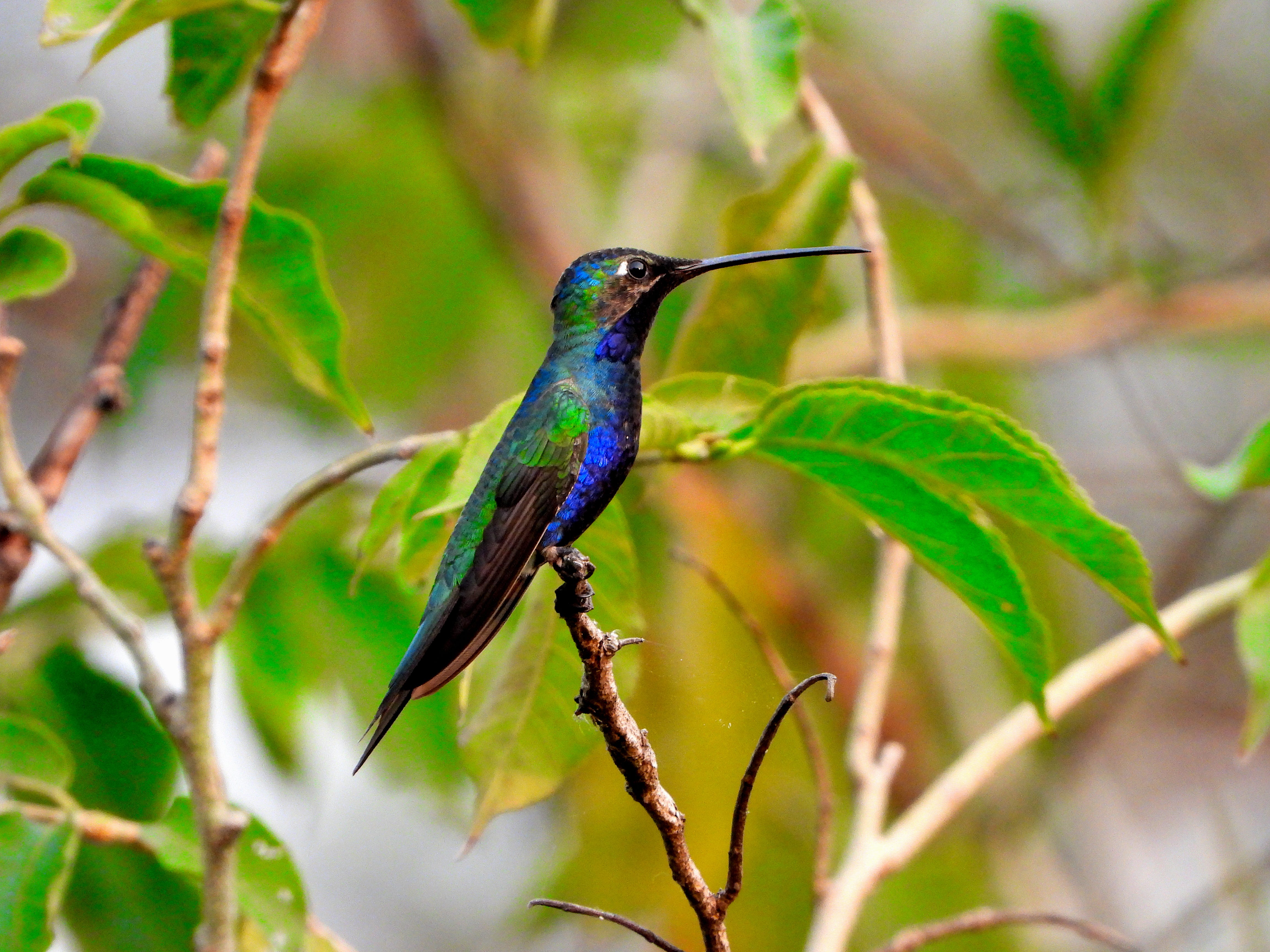
But there are signs that the birding world is waking up to Paraguay: home to more than 700 avian species, many of them unique to this corner of South America.
A handful of operators like Martin now offer birding itineraries in the remnants of Atlantic Forest of the east, the sprawling Pantanal wetlands of the north, and the biodiverse Chaco in the west.
Even the Transformers actress Megan Fox and musician Machine Gun Kelly — in town for the Asunciónico festival in 2022 — were photographed, binoculars in hand, pushing into a bush in the Bay of Asunción, which is beloved of migratory wading species.
As the Post writes this newsletter from Asunción, a clutch of parakeets are chittering in a tree outside the window, where a yellow-breasted pitogüe (great kiskadee) has also built its nest.
And this week, Paraguay’s birding bounty will get its moment in the spotlight when Asunción — for the first time — hosts the South American Bird Fair.
Hosted from September 17 to 20 at the Puerto de Asunción Cultural Centre, the fifteenth edition of the regional birding festival will see workshops, talks, and guided visits to ornithological sites of interest.
Visitors can sign up for guided birdwatching tours of the Botanical Gardens, Lago Ypacaraí, the Aguapey Natural Reserve, and Puerto Olivares.
Further afield, there are trips to the salt lagoons of the Central Chaco, as well as the Mbaracayú Reserve.
One of Paraguay’s largest surviving fragments of Atlantic Forest, the reserve is one of the best places to spot (and hear) the Pájaro Campana — whose bell-like chirrup can reach 125 decibels, one of the loudest bird calls recorded.
Experts from across Latin America will also deliver talks on climate change, the role of birds in Indigenous cultures — and explore wildlife tourism as a driver of local development, drawing on the example of top destinations like Costa Rica.
“Paraguay is emerging as one of South America’s most exciting destinations for birdwatching and ecotourism,” say organisers.
This year’s bird fair, they add, “will be the perfect opportunity to discover its extraordinary biodiversity and rich culture.”
THE POST TAKE
With luck, this last topic may catch the attention of Paraguay’s lawmakers and its president, just a few blocks away in Congress and the Palacio de López respectively.
Earlier this year, the government announced plans to triple the number of tourists received by Paraguay to ten million per year by 2037 — and “transform Paraguay into a world-class tourism destination.”
But the proposals were light on detail, with the tourism minister — who quit four months later — suggesting Paraguay should build its own version of Disneyland.
Paraguay’s nascent birding boom suggests a different way forward: betting on eco-tourism as a driver of employment and conservation, with visitors and locals alike enjoying the country’s wild places and protecting them for future generations.
There are obstacles to this vision: not least the lack of high-end, low-impact safari infrastructure in Paraguay that could attract the deep-pocketed wildlife jetset.
Martin, the French birding guide, puts up his guests in a hodge-podge of plastic tents rather than the canvas yurts preferred by glampers. The so-called Chaco Lodge at Laguna Salada, their next destination after Puerto Olivares, is just a campsite with a viewing platform.
The Mbaracayú Lodge is welcoming but rustic, and the surrounding reserve is threatened by deforestation linked to agribusiness and drug trafficking, as The Paraguay Post recently reported.

Even in Asunción, the wetlands and streams patrolled by snowy egrets and herons are also clogged by trash and sewage — the result of poor drainage and limited rubbish collection in the capital’s poorer barrios.
More worryingly, congress is currently debating plans to start drilling for gas in one of Paraguay’s last great natural reserves.
The Parque Nacional Médanos del Chaco is home to 144 recorded bird species — including the quebracho crested tinamou, the Chaco owl, and the spot-winged falconet, which are only found in the Dry Chaco biome — as well as Indigenous communities who have opposed the fossil-fuel plans.
This week’s celebration of all things winged could encourage more Paraguayans to take ownership of the extraordinary wildlife outside their front door.
As Alberto Yanosky, co-founder of local conservation and birding organisation Guyra Paraguay has put it: “You can’t defend what you don’t know.”
Also in this issue:
Peña warns against impeachment · Doctors win a pay U-turn · PISA exposes Paraguay’s education slump · Tax agency hunts for revenue · Taiwan data-center plans · Paraguayans fighting in Ukraine · Stroessner becomes a videogame villain
Want to keep reading? Claim your trial to unlock everything we publish, and access exclusive subscriber benefits.