



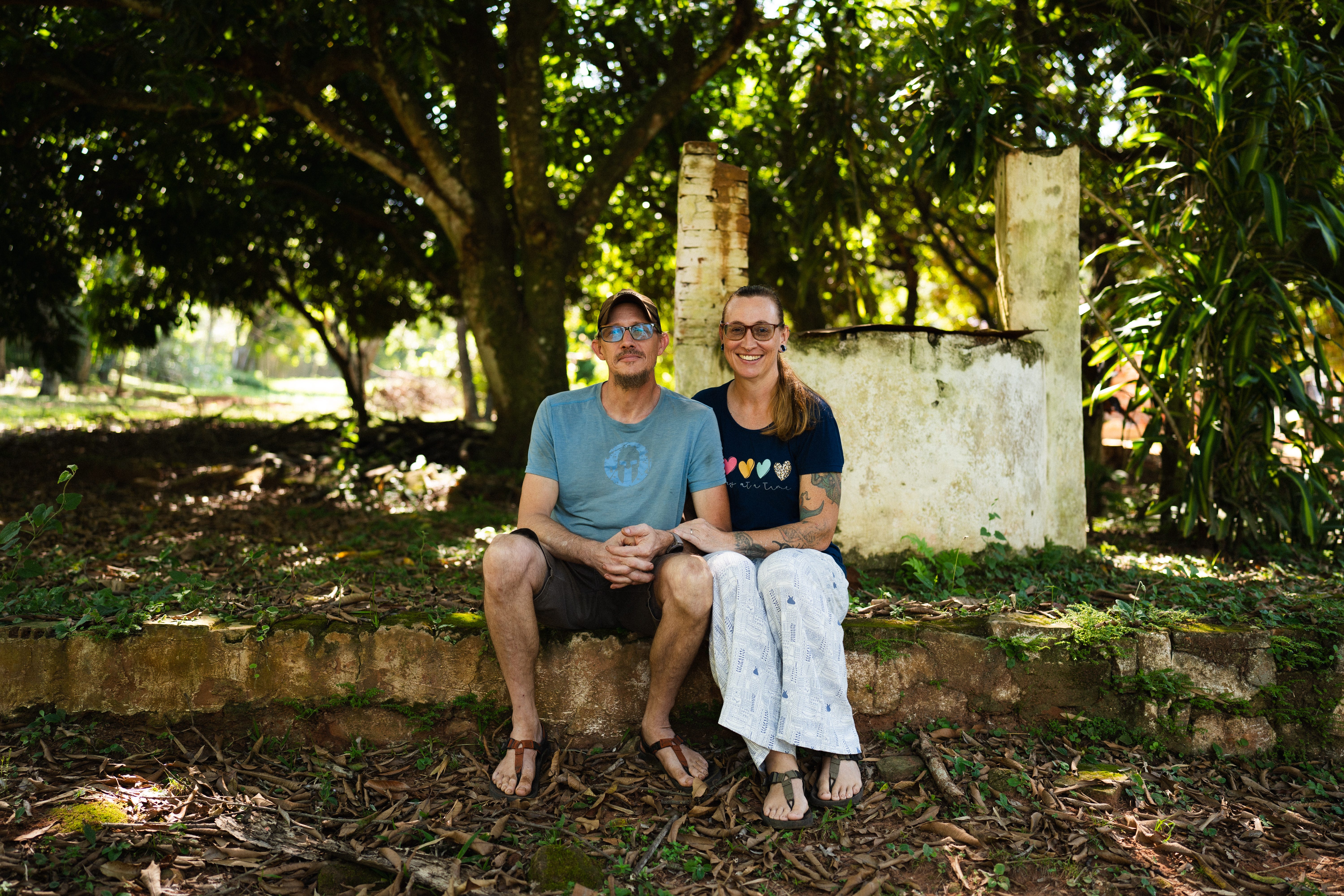
When Jess Simpson and Aric Genaw were looking to relocate from the Pacific Northwest, the middle of South America wasn’t their first choice.
The couple were poised to move to Costa Rica, but it was too expensive and bureaucratic. They researched Portugal: too chilly in the winter.
“I made a list of all the countries,” says Simpson, 49, a former U.S. Navy officer. “I got rid of the ones that were cold, that were dangerous, where they didn’t speak Spanish.”
One place stood out for its “super cheap and easy” residency process and its steamy climate, akin to her native Louisiana.
“This place just seems so chill,” she remembers thinking. “Right, we’re moving to Paraguay.”
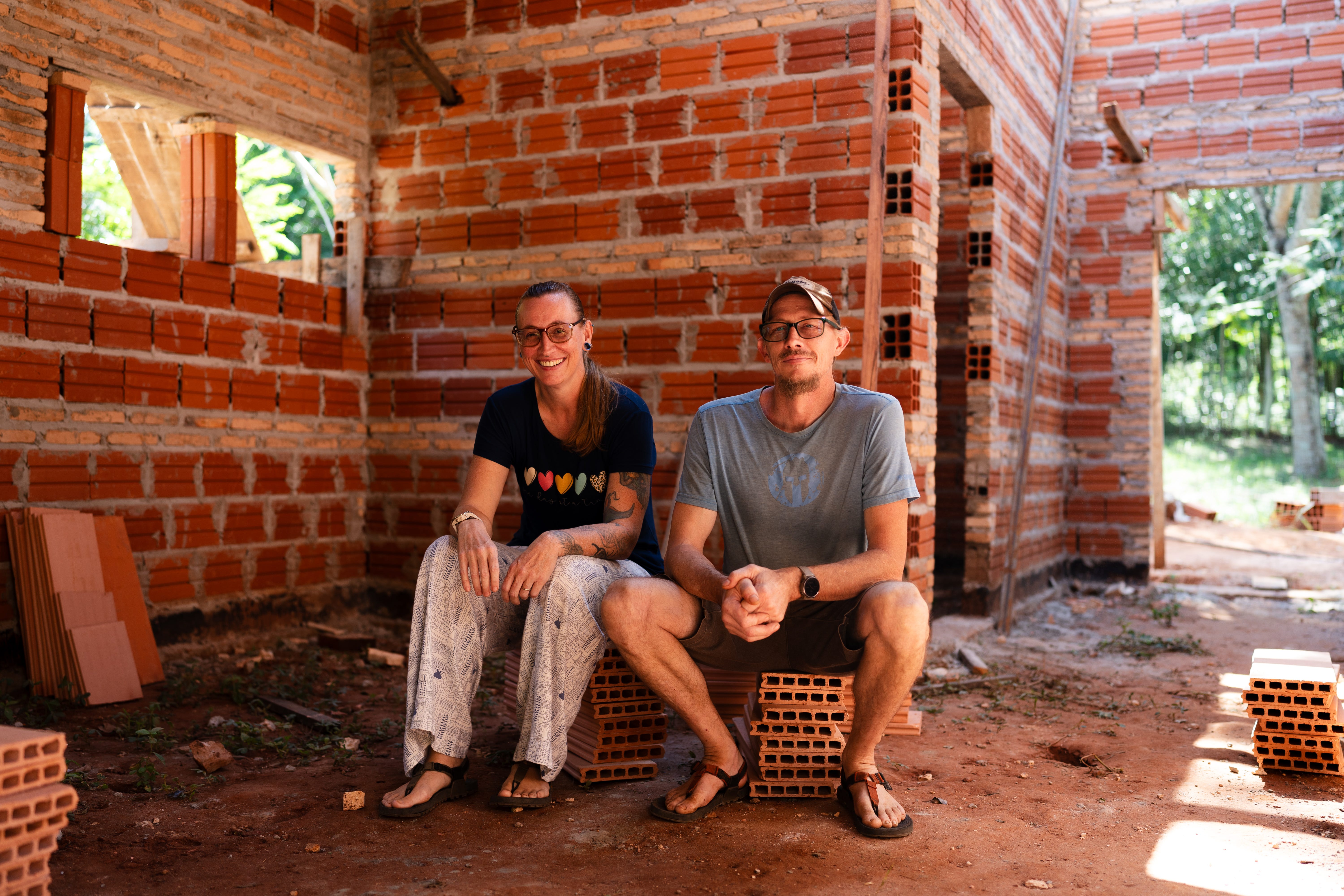
In late 2024, the couple touched down in Piribebuy — a small town in the hills 40 miles east of Asunción, the capital — with their Golden Doodle and two Australian Shepherd dogs.
Helped by a local friend, they negotiated a discount on a gently sloping plot shaded by mango and avocado trees, and started building a home.
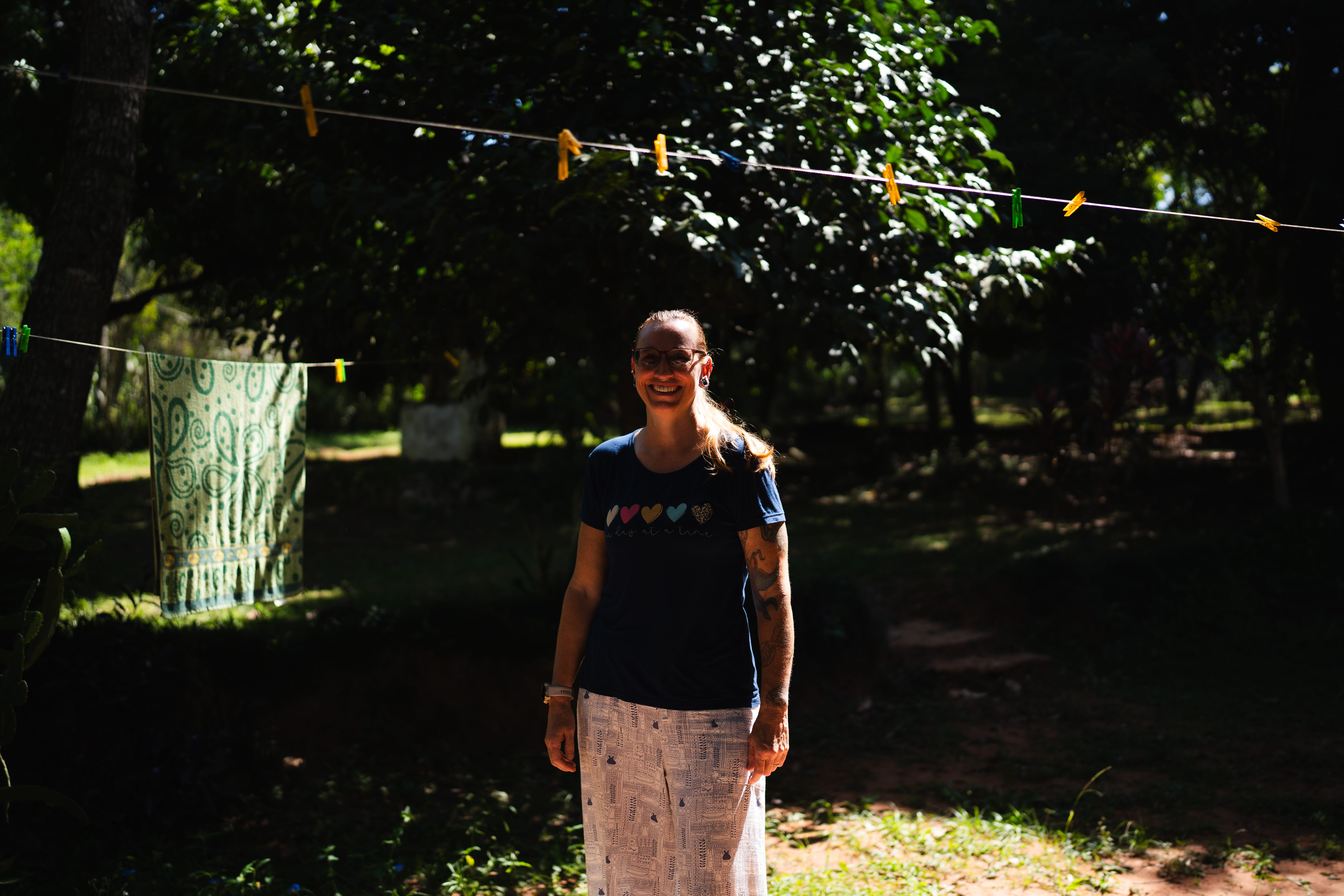
Genaw, a 50-year-old mechanic, admits to being an introvert. But Simpson, who does business coaching and bookkeeping online, quickly got stuck into local life: running trails in the hills, giving evening classes in English, making mbejú (manioc pancakes) with her neighbours.
“I’ve gained so much weight,” she laughs, mentioning a popular cheesy cornbread. “Chipa guazú: I could eat that all day long.”
Simpson also blogs fondly on Substack about life in smalltown Paraguay: the sub-tropical thunderstorms that rumble on for hours, the day-long fiestas, the wakes that last all week.
“The US is busy and loud and expensive, and all about appearances. I didn’t know my neighbours,” she reflects. “Here, I know every single person in every single house.”
Donald Trump’s tumultuous second term — which has seen law enforcement shoot dead nine people to date amid a mass round-up of undocumented migrants — has only confirmed their decision.
“We didn’t realise how much we were, like, in a police state in the US,” explains Simpson, a former municipal official in Gold Hill (pop. 1335), Jackson County, Oregon.
“And that’s why we came to Paraguay, for the freedom, for the peace and quiet, to be left alone and live … Every day, I wake up and think: what a paradise.”
A record residency rush
The couple form part of the largest wave of immigration in modern Paraguayan history. In 2025 alone, a record 47,687 people applied for residency: up 63% on the year before.
On social media, a growing cohort of expat influencers — often amplified by pro-government accounts — are praising Paraguay’s mouthwatering barbecue culture, comparatively safe streets, and traditional family values.
And on a recent morning, the National Directorate of Migration (DNM) in downtown Asunción was a flurry of foreign languages and Paraguayan fixers with sheaves of documents.
Of the 40,600 foreigners granted leave to remain last year, 24,526 were from Brazil, many of them students. Argentines, with 4,366 requests granted, were a distant second.
The influx is only accelerating: successful applications grew by 85% in January-March compared to the same period in 2025, putting Paraguay on course to receive nearly 90,000 immigrants in 2026.
Upstairs, the desk of Jorge Kronawetter — the institution’s director — is almost hidden under stacks of residency applications.
“We’re working at our limits,” says Kronawetter, who personally reviews and signs around 150 requests per day.
President Santiago Peña has made it a priority to attract wealthy foreigners. In April, Paraguay’s government announced a new Investor Pass offering fast-tracked permanent residency for those investing $150,000 in Paraguay’s tourism sector, or $200,000 in real estate or the stock market.
And amid growing conflict around the world, many are looking to Paraguay’s fast-expanding economy, low cost of living, and 10% flat tax rate — which drops to 0% for money earned abroad — as a safe haven.
“Capital always looks for where it can get the most benefits,” explains Kronawetter, with a smile.
Other top countries of origin last year included Germany (1,652), Bolivia (1,357), Spain (1,023) and Venezuela (847). Hundreds each also applied from the Netherlands, the United States, Russia, and France.
“They’re numbers we’ve never seen before,” says the director: himself descended from Austrian and Armenian grandparents who came to Paraguay in the wake of the First World War.


To cope with the tide of immigrants, the migration office plans to roll out an online portal in June that will allow foreigners to apply for temporary residency from their home country — and, at least in theory, get approval within 15 days.
The overhaul, Kronawetter says, will undercut agencies that offer “deceitful” shortcuts for thousands of dollars: “Many people don’t want it, but we’re going to do it.”
Fiscal perks and streamlined paperwork aside, Kronawetter adds, Paraguay has an ace up its sleeve: its people.
“Foreigners feel at home here … there’s no discrimination, xenophobia, or racism. You go to the countryside, and people will treat you even better than the city. The people who have the least will share with you the most.”
But not only is this warm welcome restricted to a few dozen nationalities. Citizens of China, India, and nearly all of Asia and Africa have to get a visa — requiring an invitation letter from a local resident or company — before they can enter Paraguay and apply for residency.
There’s also a paradox. As European retirees, North American digital nomads, and South American investors pile into Paraguay, many citizens are heading for the exit. According to UN data, nearly a million Paraguayans, or almost 15% of the population, live abroad.
And back home, an anti-expat backlash is gathering steam online, as critics accuse recent arrivals of driving up prices, lording it over locals, and engaging in “organised sex tourism.”
To understand why so many foreigners are coming to Paraguay — and why so many locals have left — The Paraguay Post travelled across the country to meet migrants and their descendants.
We dropped by an orderly Japanese cooperative, a Brazilian agro boomtown, and a controversial colony of German and Austrian anti-vaxxers. We also spoke with Paraguayans who have spent decades abroad, and those preparing to pack their bags.
One question repeatedly surfaced: is Paraguay really a paradise? Or does that depend on who you are, and where you come from?
A country of opportunities
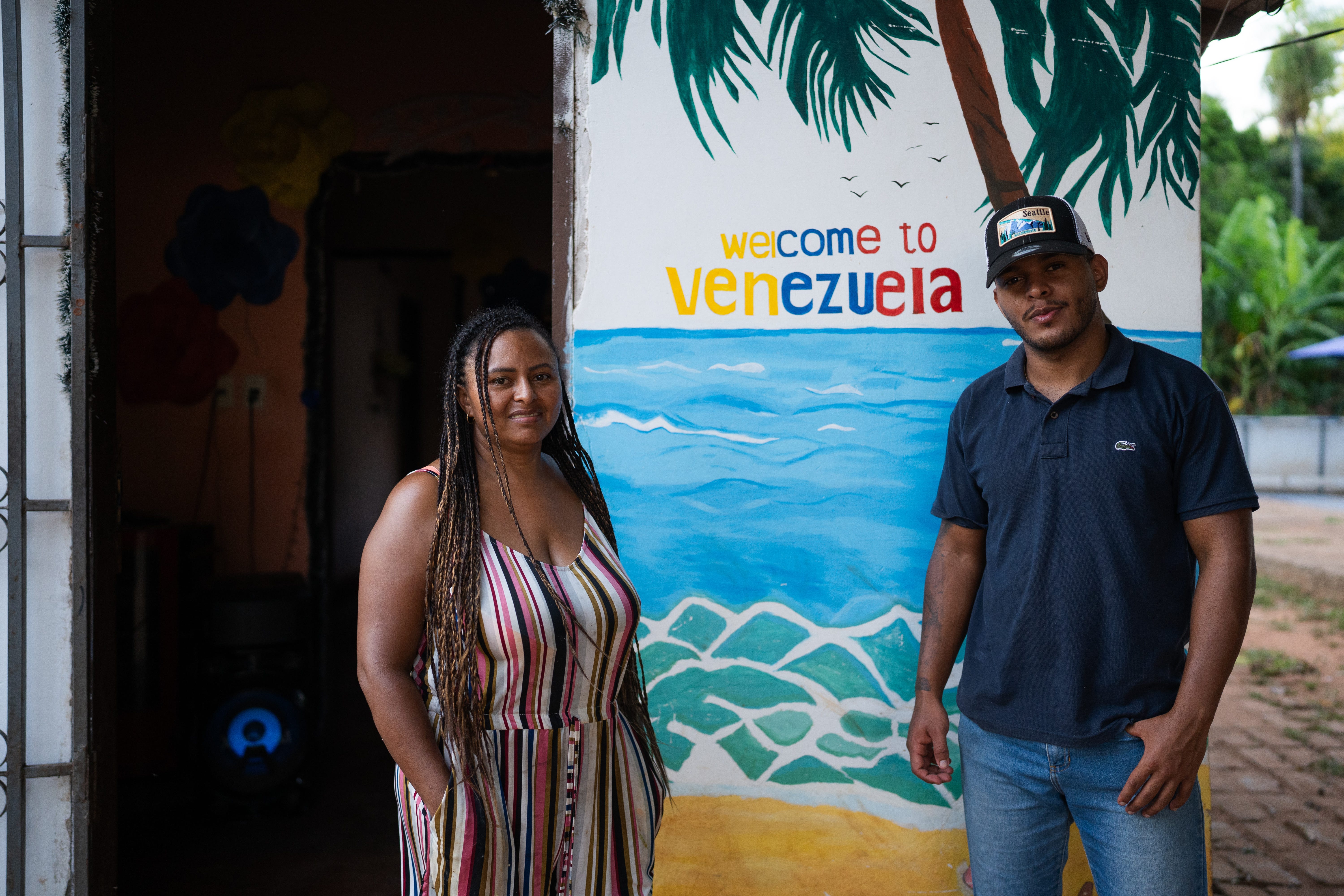
Many migrants see Paraguay as a place of possibilities: a place for dreamers to realise grand designs, and where the downtrodden and desperate can turn their lives around.
Yexis Guzmán, a former steelworker from the Caribbean coast of Venezuela, came to Paraguay five years ago. Fed up with discrimination in Peru, she took a smuggler’s boat across Lake Titicaca, cooked for truckers to raise money for a Covid test at the Bolivian border, and walked and hitchhiked across the scorching Chaco outback.
“The journey was horrific,” says Guzmán, a straight-talking 40-year-old, one of at least seven million people to have fled Venezuela’s economic meltdown in recent years.
To begin with, Paraguay was hardly better. She found a job as a cook in an Asunción hotel, but was made to work from six in the morning to 11 at night, sleeping in a tiny space behind reception. Her boss confiscated her cellphone, withheld her documents — she is yet to get them back — and threatened to sue her when she walked out three months later.
“It was the worst: the harsh treatment, the abuse, the exploitation,” Guzmán recalls.
She started selling hallacas — a kind of Venezuelan tamale — in the suburb of San Lorenzo, sending money home for her children. Within a few years, she earned enough for her eldest, Kevin, then 16, to make the long bus journey to Paraguay.
In the garden of their simple home in Capiatá, they together founded Gastronomía Porteña, which serves up coastal Venezuelan comfort food to a growing clientele from fellow Andean and Caribbean nations under the shade of two enormous mango trees.
“I’m so grateful to my grandma for showing me how to cook, and my aunties for teaching me lots of little dishes,” says Guzmán. She recalls how one Venezuelan customer cried with emotion after tasting her spin on jojoto, a corn-based dessert, for the first time in decades.
Her organisation, Qué Chévere, meanwhile helps Venezuelans get local documents, and organises craft and culinary fairs across Paraguay’s capital.
Despite the bumpy start, Paraguay has given them relative stability and freedom. Where a family member back home was jailed and tortured for sharing a meme that criticised ex-dictator Nicolás Maduro, Kevin — a keen amateur boxer who waits the tables — creates humoristic videos on social media.


According to Latinobarómetro, a region-wide opinion poll, Paraguay is one of Latin America’s most welcoming countries towards immigrants.
Just a third of Paraguayans think migration is harmful to the country or increases crime, well below the regional average, while 73% think it boosts economic development.
But Guzmán criticises a decision by Peña to close Paraguay’s borders to Venezuelans without a visa following Maduro’s abduction by U.S. special forces in January, saying it has separated families. And she yearns to return to Venezuela, she admits: “I miss my home.”
Other migrants have found unexplored business niches beyond the kitchen.
“I needed to get out,” says Verónica Vega, who came to Paraguay 15 years ago after the breakdown of a relationship with two small children and scarcely fifty dollars in her pocket. “It was almost a suicidal leap.”
She started out selling dreamcatchers made with ñanduti, Paraguayan lacework, on the street. Today, she runs a business marketing crystals, corals, and amethyst pendants to 100,000 followers across Facebook and TikTok.
After years of suffering through cold winters with little work in her native Uruguay, she now goes about barefoot — and has bought a house, acquired a showroom for her mineral collection, and had another child.
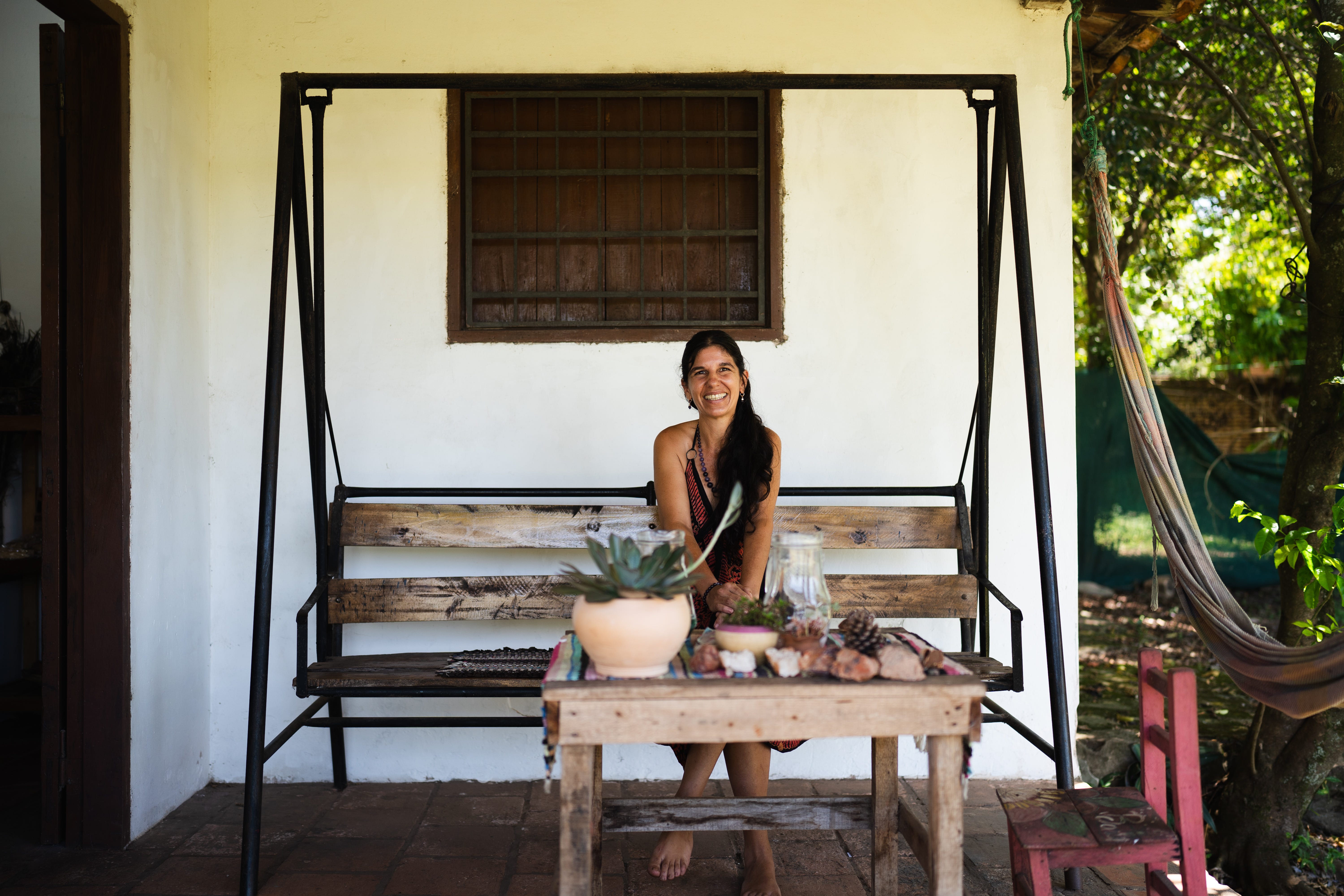
“In Uruguay, the cake is already cut,” explains Vega, 44. “In Paraguay, everything is still to play for. It’s a land of opportunities, of kind and open-hearted people.”
“Paraguay is the heart of South America. Energetically, it’s very special,” she adds. “I don’t just sell stones: I believe in their power to heal, because they helped me a lot.”
Many of Vega’s compatriots deal in prized commodities of a different kind. Uruguayans now own the most land of any group of foreigners in Paraguay: some 3 million hectares, mainly dedicated to soybean, beef, and forestry products.
Other recent immigrants see in Paraguay’s cheap costs — and emerging cultural scene — a chance to achieve their ambitions and make a mark.
Euan Richard, a 38-year-old physicist and guitarist from Edinburgh, visited Asunción as a tourist in 2021 after stints living in Tokyo and Amsterdam.
After meeting talented local musicians, many of them self-taught via YouTube, he decided to fulfill a long-held dream: opening his own jazz bar.
“I thought screw it,” Richard recalls, “why not do it here, and give the guys a place to play?”

Over the following two years, he estimates that JazzCube — a stylish space in the capital’s upscale Villa Morra district — hosted 500 live concerts with Paraguayan and international performers.
There were moments on stage, Richard says, when “it all came together: musicians sharing ideas, improvising, having a proper artistic conservation. That wasn’t happening in many other places.”
In the Netherlands it would have been too expensive and required complicated permits. “Here, I just emptied my savings account and went for it.”
Richard and his partners reluctantly sold the business, which wasn’t profitable, in January 2024.
Today, he sometimes gives classes at the UNA, Paraguay’s top public university, for an honorary fee of 10,000 guaraníes ($1.50) per hour. He has also co-authored Paraguay’s first academic paper on detecting muons, a kind of particle.
And Richard still gigs around town and records music with friends from his JazzCube days. “Looking back,” he reflects, “I’m really proud of what we did.”
The promised land
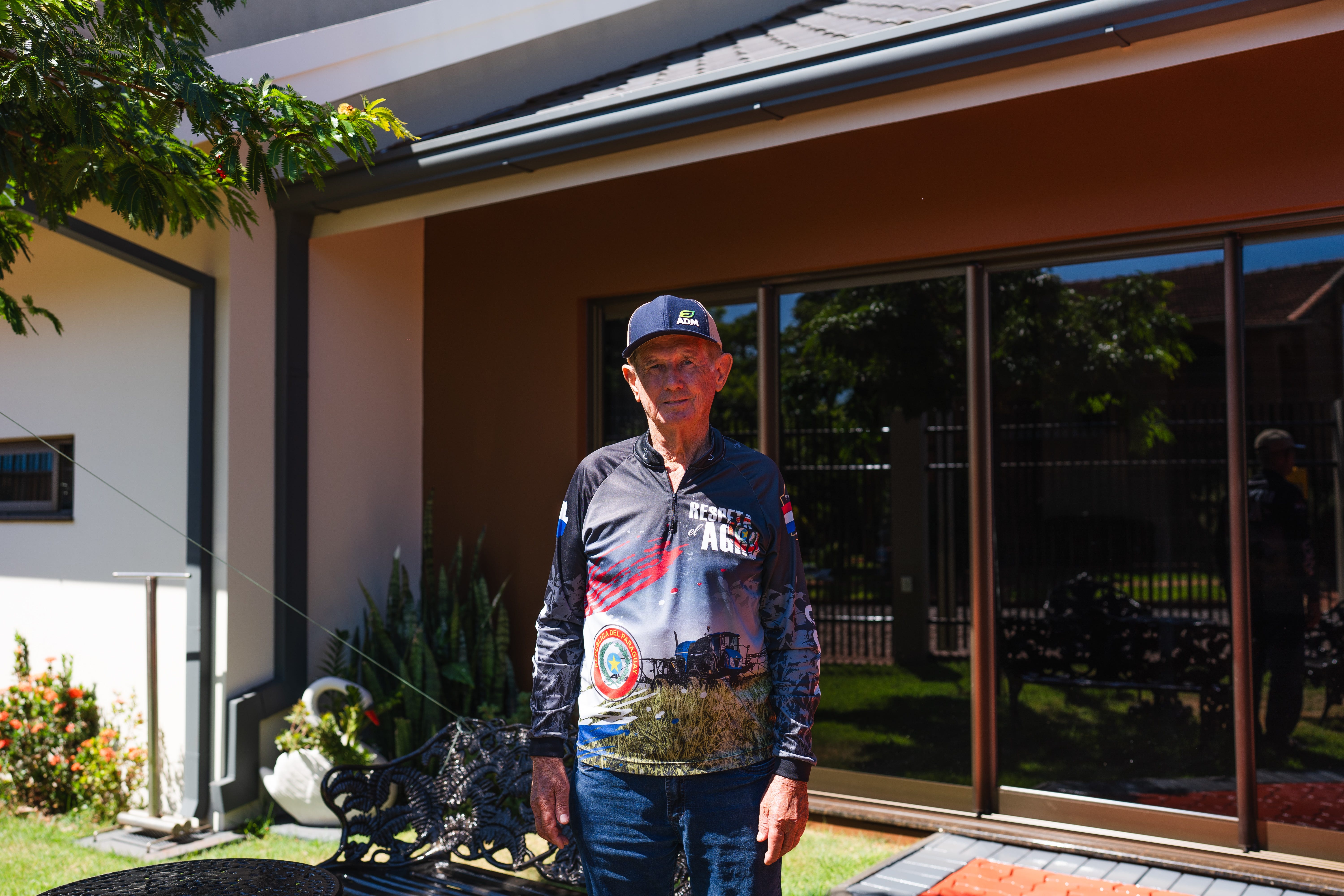
Some six hours’ drive from Asunción, the agribusiness hub of Santa Rita sits amid the fertile red earth and rolling plains of eastern Paraguay.
But the ocean of soybean surrounding the town, the churrasquerías playing sertanejo music, and the billboards in Portuguese advertising tractors, pesticides, and GM seeds make it seem like Brazil.
Ignacio Schorr, 78, was one of thousands of Brazilian colonists who settled eastern Paraguay five decades ago at the invitation of the Alfredo Stroessner regime (1954-89). He recalls tearing down colossal, centuries-old trees and living in a barn with livestock.
Today, Schorr has a house with an electric fence, two SUVs parked in his drive, seven adult children, and a thousand square kilometres of soybean to his name. Some 263,000 Brazilians were living in Paraguay in 2023: a number that jumped by nearly 10 percent last year alone. But Schorr, who has sun-weathered skin and little Spanish, looks down on the newcomers.
“They have it easy,” he says. “We got everything ready for them.”
A few blocks away, Brazilian-born lawyer Kelly Thomaze is expanding her workforce of pink-uniformed secretaries — and experimenting with AI chatbots — to deal with her waitlist of over a hundred Brazilian entrepreneurs looking to relocate to Paraguay.
“They’re desperate,” says Thomaze, whose Instagram reels praising Paraguay’s low taxes, few public holidays, and bare-bones social welfare often go viral. “It’s a matter of survival.”

Many of her consultancy firm’s clients are fleeing recent tax hikes on the rich in Brazil, looking to shift their fiscal residency Paraguay but not live here full-time. (Temporary residents can leave the country for up to 12 months without disrupting their pathway to permanent residency).
Some are setting up maquila textile factories in nearby Ciudad del Este. Here, they get tax breaks, cheap hydroelectric energy from the Itaipú Dam — and obedient workers, virtually none of whom are unionised.
“The labour requirements are much lower” in Paraguay, Thomaze explains. “We basically don’t have lawsuits.”
Others fear Brazil is sliding into a communist, pro-LGBT dictatorship under long-serving leftist president Luíz Inácio Lula da Silva, a former union leader.
Last year, right-wing former president Jair Bolsonaro was handed a 27-year sentence for conspiring to overturn the 2022 election that he lost to Lula. Judges have blocked dozens of social media accounts for cheering on Bolsonaro’s attempted coup.
“You can’t express yourself,” argues Thomaze, who moved to Paraguay with her family aged five. “It’s almost dangerous.”
Her adoptive country, by contrast, has gone from “curiosity” to promised land: “Here in Paraguay, we’re 100 percent right-wing. The whole gender issue isn’t even up for debate. The family is protected, there’s no confusion like in Brazil.”
It’s also safer, she adds. “My car outside is unlocked.”
In search of other opinions, the Post approaches several locals, but most clam up when we ask about their Brazilian neighbours and bosses.
We come across Arturo Flecha sanding the curb in front of Schorr’s house until it gleams, ready to be repainted. His foot is broken, so he sits on the broiling pavement in the sun. He says the Brazilians pay up to 130,000 guaraníes ($20) a day — compared to 100,000 guaraníes back in Asunción — with bed and board included.
“This was Brazilian territory, right?” asks Flecha, a cheerful 20-year-old. “Well, now it is. I don’t care, they’re good people. They give people work.”
“I know how to do almost anything,” he adds. “A guy’s got to eat.”
We call up Tomás Zayas, a longstanding campesino leader in the surrounding department of Alto Paraná. He says all his comrades in Santa Rita have been evicted to make way for agribusiness.
“We don’t have a problem with Brazilians coming here,” he emphasises. “The problem is the model they’re bringing.”
Zayas — whose home was attacked by unknown gunmen in 2013 — accuses the foreign soybean barons of forcing out poor Paraguayan farmers, hoarding wealth, and poisoning the environment. He says tests have found pesticides in his blood.
“They’re creating a country within our country,” Zayas warns. “This is a time bomb that at some point is going to explode.”


Starting in 1537, barely a few hundred Spanish conquistadors rowed up the Río de la Plata to subjugate and intermingle with Paraguay’s native Guaraní peoples. The province remained poor and remote for centuries.
Yet this relative isolation only stoked outsiders’ fantasies about Paraguay as a sub-tropical utopia, historian Claudio Fuentes Armadans tells The Paraguay Post.
“That fascination with Paraguay deepened,” Armadans adds, under post-independence dictator Dr. Francia (1816-40), who made it all but impossible for foreigners to enter — or to leave.
The War of the Triple Alliance (1864-70) — which saw disease, starvation, and invaders from Brazil, Argentina and Uruguay wipe out most of the male population — cemented the trope of Paraguay as a “sexual paradise” where women outnumbered men.
Yet as South American ports and factories absorbed millions of Italians, Irish, Poles, and Levantines from the 1850s onwards, Paraguay — depopulated, unstable, and with a punishingly hot climate — largely failed to attract mass immigration.
Instead, it hosted several doomed settlement schemes.
In 1872, nearly 900 “Lincolnshire farmers” were shipped from Britain to eastern Paraguay. It was part of an elaborate financial scam: in reality, most were beggars from London, and had to be rescued from starvation.
A colony of anti-Semitic vegetarians called Nueva Germania, intended to demonstrate the superiority of the Aryan race, ended with the bankruptcy and suicide of its founder in 1889.
A few years later, a group of poor Australian teetotallers founded Nueva Londres as a White utopia, “strong and straight and manly,” where “every man will be a mate.” But their communist colony was soon split apart by local women, rum, and leadership squabbles.
From 1926 onwards, Mennonite colonists from Canada and Russia transformed Paraguay’s Chaco into a cattle ranching powerhouse, marginalised its native peoples, and bulldozed clear-cuts in the forest visible from space.
To this day, Armadans argues, many foreigners see Paraguay as a place where things like taxes, laws, and vaccines are optional: “Some migrants see that as a good thing.”
But many immigrant communities in Paraguay have taken pains to integrate — and made important contributions to the public’s health and even spiritual wellbeing.
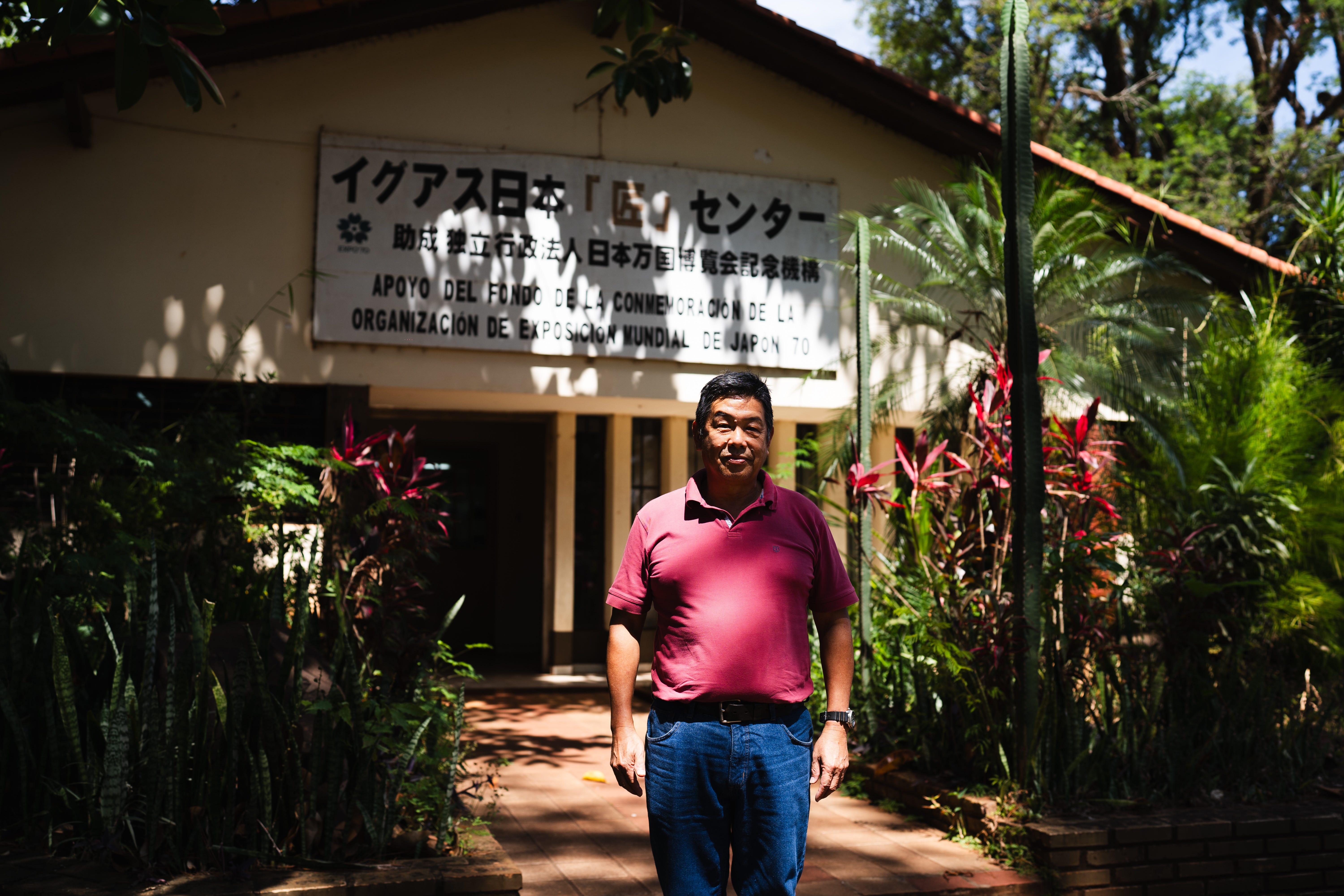
Catalino Yozo Hirano’s parents were eking out a living in a poor hilltop village in post-war Japan when they heard the Stroessner regime was handing out land.
They set sail for Paraguay, becoming some of the first residents of Colonia Yguazú, a Japanese colony founded in 1961.
The settlers cultivated tomatoes and watermelons, and planted sakura blossoms along wide avenues ready for 2,000 households. Prince Akihito, the future emperor, visited in 1978.
But fewer than 400 families followed the Hiranos. Markets were too far away, Brazilian colonists outmatched them at mechanised agriculture, and Japan’s rapid industrialisation in the 1970s made distant Paraguay a less appealing prospect.
Sixty years on, Colonia Yguazú is a prosperous, low-key community that pools its modest resources to pay for a school, open to all, that promotes Japanese language and culture — as well as a hospital with Japanese doctors and nurses where locals get cut-price care.
“Eighty-five percent of the patients are Paraguayan,” says Hirano, 65, the secretary of the Yguazú Japanese Association. “We keep the hospital going even though we run a deficit of $100,000 every year.”
This isn’t pure altruism, he admits. Today, fewer than 10 percent of the colony’s 12,000 residents are of Japanese origin.
“We’re a minority,” Hirano explains. “Our objective is to get along with the Paraguayans, because though I’m Paraguayan by birth, people see me as a foreigner.”
As a young man, Hirano adds, he returned to his parent’s homeland for six years. He found work on a car assembly line, but found the pace of life too frantic, “a race against the clock.” In Paraguay, he thinks, “you can enjoy the passage of time.”


Nearby Ciudad del Este is home to several thousand people of Chinese and Taiwanese descent: largely migrants who came to this duty-free border hub in the 1980s to strike it rich, and their descendants.
Some have poured their earnings into building an ornate, pagoda-style temple, which rises to four storeys amid the shopping malls downtown.
“Our Buddhism is very inclusive,” says its secretary, Sonia Karnani, showing the Post around. Rather than a strict faith, “people take it as a way to live your life.”

The Fo Guang Shan faith funds a free maternity and children’s hospital, fronted by statues of the Virgin Mary and Buddha. The temple also hosts intercultural events, traditional drumming classes, and exhibitions.
The serene spot — carp swimming in a pond, paper lanterns fluttering in the breeze — makes an unlikely contrast with the hectic alleyways of Ciudad del Este, Paraguay’s shopping and smuggling capital.
But most attendees at their silent mediation retreats are Paraguayan, says Karnani.
“I think it’s helping people,” adds Karnani, a fresh-faced 38-year-old who also teaches Mandarin. “That’s why they come back.”


A silent exodus
Opportunities to ascend in Paraguay aren’t available to everyone. And where some find a sense of zen in the quiet life, others see a dead end.
After finishing high school in Caaguazú in rural Paraguay, Evaristo Romero Troche traded his straw-roofed family home for the urban jungle in Brazil. He hoped to earn enough to study agronomy back home. He wouldn’t return for 17 years.
Now 42, Romero lives with his wife, daughter and mother in Costa Rosada, on the outskirts of his hometown. Sipping tereré in the shade, and wearing a Club Flamengo shirt, he recalls his time in São Paulo — a megalopolis of 20 million people — in an accented mix of Spanish, Portuguese, and the native language Guaraní.
In Brazil, Romero entered a sprawling, semi-underground textile industry where migrant workers live and work in the same cramped spaces, divided by employers — often Peruvians, Bolivians and Paraguayans — into makeshift sleeping quarters with strips of plywood or fabric.
Many shops operated off-books, paying workers in cash. Pay varied — by day, by month or by output. Romero chose the latter, working harder to earn — with three co-workers — up to 1,000 reais ($200) per day.
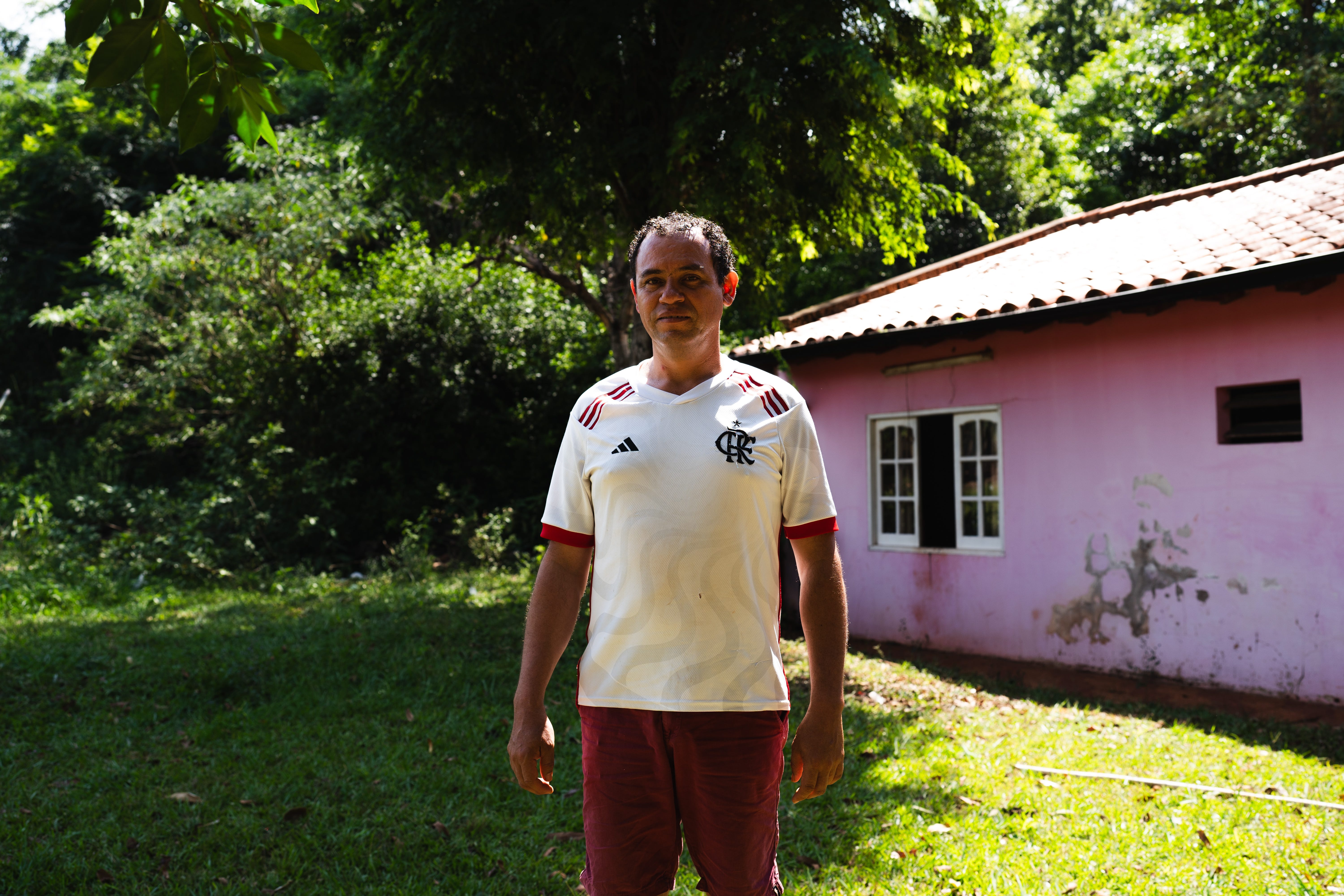
Yet the conditions often felt exploitative. His workdays ran from 7 a.m. to 9 p.m. Food and lodging were included, but breaks and paid time off weren’t. Romero saw Paraguayan children as young as 10 who had dropped out of school and traveled with their families to work in the textile shops.
A 2024 investigation by Reporter Brasil described how Brazilian authorities rescued 192 Paraguayans from slavery-like conditions in cigarette factories, ranches, and garment workshops between 2010 and 2023. The report documented cases of mothers denied maternity leave and breastfeeding at their sewing machines.
Finding such precarious jobs is easy. The Paraguay Post searched “textile worker Paraguay” on Facebook and found hundreds of publications. We wrote a WhatsApp number and spoke with the owner of a shop who promised us work. But they didn’t offer accommodation, food, or a formal contract.
Life in São Paulo wasn’t all hardship. Paraguayan migrants gathered on weekends for barbecues and football games. In 2014, when Paraguay failed to qualify for the World Cup, Romero and his co-workers represented la albirroja in a tournament of foreign residents that ultimately saw Bolivia hoist the trophy.
In 2025, more than 56,000 Paraguayans were living in Brazil, according to official data. Romero is proud of his time in São Paulo, where he eventually opened his own shop and sent for relatives to join him. Each week, he wired money to his mother so she could build a new house out of bricks.
Such remittances are a lifeline for Paraguay’s economy as a whole. In 2025, migrants sent a record $1.35bn home: the country’s third-largest source of foreign exchange after beef ($2.17bn) and soybean ($2.65bn).
Still, Romero’s homesickness only grew with the years. He would have rather stayed home if steady work had been on offer.
“I don’t want her to go through what I did,” he says, referring to his daughter, now studying nursing in Caaguazú.
All around them, the silent exodus of Paraguayan families continues.
It’s a few weeks after Christmas, and the neighbourhood is quiet: a far cry from Romero’s youth, when rowdy matches of piki vóley took place every afternoon. The wooden house across the street is padlocked: his neighbours have also migrated.
“Everyone’s gone to work in Chile, Argentina and Spain,” Romero explains.


The outflow of young women to work as nannies, cleaners and carers abroad has contributed to Paraguay’s birth rate nearly halving since 1990.
Partly reflecting mass emigration, the 2022 census found that just 6.1 million people live in Paraguay: well below previous estimates of 7.5m.
But as Paraguay’s economy grows — the country’s GDP expanded by nearly 7 percent in 2025 — and foreign governments scapegoat migrants, some are now returning.
In 2005, Vilma Lucila Núñez left her native Asunción and her two young children behind to work as a mucama, cama adentro (a live-in maid) in Daireaux, a small town 250 miles southwest of Buenos Aires.
She got up at 5 a.m. every day to make breakfast for her employer’s family, and didn’t stop until 11pm, sending part of her monthly salary — between 700 and 1000 pesos (around $300) — home to her kids.
“I cooked, I cleaned, I was a babysitter, everything,” recalls Núñez, now 49.
A few years later, she married an Argentine, gaining permanent residency as a result. They had two more children and started a small gardening business.
To keep memories of home fresh, she still prepares her tereré (chilled yerba mate) every morning and cooks traditional Paraguayan dishes like soyo, vori vori, sopa paraguaya and chipa guazú for her dual-national family.
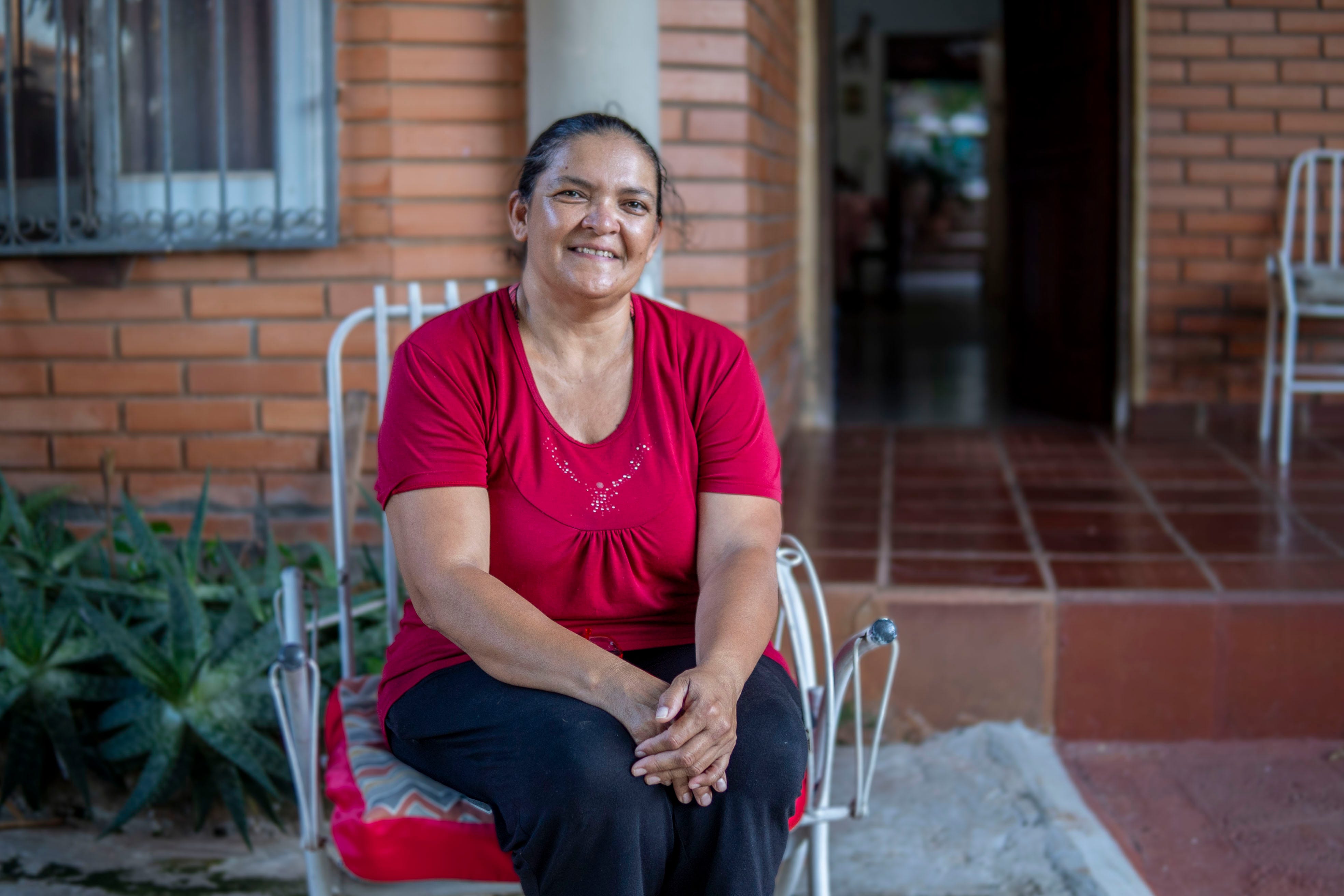
Paraguayans are Argentina’s main source of migrants, with just over 500,000 living in the neighbouring country according to its 2022 census. According to Paraguay’s national statistics office, this figure is now 722,000.
But Argentina’s conservative president Javier Milei expelled some 5,000 foreigners between December and January alone, vowing to end the “chaos and abuse” supposedly brought by migrants and “make Argentina great again.”
Recent reforms by Milei mean those without permanent residency can no longer access non-emergency healthcare for free. Foreigners who have children in Argentina or marry locals now no longer automatically get the right to remain, but have to demonstrate a clean criminal record and the ability to support themselves.
This essentially bars informal migrant workers from regularising their status, says Gabriela Liguori, the director of CAREF, a local NGO supporting migrants and refugees. “The changes Argentina is living through are all about expelling poor people,” she adds.
The crackdown in Argentina mirrors Donald Trump’s expulsion of 230,000 foreign-born residents from inside the United States in 2025. A further 250,000 were arrested at the border and deported.
Kronawetter, Paraguay’s migration director, says most of the 20 Paraguayans deported in Trump’s first year back in office were recent arrivals, and that they were deported on commercial flights: a contrast to the shackled deportees sent to El Salvador, Brazil and beyond.
He points to U.S. Immigrations and Customs Enforcement (ICE) data showing 33 Paraguayans were deported in 2024, the final year of the Biden administration. In the previous five years, the average figure was nine. “Trump has deported way fewer,” Kronawetter adds.
He thinks this supposedly lenient treatment by the Department of Homeland Security could reflect the ever-closer relationship between the Peña and Trump administrations.
In April, Paraguay received the first group of undocumented migrants from third countries expelled by the United States. Following an agreement in February that has not been published, a further 25 will be sent every month to Paraguay, where the UN will help them return to their home countries.
More than the hostile mood music in Argentina, Núñez, the former maid, is fed up with its screwball economics, rollercoaster rate of inflation, and punishing cost of living.
In March, she travelled back to Paraguay to visit relatives and plan her definitive return in December. The plan is to start another business and cultivate fruit trees in the countryside with her family.
“There’s no future” in Argentina, Núñez complains. “It’s like we’re stuck and can’t make any progress.”
It’s a different picture in Spain, the EU’s fastest-growing major economy, and home to a fast-growing community of at least 162,000 Paraguayan migrants.
In April, the socialist prime minister Pedro Sánchez at a stroke provided a pathway to legal residency for half a million undocumented workers.
Sánchez described his regularisation decree as “an act of justice and a necessity”, praising foreigners for propping up the economy, sustaining public services, and helping to build a “rich, open and diverse Spain.”
Someone who may take advantage of such policies is Marino Cabrera.
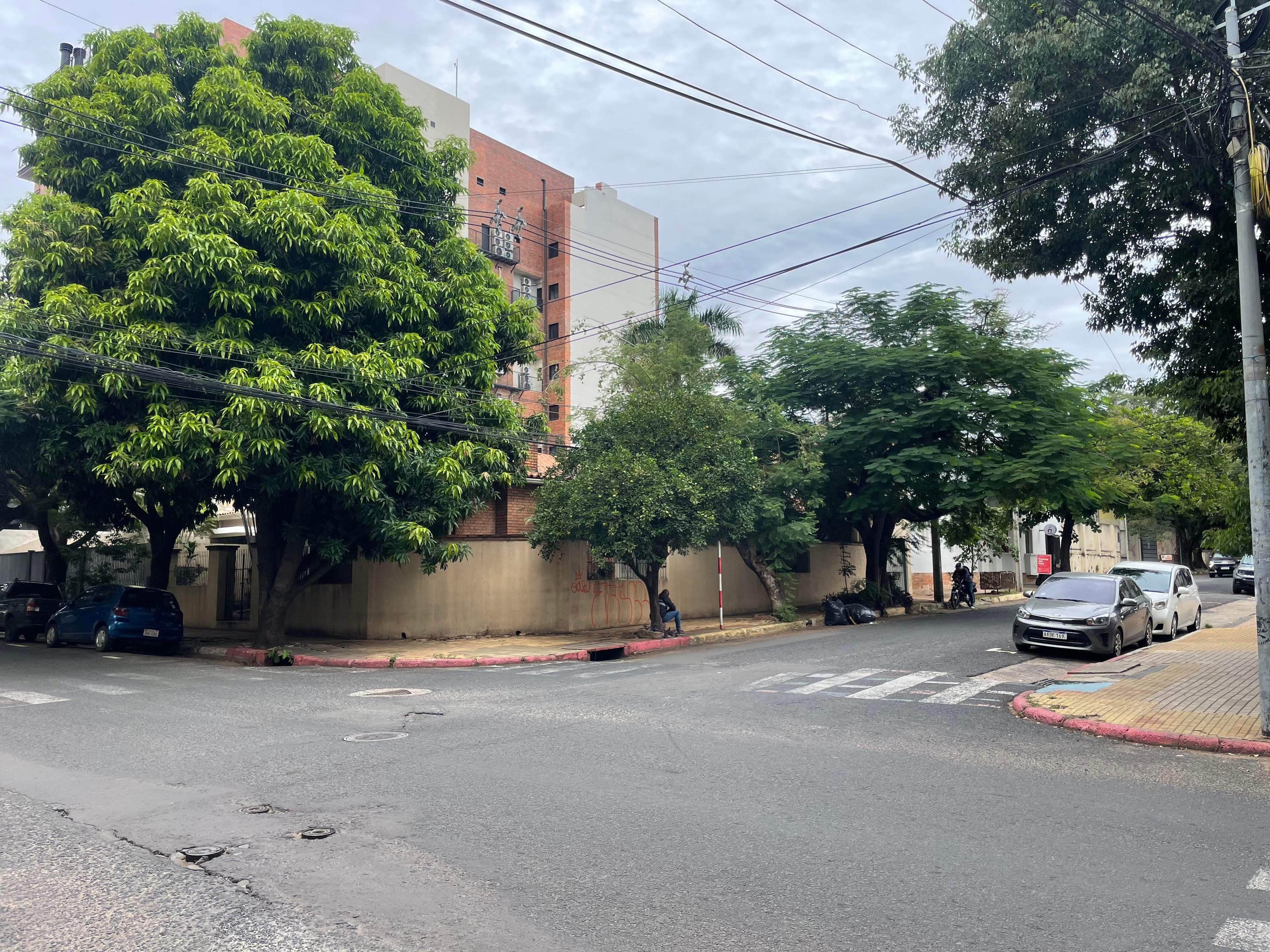
Cabrera, 53, has spent 25 years manning a kerbside fruit stall under a mango tree in Las Mercedes. He’s seen the historic Asunción barrio gradually give way to coffee shops, Venezuelan delivery drivers, and AirBnbs.
On a good day, he can earn 300,000 guaraníes ($50). But once he loads his truck with produce from the Mercado de Abasto and pays for gas, he barely breaks even.
Despite spending ten years in the army, starting as a 15-year-old cadet, he has few savings and no health insurance.
“In this country, it’s illegal to get sick,” Cabrera chuckles. “Things are difficult for regular folks. Lots of people are leaving.”
Last year, he joined them, spending seven months in Madrid. He worked 18-hour shifts refurbishing a tower block, earning up to €180 ($210) per day. “The engineers were Dominican women,” he recalls. “The rest of us were Paraguayan.”
He felt at home in Spain, but missed his family. “If it was just me, I wouldn’t have come back,” reflects Cabrera, pausing to pass a bag of pineapples and bananas into a car window. He hopes to return for another building job soon.
Paraguayans are desperate for work, Cabrera says, “but they can’t find any.” His daughter earned a psychology degree three years ago, but is still unemployed. Meanwhile, he remarks, “the foreigners that come here never want to leave. They live like kings.”
A few weeks later, the Post drops by to take Cabrera’s photo, but his stall has been dismantled. A month passes, and the corner remains empty.
The green paradise
El Paraíso Verde was reportedly planned for as many as 20,000 residents. It is currently home to around 200. Video: Matteo Fabi for The Paraguay Post.
Despite the growing buzz around Paraguay as a dream destination, some have found it isn’t all they were promised.
In the rural southern department of Caazapá, down a muddy track thirty minutes from the nearest town, a snail-shaped real-estate project is slowly rising out of a swamp.
El Paraíso Verde was founded as a “spiritual community” of dissenting worldviews in 2016 by Austrian nationals Erwin and Sylvia Annau.
On his website, Annau describes himself as a serial freedom-seeker who has “intensively” explored 16 religions and philosophies — including Scientology, which he now calls a “cult”.
Liberty, however, has its limits at El Paraíso Verde. LGBT people are not welcome. Nor are the vaccinated.
Interest in the contrarian colony spiked during the pandemic, as the couple’s online materials encouraged other European settlers to flee the “matrix” of lockdowns, Covid-19 jabs, chemtrails, 5G, and immigration from Muslim-majority countries.
“Europe is fucked,” says Peter Brandt, a 56-year-old former appliance salesman from Germany with a suntanned scalp who shows The Paraguay Post around.
They are the world’s biggest community of deliberately unvaccinated people, he claims: “It’s allowed to live here if you accept the rules, like no chemicals.”
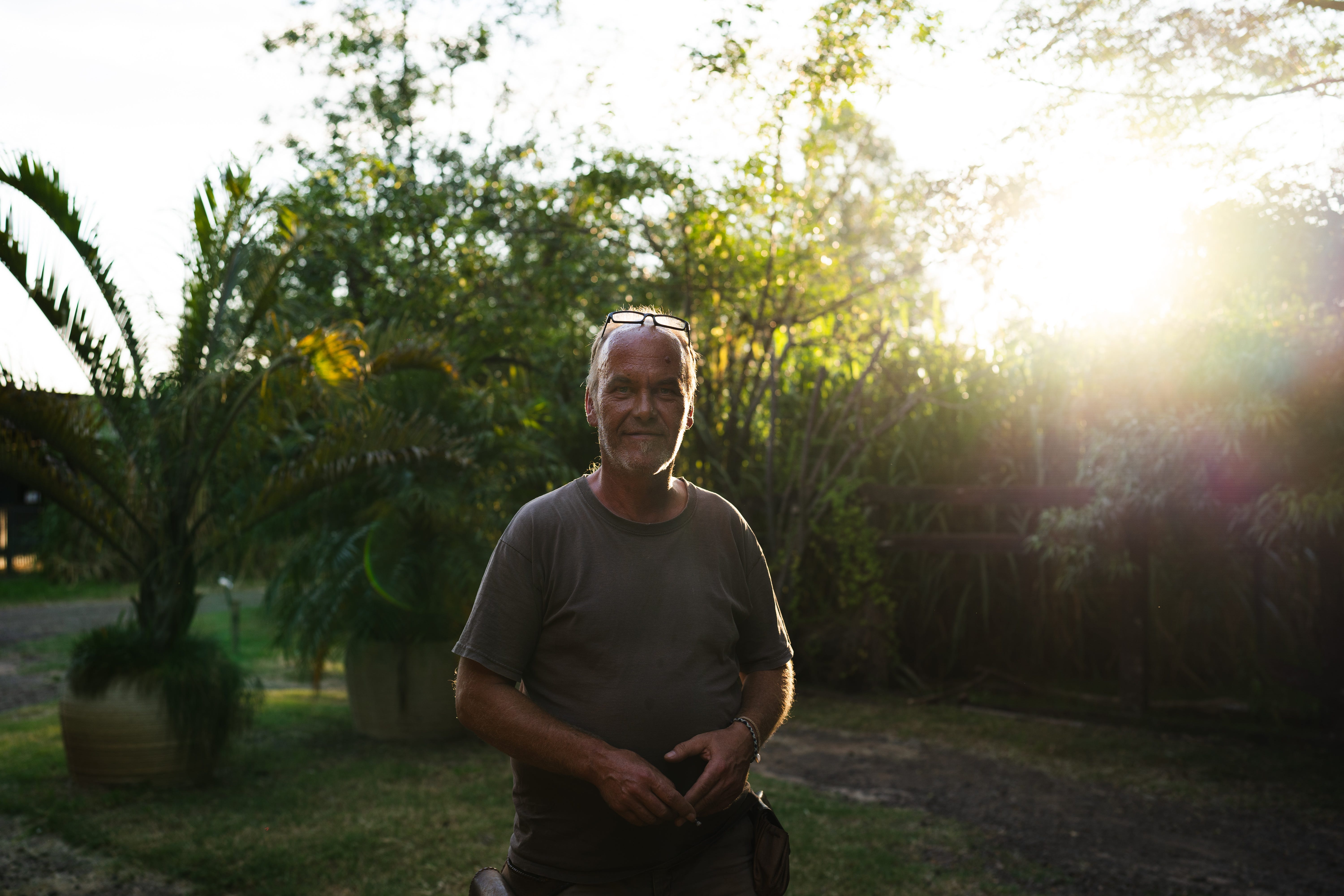
A brochure in the guest accommodation lists respect, solidarity and freedom among the community’s principles, as well as “the prevention and clarification of rumors.” Residents offer each other Reiki and Theta healing, electromagnetic treatment with a Tesla coil, 3D printing services, and a shooting club.
Outside, blonde children in waterwings splash around in a silty lake. A merry, ponytailed Bavarian called Stephan prepares delicious bread rolls, coffee and plum cakes in a repurposed shipping container.
Asked why he decided to move to Paraguay, he looks stumped.
“I don’t know,” he replies. “Must ask Erwin. I think Paraguay is very simple to come here.”
Paraguayan former soldiers with pistols and shotguns stand guard at the entrances, and at a gate separating the majority of the settlers from the Annaus’ residence and most of the amenities.
Brandt takes us through the gate for a tour of the main residential sector in his motorbike trailer. Most of the plots are vacant or half-finished: right now, only 180 to 200 people live here.
Others feature a hodge-podge of architectural techniques. There’s a two-storey log cabin on sale for $1m, a construction resembling a Mongolian yurt, a half-buried, hobbit-like house, and several Spanish-style villas.
One of the nicest is home to Heinz Klötzner, a spry 76-year-old who moved here during the pandemic with his late wife. He has since created a butterfly-filled garden with papaya, grapefruit and orange trees and a natural pool where he swims every morning.
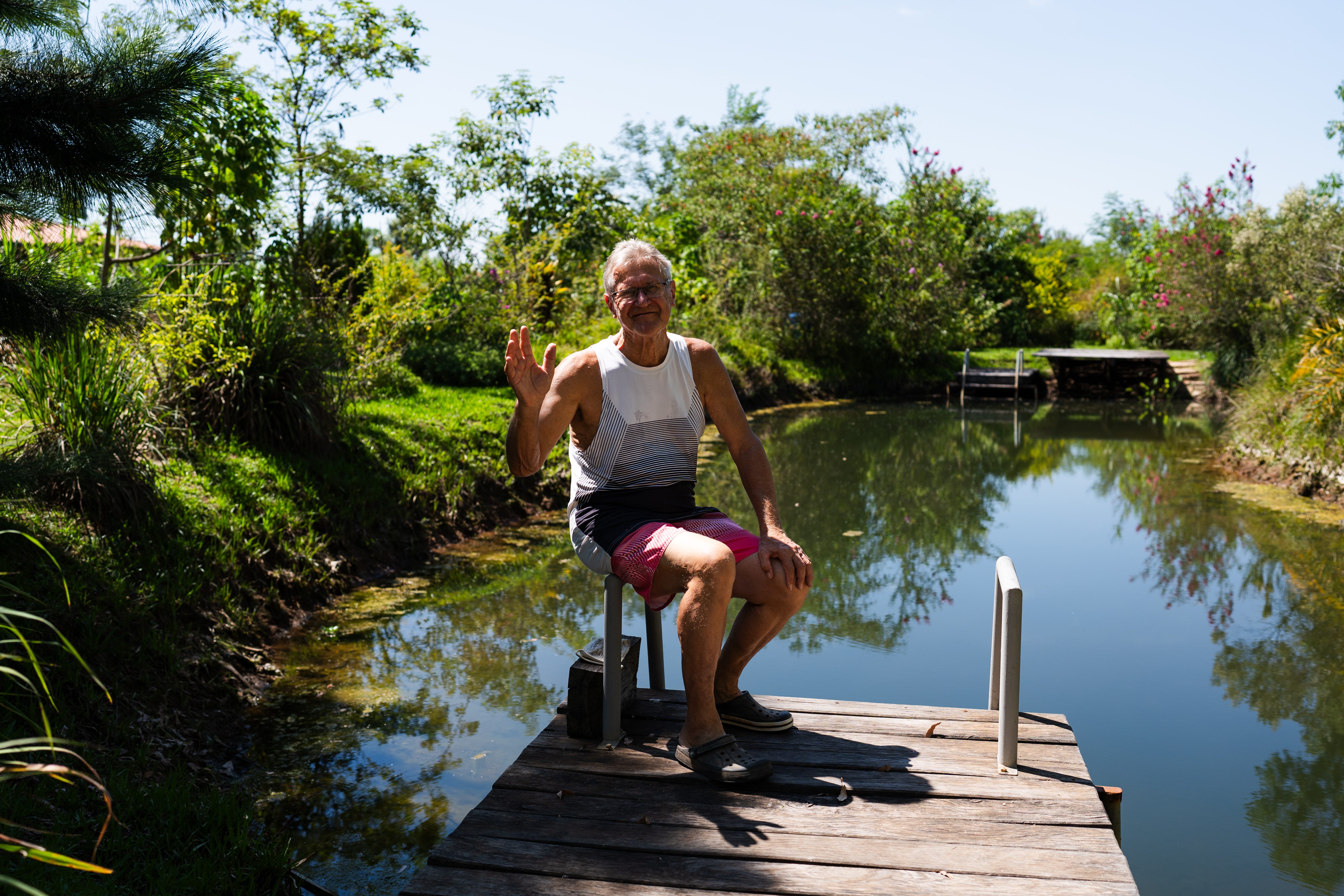
“Five years ago, there was nothing here,” Klötzner says, showing the Post a picture of a tangled field. “I don’t want to go back to Europe. Life there is so hectic.”
In common with several other settlers, Klötzner also grew up in communist East Germany.
That experience means “we can see the next dictatorship coming,” explains Brandt, who supports himself with a few hundred dollars a month from an AI-powered cryptocurrency trading platform.
For some, this Paraguayan Eden reportedly turned out to be a legal and financial hell. Former investors and residents have accused the colony’s operating company, Reljuv S.A., of swindling them out of tens of millions of dollars.
Some buyers say they packed up their lives in Europe, invested their savings in property in El Paraíso Verde — only to arrive and find that construction hadn’t begun and their land titles were unclear or contested.
In late 2025, the public prosecutor’s office in the nearby city of Villarrica charged Erwin and Sylvia Annau — as well as Reljuv’s former president, Argentine businessman and local powerbroker Juan Buker — with fraud.
In the years prior to Paraguay’s 2023 election, the three were photographed alongside Horacio Cartes and Santiago Peña, then a presidential candidate, during a visit to El Paraíso Verde. They also appeared arm-in-arm with the powerful ex-president and his protégé at a campaign event in Caazapá hosted by Buker. A lawyer representing alleged victims has claimed that investors’ money was spent by Peña’s campaign.
The Annaus and Buker have blamed each other for the financial irregularities, according to local media. None have been found guilty of any wrongdoing in connection with El Paraíso Verde.
Thomas Schulz — a gruff, bear-like former orchestra director from Baden-Württemberg — has become an unlikely unofficial spokesman for the alleged victims.
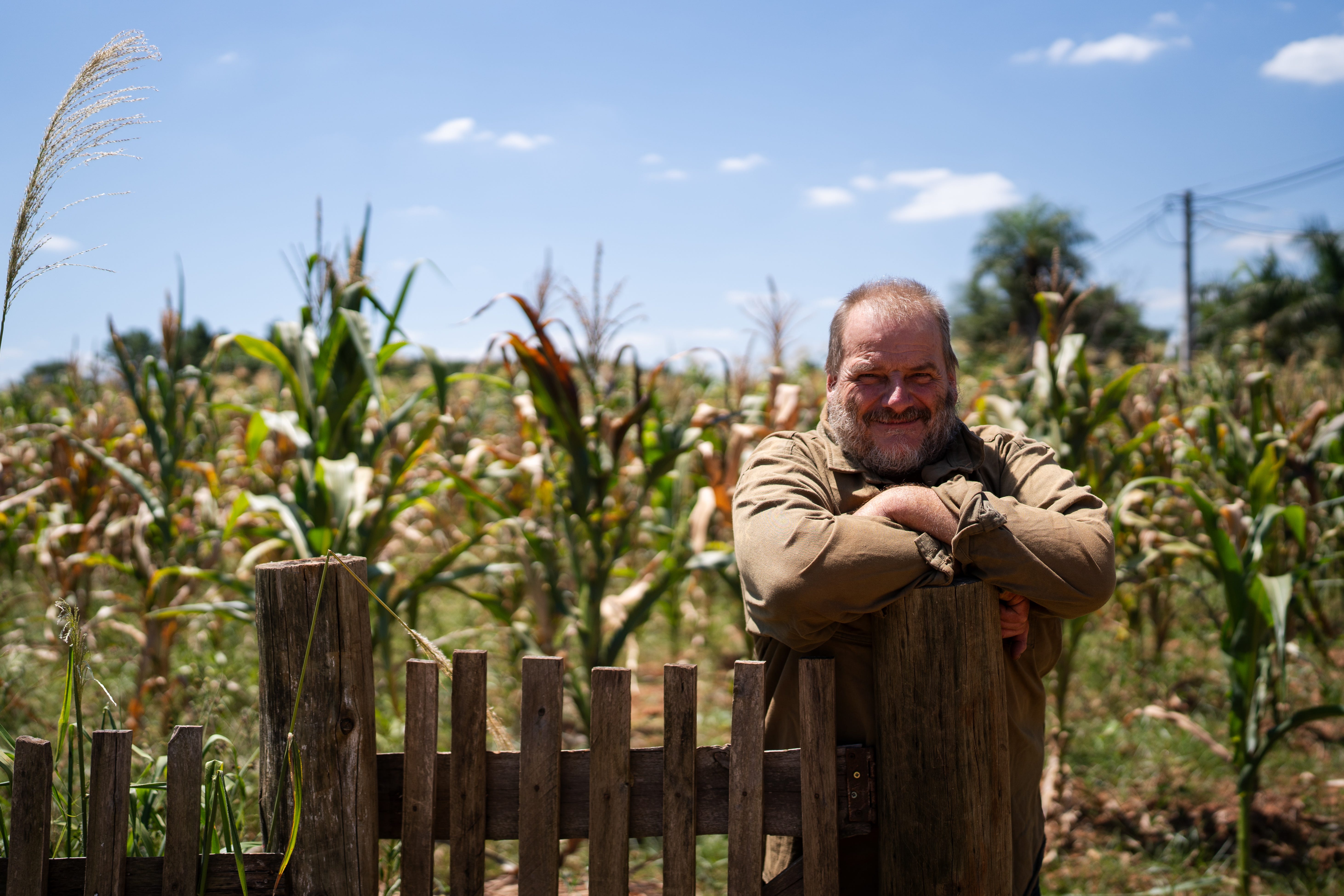
In 2021, he relocated to Paraguay with his wife and son, who has ADHD and struggled during the pandemic with mask mandates and social distancing at school.
“I was against all these stupid orders,” Schulz tells The Paraguay Post at a local restaurant. “I’m not against all vaccinations, only genetically modified vaccinations.”
Immigration was also a push factor. “I’m not a racist,” he says. “I have lots of friends who are white, black. But you can’t eliminate the white race.”
His family settled in the lush Yybyturuzú hills. Schulz became a small-scale rancher, trading his tuxedo for a frayed flannel shirt, crocs, and dirt under his fingernails. His son, now homeschooled, speaks Guaraní with local friends.
He encountered El Paraíso Verde’s videos and steered clear: “I watched five minutes, then had enough.” But over the following years he met “30 to 40 people” who had lost everything and were scared to speak up.
The Swabian cowboy became their de facto advocate, with several leaving the country and transferring him their properties in El Paraíso Verde in the hope he could claw back some of their investment.
“I don’t want to be more rich with this,” he explains. “If I sell something, I’ll use the money to continue the fight.”
He feels sorry for the remaining residents, saying they have been made to live in fear of regular Paraguayans, calling the gated community a “cage” and the Annaus a “dictatorship.”
“I don’t want to have the same [as] in Germany,” he explains, “a country inside a country. If I migrate to a country, I want to be part of it … What kind of life it is, if you are only afraid?”
Despite his battle with its management — he adds with a hint of mischief — El Paraíso Verde remains one of his top customers, paying premium prices for his organic, vaccine-free beef and manure.


Back at the settlement, Brandt complains that “depressed” investors who lost money are spreading unnecessary negativity. “That’s in the past,” he says.
In an interview posted to YouTube last year, the Annaus say they are transitioning to a democratic model of governance. They declare the “corruption crisis” to be over, blaming it on local associates who took advantage of them not speaking Spanish.
Erwin closes by promising to “make El Paraíso Verde great again.”
“Come by and see for yourself,” the silver-haired tax consultant and alternative healer tells viewers. “Make up your own mind.”
Schulz, polishing off a plate of pork chops with extra sauce in the nearby diner, is unconvinced the leadership of the colony — which is now divided into two entities called Pira Tava and Paraiso Homes — has turned over a new leaf.
“Even if a rat is born in a stable, it will never be a racing horse,” he concludes, before settling his heavy frame onto his motocarro pickup and rattling off down the road.
A forever home?
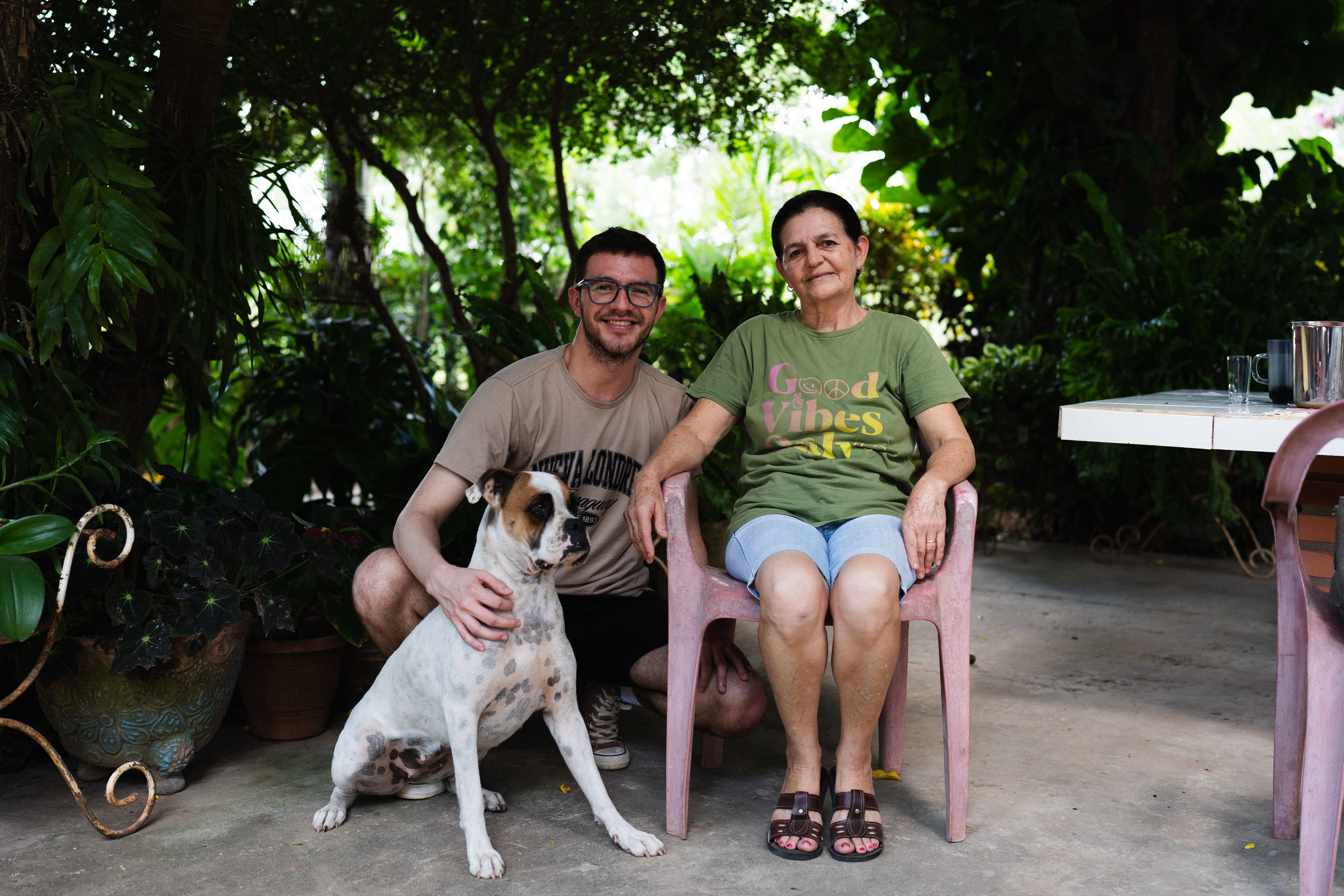
Some of those who come to Paraguay in search of paradise seem to have found it. For their descendants, the grass often looks greener elsewhere.
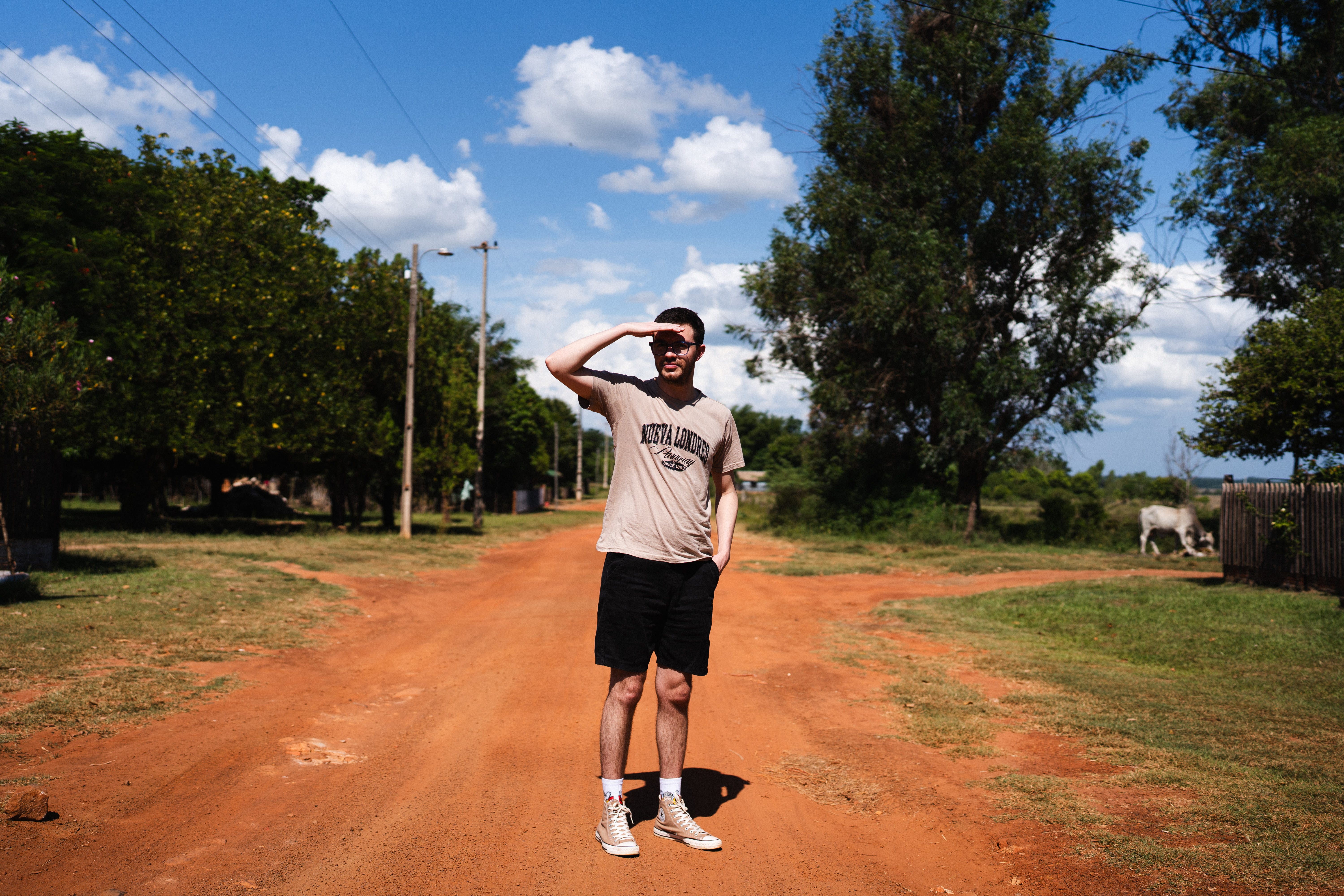
In Nueva Londres — today a sleepy town 80 miles east of Asunción — surnames like Kennedy, Smith, and Murray are all that remain of the Anglo-Australian socialist experiment.
Serving up scone-like chipa avati and a beef vori-vori stew in her verdant garden, Blanca McCreen, 62, says she wishes she learned English.
“My grandfather spoke it perfectly,” she recalls. “But we’ve lost all those things.”
“Nueva Londres,” she adds, “is very peaceful. There’s no crime. What’s lacking most of all is work. Those that can, leave.”
Her son, Hector, may soon be one of them. He works as a doctor in the nearby town of Coronel Oviedo, but his career can only progress so far in Paraguay.
Promotions usually go to members of the Colorado Party, he explains, which has governed Paraguay for most of the past 80 years.
“There are people working alongside me who didn’t lift a finger to get there,” complains Hector, a softly-spoken 29-year-old.
Asked where he might seek fresher pastures, he is emphatic: “England, without a doubt.” He wants to study in the UK, and is curious about his roots.
The drizzly British climate, he adds wistfully — as the mid-afternoon sun beats down — also appeals: “For me, a rainy day is the best.”
Back in Piribebuy, Simpson and Genaw acknowledge their adoptive country isn’t perfect.
She mentions the Paraguayan penchant for fireworks on every occasion, and how some of their neighbours throw trash in the nearby stream.
But asked if Paraguay feels like her forever home, Simpson nods fervently. “Yes, yes,” she repeats, switching into Spanish. “Para siempre.”
Considering Paraguay? The Paraguay Post has five Top Tips:
1. Do your research
Some basic due diligence goes a long way. Can you cope with the weather (over 30 degrees half the year and seriously humid, coupled with regular powercuts)? Do you have considerable savings, foreign income, or a monetisable skill that locals don’t? Can you do without Amazon deliveries? Can you handle noise, rubbish and hazardous roads? If the answer to any of these questions is no, Paraguay may not be for you.
2. Try before you buy
Visitors from most of the Western world can enter Paraguay on a 90-day tourist visa, which can usually be renewed for free by hopping across the border at Posadas, Clorinda, or Foz do Iguaçu. Use this time to travel, meet people, check out the property market, and see if Paraguay feels right for you. For peace of mind, temporary residency gives you the right to remain and work in the country for two years. It can then be converted into permanent residency with a college degree or proof of income.
3. Learn the language(s)
English is not widely spoken outside of the upper classes in Asunción. To make friends, do official business, and embrace local life, basic Spanish is pretty much essential. In rural areas, speaking some Guaraní will also help you break the ice and keep track of conversations going on around you. Good Spanish schools in Asunción include Idipar and El Políglota, while the Granel offers evening courses in Guaraní.
4. Think long-term
Things about Paraguay that appeal as a young digital nomad — low taxes, limited government — may wear thin when later starting a family: public schools and hospitals are severely underfunded, while private clinics are poorly regulated. As a fit and healthy retiree, you may regret moving to the country and finding yourself isolated a decade later. Small towns near big cities — Areguá, Luque, Hohenau or Paraguarí — offer an appealing compromise: a slow pace of life with nature nearby, but with easy access to essential services.
5. Get informed
Reliable information on Paraguay is hard to come by. People selling residency packages or real-estate opportunities may not be 100% straight with you. Websites doing paid PR for the government won’t tell you the full story. The Paraguay Post isn’t neutral — we call it how we see it — but we’re fully independent, and staffed by locals who live and breathe Paraguay. Our Weekly Post briefing sums up the news you need: all for a few bucks per month.
Great reporting. Congrats, Laurie and Josué! Well-balanced and as nuanced as possible to tell this very complex story. I'd recommend this to anyone thinking of coming to Paraguay. All the good, the bad and the ugly carefully stated. High-quality and useful journalism! 👏👏👏
I’m on my way soon. Looking for connections.
Thank you for being here on Substack!